
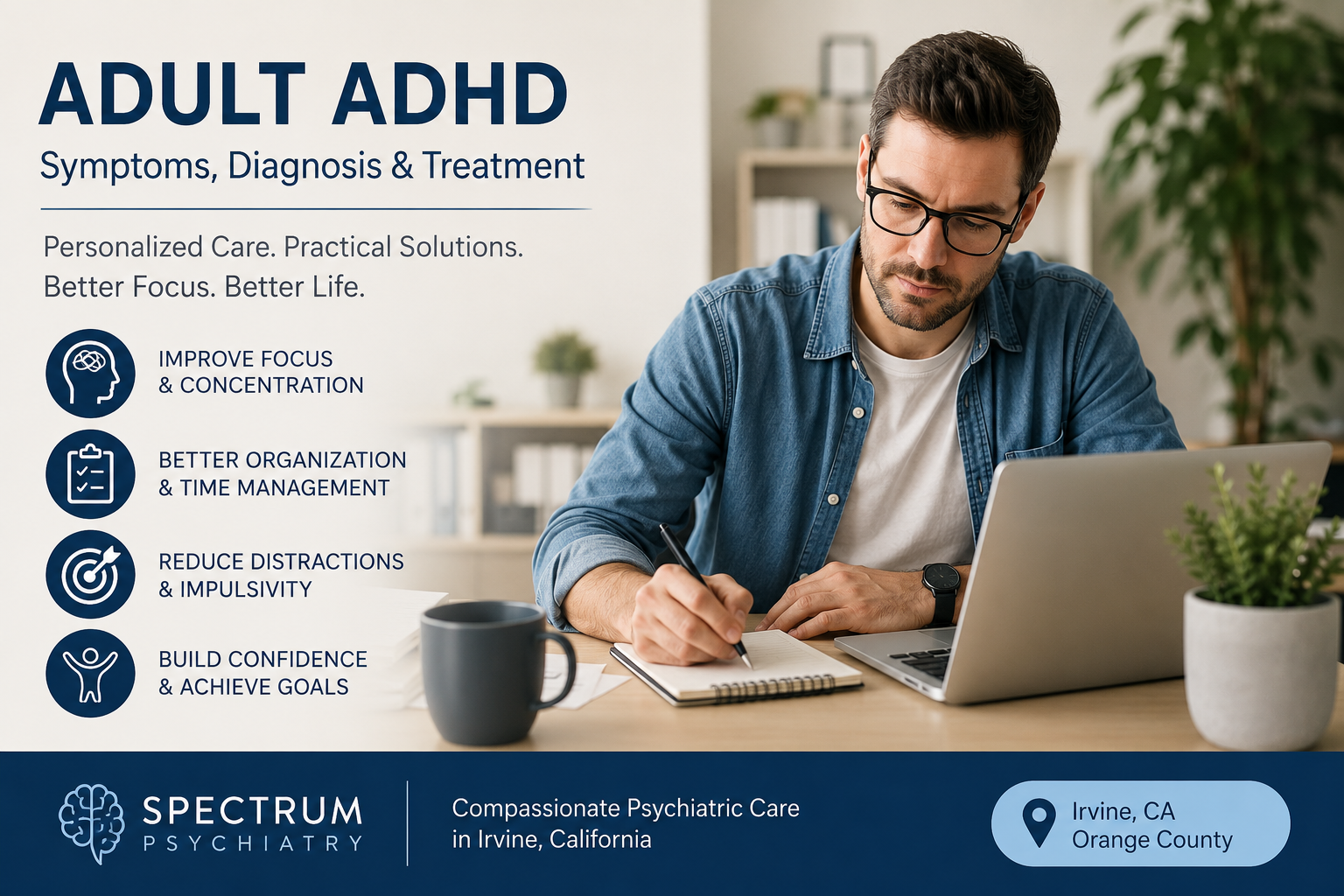
Adult ADHD Symptoms, Diagnosis, and Treatment in Irvine, California
Learn how adult ADHD affects attention, organization, time management, relationships, and work—and how professional evaluation and personalized treatment can help.

This article has been medically reviewed for clinical accuracy and reflects current evidence-based approaches to adult ADHD evaluation and treatment.
Many people associate attention-deficit/hyperactivity disorder, or ADHD, with children. However, ADHD can continue into adulthood. Some adults were diagnosed when they were young, while others may not recognize their symptoms until responsibilities at work, school, home, or within relationships become more demanding.
Adults with ADHD are not simply careless, lazy, or unmotivated. ADHD is a condition that can affect attention, impulse control, activity level, planning, working memory, and emotional regulation. Symptoms may look different from one person to another and can also change over time.
What Is Adult ADHD?
ADHD is a neurodevelopmental condition characterized by an ongoing pattern of inattention, hyperactivity, impulsivity, or a combination of these symptoms. For a diagnosis to be considered, symptoms must interfere with functioning in important areas of life.
Although ADHD begins during childhood, some people do not receive a diagnosis until adulthood. Earlier symptoms may have been overlooked because the person earned good grades, lived in a highly structured environment, or developed coping strategies that temporarily reduced the impact of the condition.
Common Symptoms of ADHD in Adults
Adult ADHD does not always appear as obvious physical hyperactivity. In adults, symptoms may be expressed through chronic disorganization, internal restlessness, difficulty completing tasks, impulsive decisions, or inconsistent performance.
Symptoms of inattention may include:
- Difficulty concentrating during conversations or meetings
- Frequently losing keys, phones, documents, or other items
- Forgetting appointments, deadlines, or responsibilities
- Starting projects but struggling to complete them
- Becoming distracted by sounds, messages, or unrelated thoughts
- Difficulty following detailed instructions
- Avoiding tasks that require sustained mental effort
- Making preventable mistakes because details were missed
- Struggling to prioritize responsibilities
Hyperactive or impulsive symptoms may include:
- Feeling internally restless or unable to relax
- Talking excessively or interrupting other people
- Making decisions without considering the consequences
- Becoming impatient while waiting
- Changing jobs, activities, or interests frequently
- Acting quickly during emotionally intense situations
- Needing constant activity or stimulation
- Difficulty remaining seated for extended periods
How Adult ADHD Can Affect Daily Life
ADHD may affect more than a person's ability to focus. It can influence many parts of daily functioning, especially when responsibilities increase.
Work and education
Adults with ADHD may have difficulty meeting deadlines, organizing projects, listening during meetings, studying, managing emails, or completing repetitive tasks. Performance may be inconsistent, even when the person is intelligent and highly capable.
Relationships
Forgetfulness, interrupting, poor time management, and difficulty completing shared responsibilities can create tension in relationships. Partners or family members may incorrectly interpret these behaviors as a lack of concern or effort.
Financial management
Impulsive spending, missed payments, unopened mail, and difficulty maintaining a budget may lead to financial stress. Practical systems and professional treatment may help reduce these difficulties.
Emotional health
Some adults with ADHD experience frustration, rejection sensitivity, low self-esteem, irritability, or rapid emotional reactions. Years of being described as careless, disorganized, or unreliable may also affect confidence.
ADHD Can Look Different in Women
Women with ADHD may be more likely to experience inattentive symptoms that are less visible to other people. They may appear quiet or successful while privately struggling with disorganization, forgetfulness, mental exhaustion, or feeling overwhelmed.
Some women develop extensive systems to compensate for their symptoms. These strategies may work temporarily but can become difficult to maintain when responsibilities increase. This may contribute to delayed diagnosis.
Is It ADHD or Something Else?
Concentration problems do not automatically mean that a person has ADHD. Similar symptoms may occur with anxiety, depression, trauma-related conditions, sleep disorders, substance use, thyroid problems, medication effects, chronic stress, or other medical concerns.
A careful evaluation is important because treatment depends on the cause of the symptoms. In some cases, ADHD may also occur together with anxiety, depression, or another condition.
How Is Adult ADHD Diagnosed?
There is no single laboratory test, brain scan, or online quiz that can independently diagnose ADHD. Diagnosis requires a comprehensive clinical evaluation by a qualified healthcare professional.
An adult ADHD evaluation may include:
- A detailed discussion of current symptoms
- Information about childhood behavior and school experiences
- A review of work, academic, and relationship functioning
- Standardized ADHD screening questionnaires
- A review of medical and psychiatric history
- Evaluation for anxiety, depression, trauma, and sleep problems
- A review of medications, caffeine, alcohol, and substance use
- Information from a partner or family member when appropriate
Online screening questionnaires may help identify whether further evaluation is appropriate, but they should not be used as a substitute for a professional diagnosis.
Adult ADHD Treatment Options
Treatment should be individualized according to symptoms, health history, daily responsibilities, treatment preferences, and any other mental health or medical conditions.
Medication management
Stimulant and non-stimulant medications may be considered for adult ADHD. Medication selection depends on the person's symptoms, medical history, potential side effects, other medications, and treatment goals.
ADHD medication requires appropriate monitoring. Follow-up appointments may include reviewing symptom improvement, sleep, appetite, blood pressure, heart rate, mood, and possible side effects.
Psychotherapy and behavioral strategies
Therapy can help adults develop practical systems for organization, emotional regulation, time management, and problem-solving. Cognitive behavioral approaches may also help address negative beliefs that developed after years of struggling with untreated symptoms.
Organizational support
Helpful tools may include:
- Using one calendar for all appointments and deadlines
- Setting alarms and reminders for important tasks
- Breaking large projects into smaller steps
- Creating designated places for commonly lost items
- Reducing distractions during focused work
- Using written checklists instead of relying on memory
- Scheduling short breaks during longer tasks
Sleep and lifestyle support
Consistent sleep, regular physical activity, balanced meals, limited alcohol use, and careful caffeine intake can support overall functioning. These habits do not replace treatment, but they may improve attention, mood, and emotional regulation.
When Should You Seek an ADHD Evaluation?
Consider speaking with a psychiatrist or another qualified healthcare professional when attention, organization, restlessness, or impulsive behavior consistently interferes with work, education, relationships, finances, or daily responsibilities.
An evaluation may be particularly helpful when symptoms have existed for many years, appear in more than one area of life, or continue despite attempts to improve organization and focus.
Adult ADHD Care at Spectrum Psychiatry
Spectrum Psychiatry provides personalized psychiatric evaluations and medication management for adults in Irvine, Orange County, and surrounding California communities.
An ADHD evaluation considers the whole person rather than focusing on a checklist alone. Symptoms, medical history, childhood experiences, sleep, mood, anxiety, daily functioning, and treatment goals are reviewed before treatment recommendations are made.
Depending on the evaluation, treatment may include medication management, behavioral recommendations, psychotherapy referrals, lifestyle support, or treatment for another condition contributing to concentration difficulties.
Frequently Asked Questions
Can ADHD be diagnosed for the first time in adulthood?
Yes. Some people do not receive an ADHD diagnosis until adulthood. However, the evaluation generally looks for evidence that relevant symptoms were present during childhood, even if they were not formally diagnosed at the time.
Does everyone with ADHD need medication?
No. Treatment is individualized. Some adults benefit from medication, while others may use therapy, behavioral strategies, organizational support, lifestyle changes, or a combination of approaches.
Can anxiety cause symptoms that resemble ADHD?
Yes. Anxiety can interfere with concentration, memory, sleep, and task completion. A comprehensive evaluation can help determine whether symptoms are related to ADHD, anxiety, another condition, or a combination of factors.
Can adults with ADHD be successful?
Yes. Adults with ADHD can succeed professionally, academically, and personally. Accurate diagnosis, appropriate treatment, supportive routines, and practical coping strategies can help reduce impairment and build on individual strengths.
Does Spectrum Psychiatry evaluate adult ADHD in Irvine?
Spectrum Psychiatry provides psychiatric evaluations and medication management for adults experiencing attention, organization, impulsivity, mood, anxiety, and related mental health concerns in Irvine and Orange County.
Final Thoughts
Adult ADHD can make ordinary responsibilities feel unusually difficult, but these challenges are not a sign of laziness or lack of intelligence. A careful evaluation can help identify the source of the symptoms and determine which treatment options may be appropriate.
Professional care, medication when appropriate, therapy, practical organizational systems, and healthy routines can help adults improve focus, consistency, emotional regulation, and daily functioning.
Adult ADHD Evaluation in Irvine and Orange County
Spectrum Psychiatry provides personalized psychiatric evaluations and medication management for adults experiencing attention, organization, impulsivity, anxiety, mood, and related concerns.
- ✓ Comprehensive psychiatric evaluations
- ✓ Adult ADHD assessment
- ✓ Medication management
- ✓ Telepsychiatry appointments
- ✓ Personalized treatment planning
Schedule an Appointment
To discuss attention, organization, impulsivity, or related mental health concerns, contact Spectrum Psychiatry for an individualized psychiatric evaluation in Irvine and Orange County.