
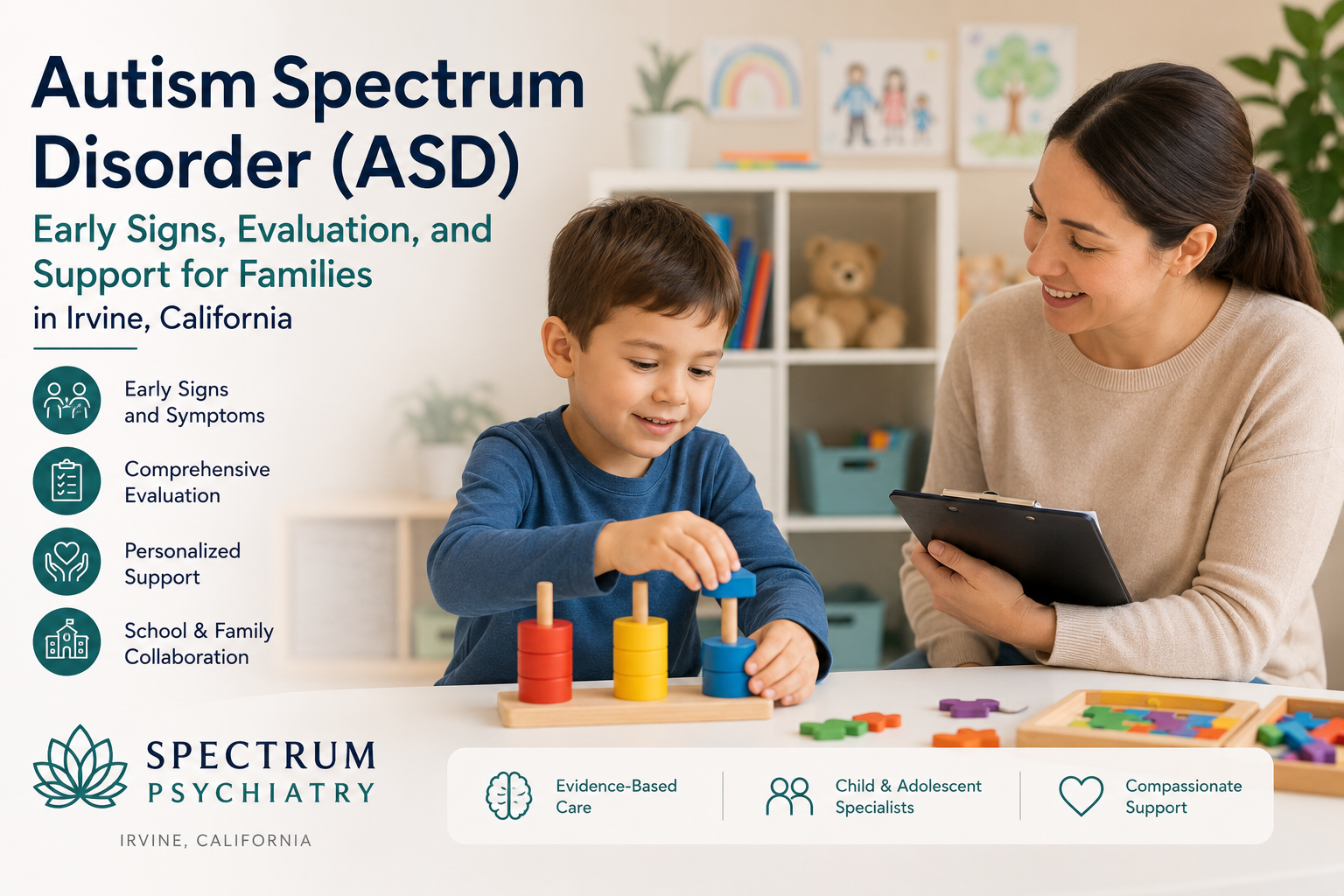
Autism Spectrum Disorder: Early Signs, Evaluation, and Support for Families in Irvine, California
Autism Spectrum Disorder (ASD) is a neurodevelopmental condition that affects communication, social interaction, behavior, and the way a child experiences and responds to the world around them. Autism exists on a spectrum, meaning that every child has unique strengths, challenges, and support needs.
Many parents begin noticing developmental differences during infancy or early childhood. Some children may have delayed speech, limited eye contact, difficulty engaging with peers, or repetitive behaviors. Others may have more subtle symptoms that become noticeable later as social and academic expectations increase.
Early identification and intervention can significantly improve a child’s development, communication skills, emotional well-being, and overall quality of life. Families throughout Irvine, Orange County, and California often seek professional guidance when they have concerns about developmental milestones or social functioning.
What Is Autism Spectrum Disorder?
Autism Spectrum Disorder is a developmental condition that affects how a person communicates, interacts socially, processes sensory information, and responds to their environment. Autism is not an illness and cannot be "cured." Instead, it represents a different way of experiencing and understanding the world.
Children with autism may have varying levels of support needs. Some children communicate verbally and function independently, while others may require more extensive assistance with daily activities, communication, or social interaction.
Early Signs of Autism in Young Children
Autism symptoms can appear during infancy or early childhood. While every child develops at their own pace, certain signs may suggest the need for a developmental evaluation.
- Limited eye contact
- Delayed speech or language development
- Limited response to their name
- Difficulty engaging in back-and-forth interaction
- Reduced interest in social play
- Repetitive movements such as hand flapping
- Strong preference for routines
- Difficulty adapting to change
- Unusual reactions to sounds, textures, or lights
- Intense focus on specific interests
- Limited use of gestures
- Difficulty understanding social cues
Autism Symptoms in School-Age Children
Some children are not identified until they reach school age. Social expectations become more complex as children grow, and challenges may become more noticeable in the classroom or during peer interactions.
School-age children with autism may struggle with understanding social rules, maintaining conversations, interpreting facial expressions, managing transitions, or coping with sensory stimulation in busy environments.
Despite these challenges, many children with autism have remarkable strengths, including creativity, honesty, attention to detail, strong memory skills, and deep knowledge in areas of interest.
Social and Communication Differences
Communication challenges vary significantly among children with autism. Some children may have delayed speech, while others may have advanced vocabulary but struggle with social communication.
Difficulties may include understanding nonverbal cues, maintaining conversations, recognizing sarcasm, interpreting emotions, or understanding social expectations in different situations.
These differences can sometimes make it difficult for children to build friendships or feel confident in social environments.
Sensory Sensitivities and Autism
Many children with autism experience sensory sensitivities. Everyday sounds, lights, textures, smells, or crowded environments may feel overwhelming or uncomfortable.
Some children may avoid certain clothing materials, become upset by loud noises, or seek specific sensory experiences such as movement, pressure, or repetitive activities.
Understanding sensory needs can help parents, teachers, and clinicians create supportive environments that reduce stress and improve functioning.
Repetitive Behaviors and Routines
Repetitive behaviors and a preference for routines are common characteristics of autism. Children may engage in repetitive movements, follow specific rituals, or become distressed when routines change unexpectedly.
Predictability often helps children feel safe and comfortable. Understanding this need can improve family communication and reduce anxiety during transitions.
How Autism Is Evaluated
Autism evaluations involve gathering information about a child's developmental history, communication skills, behavior, social functioning, sensory experiences, and overall development.
Parents are often asked about developmental milestones, language development, social interactions, behavior patterns, school functioning, and family concerns. Information from teachers or other professionals may also be helpful.
A comprehensive evaluation helps determine whether autism or other developmental, behavioral, or mental health concerns may be contributing to a child's symptoms.
Conditions That Can Occur Alongside Autism
Many children with autism also experience other developmental or mental health conditions. Identifying these concerns helps ensure that treatment plans address the child's complete needs.
- ADHD
- Anxiety disorders
- Depression
- Sleep difficulties
- Learning disorders
- Sensory processing challenges
- Language disorders
- Emotional regulation difficulties
Support and Treatment Options
While autism itself is not something that needs to be "fixed," many children benefit from supportive services that help them strengthen communication skills, improve daily functioning, and navigate social situations more comfortably.
- Comprehensive developmental evaluation
- Psychiatric assessment
- Behavioral interventions
- Speech and language support
- Occupational therapy recommendations
- Parent education and support
- School collaboration when appropriate
- Ongoing mental health support
Supporting Families After Diagnosis
Receiving an autism diagnosis can bring a range of emotions for families. Some parents feel relief because they finally have answers, while others may feel overwhelmed by uncertainty about the future.
It is important to remember that autism does not define a child's potential. With appropriate support, understanding, and accommodations, many children with autism develop meaningful relationships, academic success, and fulfilling lives.
Autism Evaluation and Support in Irvine and Orange County
Spectrum Psychiatry provides child and adolescent psychiatric services for families throughout Irvine and Orange County, including Newport Beach, Costa Mesa, Tustin, Lake Forest, Laguna Hills, Mission Viejo, Santa Ana, and nearby California communities.
If you have concerns about your child's development, social communication, behavior, or emotional well-being, a professional evaluation can help provide clarity and guide next steps.
You can also learn more about our psychiatrist services in Irvine, CA for broader psychiatric care in Orange County.

Medically Reviewed By
Dr. Ismail Deniz
Psychiatrist
This article has been medically reviewed by Dr. Ismail Deniz to ensure accuracy and alignment with current evidence-based psychiatric care and autism evaluation practices.
Last reviewed: June 2026
Autism Evaluations in Irvine & Orange County
If you have concerns about autism, developmental milestones, or social communication challenges, Spectrum Psychiatry can help you explore evaluation and support options.
Contact Spectrum Psychiatry