
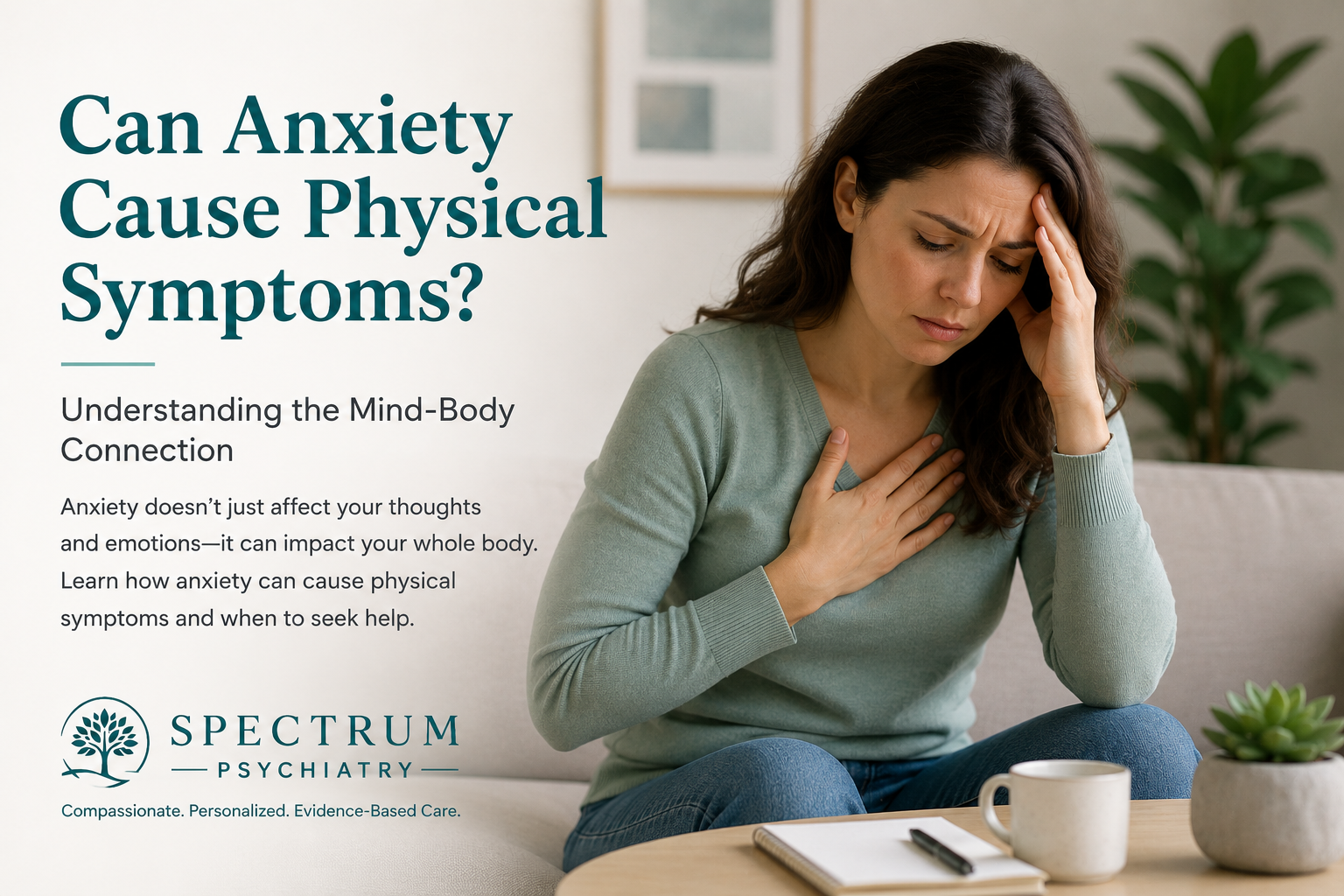
Can Anxiety Cause Physical Symptoms? Understanding the Mind-Body Connection
Anxiety is often thought of as a mental or emotional experience, but it can also affect the body in powerful ways. Many people with anxiety experience physical symptoms such as chest tightness, dizziness, headaches, muscle tension, fatigue, stomach problems, and shortness of breath.
These symptoms can feel alarming, especially when they appear suddenly or resemble symptoms of a medical condition. While it is always important to rule out urgent medical concerns, anxiety can be a real cause of physical discomfort.
At Spectrum Psychiatry, we help adults in Irvine and Orange County understand the connection between anxiety, stress, and physical symptoms through personalized psychiatric evaluation and treatment.
Why Anxiety Affects the Body
Anxiety activates the body's stress response. When your brain senses danger or pressure, it can trigger the release of stress hormones and prepare the body for action. This is sometimes called the fight-or-flight response.
During this response, your heart may beat faster, your breathing may change, your muscles may tighten, and your digestive system may slow down or become more sensitive. These changes are designed to protect you in moments of danger, but they can become exhausting when anxiety happens frequently.
Common Physical Symptoms of Anxiety
Anxiety symptoms can vary from person to person. Some people experience mostly emotional worry, while others notice anxiety primarily through physical sensations.
- Chest tightness or chest discomfort
- Rapid heartbeat or palpitations
- Shortness of breath
- Dizziness or lightheadedness
- Headaches
- Muscle tension
- Neck, shoulder, or back pain
- Fatigue or low energy
- Stomach pain, nausea, or digestive issues
- Sweating or trembling
- Tingling sensations
- Difficulty sleeping
Physical anxiety symptoms can sometimes create a cycle of fear. A person may notice a physical sensation, worry that something is seriously wrong, and then become even more anxious. This can make the physical symptoms feel stronger.
Can Anxiety Cause Chest Pain?
Anxiety can cause chest tightness, chest pressure, or discomfort. This may happen because of muscle tension, changes in breathing, increased heart rate, or panic symptoms. However, chest pain should never be ignored.
If you have new, severe, or unexplained chest pain, shortness of breath, pain spreading to the arm or jaw, fainting, or other concerning symptoms, seek emergency medical care immediately.
Once serious medical causes have been ruled out, psychiatric care can help determine whether anxiety, panic attacks, stress, or another mental health condition may be contributing to the symptoms.
Anxiety and Digestive Problems
Anxiety can affect the digestive system because the brain and gut are closely connected. Stress may contribute to nausea, stomach discomfort, changes in appetite, diarrhea, constipation, or a feeling of tightness in the stomach.
Some people notice that their digestive symptoms become worse during stressful periods, before important events, or when they are worrying intensely. Treating anxiety can sometimes improve both emotional and physical symptoms.
Anxiety, Fatigue, and Muscle Tension
Chronic anxiety can keep the body in a state of alertness. Over time, this may lead to fatigue, muscle soreness, headaches, jaw tension, neck pain, or difficulty relaxing.
Many people with anxiety feel tired even after sleeping because their nervous system has been working overtime. Poor sleep, racing thoughts, and physical tension can all contribute to exhaustion.
Anxiety, Panic Attacks, and Physical Symptoms
Panic attacks can cause intense physical symptoms that may feel frightening. These may include a racing heart, shaking, sweating, chest tightness, shortness of breath, dizziness, nausea, or a fear of losing control.
Because panic symptoms can feel similar to medical emergencies, many people first seek medical care before realizing that anxiety may be involved. A psychiatric evaluation can help identify panic symptoms and create an appropriate treatment plan.
If you are experiencing ongoing worry, panic symptoms, or physical symptoms related to anxiety, you may find our Anxiety Treatment in Irvine page helpful.
When Should You Seek Professional Help?
It may be time to seek professional support if physical anxiety symptoms are frequent, distressing, difficult to control, or interfering with your work, relationships, sleep, or daily life.
You should also consider professional care if you frequently worry about your health, avoid activities because of physical symptoms, or feel stuck in a cycle of anxiety and body sensations.
A complete evaluation can help clarify whether symptoms are related to anxiety, depression, ADHD, sleep problems, trauma, or another mental health concern.
Treatment Options for Anxiety-Related Physical Symptoms
Treatment depends on each person's symptoms, medical history, and goals. Anxiety treatment may include psychiatric evaluation, medication management, psychotherapy, lifestyle strategies, and support for related concerns such as depression or ADHD.
Medication management may help reduce excessive worry, panic symptoms, irritability, sleep disruption, and physical tension when clinically appropriate. Therapy can help patients understand the anxiety cycle, reduce avoidance, and develop practical coping tools.
Lifestyle habits may also support recovery. These may include improving sleep, reducing caffeine, practicing relaxation techniques, increasing physical activity, and building healthier routines around stress.
If anxiety is also affecting your mood, you may also want to learn more about our Depression Treatment in Irvine services.
Anxiety Treatment in Irvine and Orange County
Spectrum Psychiatry serves patients throughout Irvine and Orange County, including Newport Beach, Costa Mesa, Tustin, Lake Forest, Laguna Hills, Mission Viejo, Santa Ana, and nearby communities.
If anxiety is showing up in your body, you are not alone. Physical symptoms of anxiety are real, and treatment can help you better understand what is happening and feel more in control.
You can also learn more about our psychiatrist services in Irvine, CA for broader psychiatric care in Orange County.

Medically Reviewed By
Dr. Gulay Tegin, MD
Psychiatrist
This article has been medically reviewed by Dr. Gulay Tegin, MD to ensure accuracy and alignment with current psychiatric guidelines and evidence-based anxiety treatment practices.
Last reviewed: June 2026
Anxiety Treatment in Irvine & Orange County
If anxiety symptoms are affecting your body, sleep, relationships, or daily responsibilities, Spectrum Psychiatry can help you explore diagnosis and treatment options.
Contact Spectrum Psychiatry