
Drug Addiction Treatment in Irvine, California: A Complete Guide to Recovery and Psychiatric Care
Understanding substance use disorder, recognizing warning signs, and learning how individualized psychiatric care can support recovery.

This article has been reviewed for educational and clinical accuracy and discusses substance use disorder, co-occurring psychiatric conditions, treatment options, safety concerns, and recovery support.
Drug addiction can affect physical health, emotional well-being, relationships, employment, education, finances, and personal safety. It may begin with occasional or prescribed use and gradually develop into a pattern that feels increasingly difficult to control.
Substance use disorder is not simply a lack of willpower. It is a treatable medical condition involving changes in behavior, motivation, judgment, stress regulation, and the brain's reward system.
Recovery is possible. Professional treatment can help patients understand the reasons behind substance use, manage cravings, address co-occurring mental health symptoms, reduce health risks, and develop a realistic plan for long-term recovery.
Key Takeaway
Drug addiction is treatable, but treatment must be matched to the substance involved, severity of use, withdrawal risks, medical history, psychiatric symptoms, living environment, and personal recovery goals. Some patients can be treated in an outpatient setting, while others require detoxification, residential care, hospitalization, or specialized addiction services.
What Is Drug Addiction?
Drug addiction is commonly diagnosed as a substance use disorder. It involves a pattern of substance use that leads to clinically significant distress, health risks, impaired control, or difficulty meeting responsibilities.
A person may continue using a substance despite recognizing that it is harming health, relationships, work, finances, or emotional stability. Attempts to reduce or stop may be unsuccessful, and increasing amounts may be needed to achieve the same effect.
Common features of substance use disorder may include:
- • Using more of a substance than intended
- • Repeated unsuccessful attempts to reduce or stop
- • Strong cravings or urges to use
- • Spending significant time obtaining or using substances
- • Neglecting work, school, family, or personal responsibilities
- • Continuing despite physical or psychological harm
- • Giving up important social or recreational activities
- • Using in dangerous situations
- • Developing tolerance
- • Experiencing withdrawal symptoms
Why Addiction Is a Medical Condition
Repeated substance use can affect brain systems involved in reward, motivation, stress, memory, judgment, and self-control. Over time, drug use may become less about seeking pleasure and more about avoiding withdrawal, emotional distress, or intense cravings.
Biological vulnerability, genetics, trauma, chronic stress, psychiatric conditions, environment, social influences, and access to substances can all contribute to the development of addiction.
Personal responsibility remains part of recovery, but shame and punishment alone do not treat the underlying condition. Effective care combines accountability with medical assessment, behavioral treatment, practical support, and relapse prevention.
Commonly Misused Substances
Substance use disorders can involve illegal drugs, prescription medications, or legal substances used in unsafe or uncontrolled ways. The medical risks and treatment approach differ depending on the substance.
Opioids
Opioids include heroin, fentanyl, and prescription pain medications such as oxycodone or hydrocodone. Opioid use can lead to tolerance, physical dependence, severe withdrawal, and fatal overdose.
Treatment may include medications specifically approved for opioid use disorder, overdose prevention planning, behavioral treatment, and coordination with specialized addiction services.
Cocaine and Other Stimulants
Cocaine, methamphetamine, and misused prescription stimulants may temporarily increase energy, confidence, alertness, or productivity. Continued use may contribute to anxiety, paranoia, irritability, insomnia, depression, cardiovascular problems, and impaired judgment.
Stimulant withdrawal may involve exhaustion, depression, sleep changes, strong cravings, and reduced motivation. Severe psychiatric symptoms require prompt evaluation.
Benzodiazepines
Benzodiazepines are prescription medications sometimes used for anxiety, panic symptoms, seizures, or short-term insomnia. Examples include alprazolam, lorazepam, clonazepam, and diazepam.
Regular use can cause physical dependence. Abrupt discontinuation may lead to severe withdrawal, including seizures, and should not be attempted without appropriate medical guidance.
Cannabis
Cannabis is often viewed as harmless, but some individuals develop persistent use, tolerance, cravings, reduced motivation, concentration problems, anxiety, sleep difficulties, or impaired functioning.
High-potency cannabis may also worsen panic, paranoia, psychotic symptoms, or mood instability in vulnerable individuals.
Prescription Medications
Prescription opioids, stimulants, sedatives, and sleep medications can be misused by taking higher doses, using another person's medication, combining medications, or using them for effects other than the intended medical purpose.
Warning Signs of Drug Addiction
Addiction may develop gradually, and early signs can be difficult to recognize. Symptoms vary according to the substance, frequency of use, dose, health history, and whether multiple substances are involved.
Behavioral Signs
- • Frequently missing work, school, or appointments
- • Becoming secretive about activities or finances
- • Using substances alone or in unsafe situations
- • Repeatedly borrowing or losing money
- • Neglecting hygiene, nutrition, or responsibilities
- • Sudden changes in friendships or routines
- • Seeking prescriptions from multiple providers
- • Continuing use despite repeated consequences
Emotional and Psychiatric Signs
- • Increased anxiety, irritability, or agitation
- • Depression or loss of motivation
- • Rapid mood changes
- • Paranoia or suspiciousness
- • Emotional numbness
- • Sleep disruption
- • Suicidal thoughts or hopelessness
- • Hallucinations or severe confusion
Physical Signs
- • Significant weight or appetite changes
- • Tremors, sweating, or unusual restlessness
- • Slurred speech or impaired coordination
- • Frequent nosebleeds or nasal irritation
- • Unexplained injuries
- • Extreme sleepiness or prolonged wakefulness
- • Changes in pupils or eye appearance
- • Withdrawal symptoms when use is reduced
Signs of a Possible Overdose
A suspected overdose is a medical emergency. Call emergency services immediately if someone has:
- • Very slow, irregular, or stopped breathing
- • Blue, gray, or pale lips and fingertips
- • Loss of consciousness or inability to wake
- • Seizures
- • Severe chest pain
- • Extreme confusion, agitation, or overheating
- • Choking, gurgling, or unusual snoring sounds
Why Some People Are More Vulnerable to Addiction
Addiction does not have one single cause. Different combinations of biological, psychological, environmental, and social factors can increase risk.
- • Family history of addiction
- • Early exposure to alcohol or drugs
- • Childhood adversity or trauma
- • Untreated anxiety or depression
- • ADHD or impulsivity
- • Bipolar disorder or mood instability
- • PTSD or chronic emotional distress
- • Chronic pain
- • Social isolation
- • High-stress work or family environments
- • Easy access to substances
- • Limited recovery support
Risk factors do not mean that addiction is inevitable. They help clinicians understand why the problem developed and which treatment strategies may be most helpful.
Addiction and Co-Occurring Mental Health Conditions
Many individuals with substance use disorder also experience anxiety, depression, ADHD, trauma-related symptoms, bipolar disorder, insomnia, or another psychiatric condition. This is sometimes called a dual diagnosis or co-occurring disorder.
A person may begin using substances to cope with emotional pain, improve sleep, increase energy, reduce anxiety, or quiet intrusive thoughts. Over time, the substance may worsen the original symptoms and create additional problems.
Addiction and Anxiety
Alcohol, sedatives, cannabis, or other substances may temporarily reduce anxiety. However, repeated use can increase rebound anxiety, panic symptoms, withdrawal-related distress, and dependence.
Addiction and Depression
Depression may increase the desire to escape emotional pain, while substance use may worsen motivation, sleep, relationships, financial stability, and hopelessness. Suicidal thoughts require immediate professional assessment.
Addiction and ADHD
ADHD may increase vulnerability through impulsivity, sensation-seeking, emotional dysregulation, and difficulty maintaining routines. Careful diagnosis is important because substance use can also produce concentration and motivation problems that resemble ADHD.
Addiction and Trauma
Some individuals use substances to numb intrusive memories, nightmares, fear, guilt, or emotional distress associated with trauma. Effective treatment may need to address both recovery and trauma-related symptoms at an appropriate pace.
Addiction and Bipolar Disorder
Substance use can trigger or worsen mood instability, insomnia, impulsive decisions, agitation, depression, or psychotic symptoms. Distinguishing substance-induced symptoms from an underlying mood disorder may require careful observation and follow-up.
How a Psychiatric Evaluation Can Help
A psychiatric evaluation helps clarify the severity of substance use, identify immediate safety risks, assess co-occurring mental health conditions, and determine which level of care may be appropriate.
The evaluation may include:
- ✓ The substances being used
- ✓ Amount, frequency, and duration of use
- ✓ Previous attempts to reduce or stop
- ✓ History of withdrawal symptoms
- ✓ Previous overdose or emergency treatment
- ✓ Current prescription medications
- ✓ Medical and psychiatric history
- ✓ Anxiety, depression, ADHD, trauma, or mood symptoms
- ✓ Sleep, appetite, energy, and daily functioning
- ✓ Family and social support
- ✓ Risk of self-harm or harm to others
- ✓ Motivation, barriers, and recovery goals
Laboratory testing, toxicology screening, medical examination, or coordination with another clinician may also be recommended when clinically appropriate.
Does Everyone Need Detoxification?
Detoxification, also called withdrawal management, is the process of safely managing the physical and psychological effects that can occur when substance use is reduced or stopped.
Not every patient needs medically supervised detoxification. However, withdrawal from alcohol, benzodiazepines, and certain other substances can be dangerous and may require urgent medical monitoring.
The appropriate setting depends on factors such as:
- • The substance involved
- • Amount and frequency of use
- • Duration of use
- • Previous withdrawal complications
- • History of seizures or delirium
- • Pregnancy or significant medical illness
- • Use of multiple substances
- • Suicide risk or severe psychiatric symptoms
- • Safety and support in the home environment
Do Not Stop Certain Substances Abruptly
Suddenly stopping alcohol, benzodiazepines, or other substances after regular use may cause serious withdrawal. Patients should seek medical guidance rather than attempting an unsupervised withdrawal when physical dependence may be present.
Treatment Options for Drug Addiction
There is no single treatment plan that works for everyone. Effective care considers the substance involved, severity of use, physical health, psychiatric symptoms, personal circumstances, recovery goals, and available support.
Treatment may involve outpatient psychiatric care, psychotherapy, medication, medically supervised withdrawal, intensive outpatient programs, residential treatment, hospitalization, peer recovery support, or a coordinated combination of services.
Comprehensive Psychiatric Care
Psychiatric care can help identify why substance use began, which symptoms maintain the pattern, and whether another mental health condition is contributing to cravings or relapse.
Treatment may address anxiety, depression, ADHD, trauma, sleep problems, mood instability, psychosis, or other psychiatric concerns alongside the substance use disorder.
Medication for Substance Use Disorders
Medication may be appropriate for certain substance use disorders. The specific medication depends on the substance, medical history, withdrawal risk, treatment goals, and other clinical factors.
For opioid use disorder, medications may help reduce withdrawal, cravings, illicit opioid use, and overdose risk. Alcohol use disorder may also be treated with medications that reduce cravings or support abstinence in appropriate patients.
Medication is not a substitute for recovery work. It is one tool that may help stabilize symptoms and make it easier to participate in therapy, rebuild routines, and maintain treatment.
Individual Psychotherapy
Individual therapy can help patients identify triggers, understand patterns of use, improve emotional regulation, strengthen motivation, manage cravings, and develop alternatives to substance use.
Therapy may also address trauma, shame, grief, relationship problems, anxiety, depression, or other experiences that contribute to continued use.
Cognitive Behavioral Therapy
Cognitive behavioral therapy can help patients recognize thoughts, emotions, and situations that increase the risk of substance use. Treatment focuses on developing more effective coping strategies and changing behaviors that maintain the addiction cycle.
Motivational Approaches
Many people feel uncertain about stopping. Motivational approaches help patients explore the benefits and consequences of change without relying on shame, confrontation, or pressure.
Group and Peer Support
Group treatment and peer recovery communities can reduce isolation, provide accountability, and offer practical support from others who understand the challenges of recovery.
Family Support
Addiction affects families as well as the individual. Family members may experience fear, anger, exhaustion, financial stress, and uncertainty about how to help.
Family education may help loved ones establish boundaries, respond to emergencies, avoid enabling behaviors, support treatment, and protect their own well-being.
Outpatient, Intensive Outpatient, or Residential Treatment?
The appropriate level of care depends on safety, severity, withdrawal risk, medical stability, psychiatric symptoms, living environment, previous treatment response, and ability to remain abstinent outside a structured setting.
| Level of Care | May Be Appropriate For |
|---|---|
| Outpatient Treatment | Patients who are medically stable, able to attend appointments, and have sufficient support and safety outside treatment |
| Intensive Outpatient Program | Patients who need structured therapy and frequent support while continuing to live at home |
| Partial Hospitalization | Patients needing intensive daytime treatment without overnight residential care |
| Residential Treatment | Patients who need a highly structured and substance-free environment with continuous support |
| Inpatient or Hospital Care | Patients with severe withdrawal, overdose risk, medical instability, psychosis, suicidality, or other urgent safety concerns |
Spectrum Psychiatry may recommend or coordinate with specialized detoxification, residential, intensive outpatient, or emergency services when a higher level of care is needed.
Relapse Prevention and Long-Term Recovery
Recovery is an ongoing process. Stopping substance use is important, but long-term improvement also requires identifying triggers, managing psychiatric symptoms, building structure, and creating reliable sources of support.
A relapse prevention plan may include:
- ✓ Recognizing personal triggers
- ✓ Identifying early warning signs
- ✓ Developing strategies for cravings
- ✓ Avoiding high-risk people, places, and situations
- ✓ Maintaining psychiatric and therapy appointments
- ✓ Treating anxiety, depression, ADHD, or trauma symptoms
- ✓ Creating a stable sleep routine
- ✓ Building supportive relationships
- ✓ Participating in recovery groups when helpful
- ✓ Planning for emergencies or unexpected exposure
Is Relapse a Treatment Failure?
Relapse does not mean that recovery is impossible or that previous progress has been erased. It may show that treatment intensity, coping strategies, medication, living conditions, or support systems need to be reassessed.
Because tolerance may decrease during abstinence, returning to a previously used dose can increase overdose risk. A relapse should therefore be treated as an important medical and safety concern.
How Loved Ones Can Help
Family members often want to help but may be unsure what to say. Compassionate, direct communication is generally more useful than blame, threats, or prolonged arguments while the person is intoxicated.
- • Speak when the person is as calm and sober as possible
- • Describe specific behaviors rather than using labels
- • Express concern without humiliation
- • Encourage professional evaluation
- • Offer practical help with finding treatment
- • Establish clear safety and financial boundaries
- • Do not cover up dangerous consequences
- • Seek support for yourself
In an emergency involving overdose, severe withdrawal, violence, psychosis, suicidal behavior, or inability to remain conscious, contact emergency services immediately.
Recovery Is Possible
People can and do recover from substance use disorders. Recovery may involve complete abstinence, medication-supported recovery, improved health and functioning, stronger relationships, and reduced risk of overdose or other harm.
Progress is often gradual. Patients may need more than one treatment approach or level of care before finding the combination that works best.
Individualized psychiatric treatment, appropriate addiction services, ongoing monitoring, therapy, family support, and relapse prevention can provide a stronger foundation for long-term recovery.
Frequently Asked Questions
Can drug addiction be treated?
Yes. Substance use disorders are treatable. Care may include psychiatric evaluation, therapy, medication when appropriate, withdrawal management, recovery support, and treatment of co-occurring mental health conditions.
What is a substance use disorder?
A substance use disorder is a medical condition in which continued use causes significant impairment, distress, health risks, or difficulty meeting responsibilities. Symptoms may include loss of control, cravings, tolerance, withdrawal, and continued use despite harm.
Can a psychiatrist help with addiction?
Yes. A psychiatrist can evaluate substance use, withdrawal risk, mental health symptoms, medications, medical history, and safety. The psychiatrist can recommend treatment and coordinate with specialized addiction services when needed.
Can addiction and anxiety occur together?
Yes. Anxiety and substance use disorders frequently occur together. Substances may be used to temporarily reduce anxiety but can later worsen symptoms, create withdrawal-related distress, and increase dependence.
Does everyone need detoxification?
No. The need for detoxification depends on the substance, amount and duration of use, withdrawal history, medical risks, psychiatric symptoms, and home environment. Some types of withdrawal require urgent medical supervision.
Are medications used to treat addiction?
Medication may be used for certain opioid or alcohol use disorders, withdrawal symptoms, cravings, overdose prevention, or co-occurring psychiatric conditions. The appropriate option depends on an individualized medical evaluation.
Is relapse a sign that treatment failed?
No. Relapse may indicate that the treatment plan, level of care, coping strategies, medication, environment, or recovery support needs to be adjusted. It should be addressed promptly because overdose risk may increase after a period of abstinence.
How long does addiction treatment take?
Treatment duration varies. Some patients need short-term stabilization followed by continuing care, while others benefit from long-term treatment and recovery support. The plan should be reviewed as symptoms, risks, and goals change.
Can family members participate in treatment?
Family participation may be helpful when the patient agrees and it is clinically appropriate. Family education can improve communication, boundaries, safety planning, and understanding of the recovery process.
When is drug use an emergency?
Suspected overdose, stopped or slowed breathing, loss of consciousness, seizures, severe withdrawal, chest pain, hallucinations, psychosis, extreme confusion, suicidal behavior, or immediate danger requires emergency medical attention.
Addiction and Psychiatric Care in Irvine
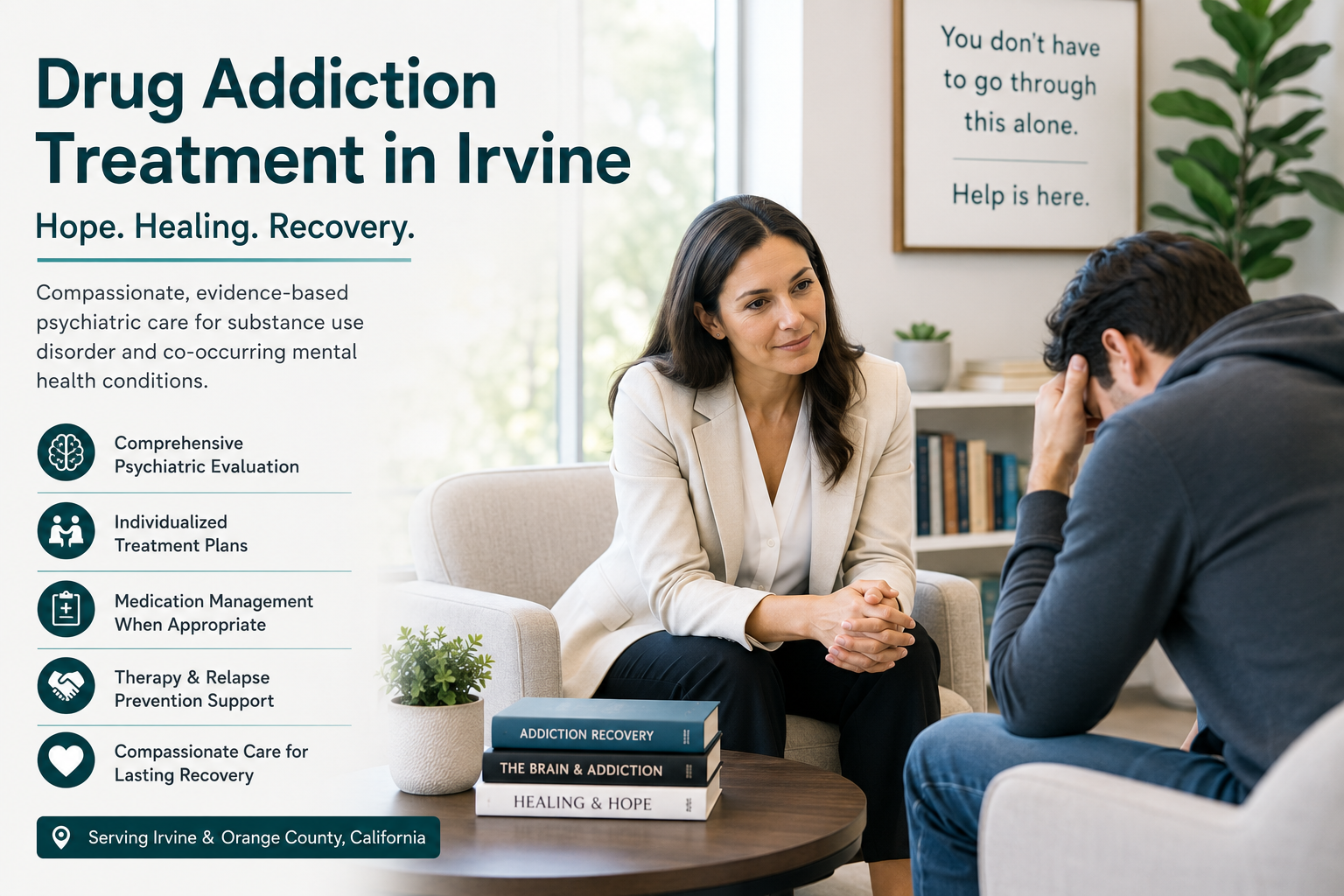
Spectrum Psychiatry provides individualized psychiatric evaluations for patients experiencing substance use concerns, cravings, mood symptoms, anxiety, depression, ADHD, trauma, insomnia, or uncertainty about how these conditions may be connected.
Treatment recommendations are based on each patient's substance use history, psychiatric symptoms, medical risks, functioning, safety needs, and personal recovery goals.
- ✓ Comprehensive psychiatric evaluation
- ✓ Substance use and safety assessment
- ✓ Evaluation of co-occurring mental health conditions
- ✓ Medication management when clinically appropriate
- ✓ Individualized treatment planning
- ✓ Relapse prevention and ongoing monitoring
- ✓ Coordination with therapists and addiction programs
- ✓ Referral to higher levels of care when needed
- ✓ Serving Irvine and Orange County
Final Thoughts
Drug addiction can feel overwhelming, but it is not hopeless. Effective treatment begins with an honest evaluation of substance use, safety risks, physical health, emotional symptoms, and the conditions that may be contributing to continued use.
Some patients can begin recovery through outpatient psychiatric care, while others require detoxification, intensive outpatient treatment, residential care, or hospitalization. Selecting the appropriate level of care is an essential part of safe treatment.
With individualized care, evidence-based treatment, reliable support, and ongoing follow-up, meaningful recovery and improved quality of life are possible.
Medical disclaimer: This article is provided for general educational purposes and does not replace individualized medical, psychiatric, or addiction treatment. Spectrum Psychiatry may not provide every level of addiction care described in this article. Patients may be referred to detoxification, residential, inpatient, emergency, or other specialized services when clinically necessary.
Emergency warning: Call emergency services immediately for suspected overdose, stopped or slowed breathing, loss of consciousness, seizures, severe withdrawal, chest pain, suicidal behavior, psychosis, or immediate danger to the patient or others.