
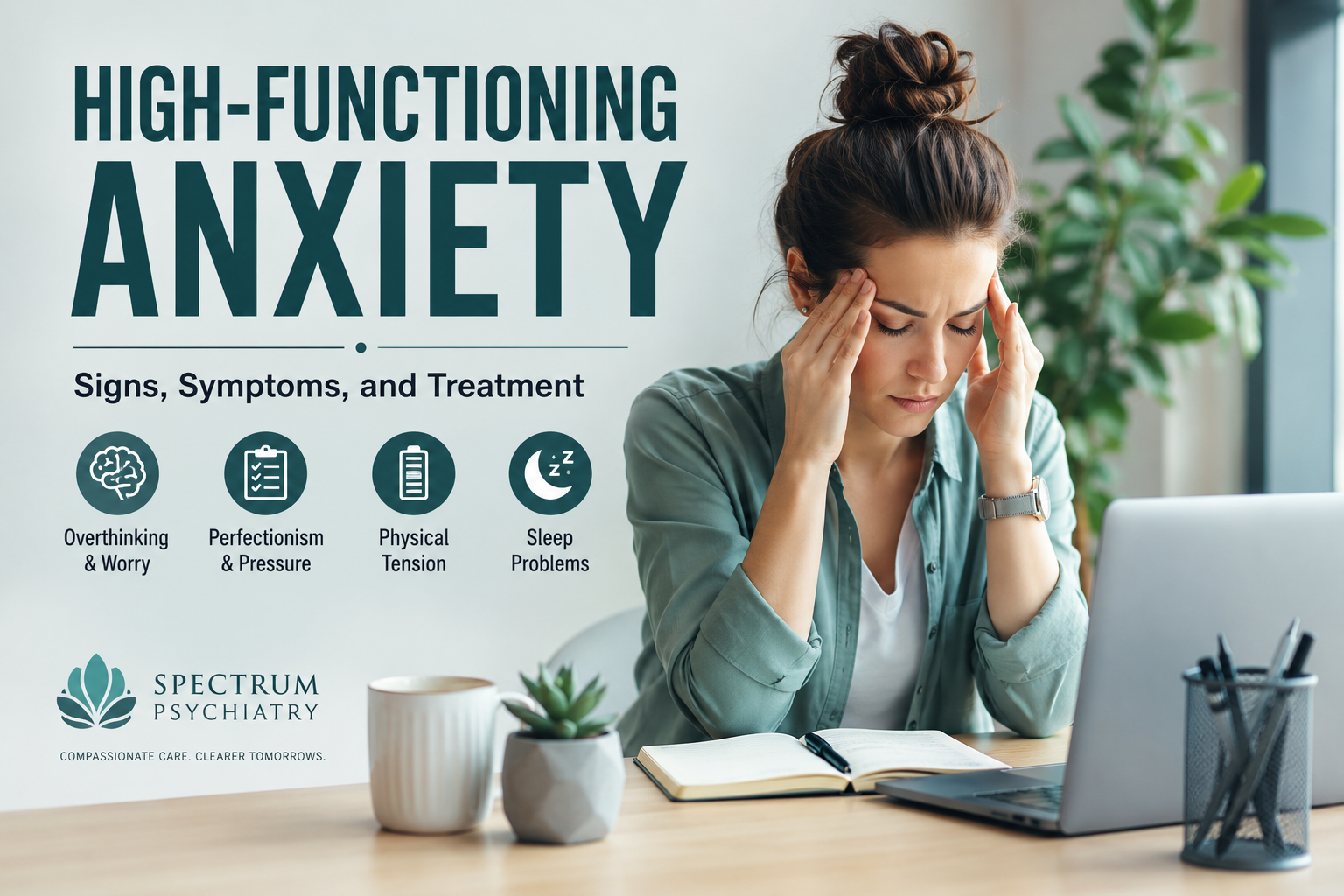
How to Recognize High-Functioning Anxiety: Signs, Symptoms, and Treatment
Understanding hidden anxiety, perfectionism, overthinking, physical stress symptoms, and when professional support may be helpful.

This article has been reviewed for educational and clinical accuracy and discusses anxiety symptoms, perfectionism, overthinking, emotional distress, and treatment options.
Some people with anxiety appear calm, capable, productive, and highly successful. They meet deadlines, take care of their families, maintain relationships, and may even be praised for being organized and dependable. Internally, however, they may experience constant worry, fear of failure, racing thoughts, physical tension, and difficulty relaxing.
The term high-functioning anxiety is often used to describe this experience. It is not a formal psychiatric diagnosis, but it may describe a pattern in which anxiety remains hidden because the person continues to function well on the outside.
What Is High-Functioning Anxiety?
High-functioning anxiety generally refers to anxiety symptoms in someone who continues to manage work, education, family life, and daily responsibilities. Their anxiety may even appear to motivate productivity, preparation, punctuality, and achievement.
Despite outward success, the person may feel overwhelmed, mentally exhausted, or unable to stop worrying. They may believe that slowing down will lead to failure, criticism, disappointment, or loss of control.
Important Clinical Note
High-functioning anxiety is not listed as a separate diagnosis in the DSM-5-TR. A professional evaluation may instead identify generalized anxiety disorder, social anxiety disorder, panic disorder, obsessive-compulsive symptoms, trauma-related symptoms, depression, ADHD, or another condition.
Common Signs of High-Functioning Anxiety
The signs may be easy to miss because many behaviors are socially rewarded. A person may be described as ambitious, prepared, detail-oriented, responsible, or hardworking.
- • Constant overthinking and mental reviewing
- • Perfectionism and fear of making mistakes
- • Difficulty saying no to requests
- • Fear of disappointing other people
- • Excessive preparation for ordinary situations
- • Trouble delegating responsibilities
- • Repeatedly checking work for errors
- • Needing reassurance from others
- • Feeling uncomfortable during rest or free time
- • Appearing calm while feeling anxious internally
Emotional Symptoms
One of the defining characteristics of high-functioning anxiety is that emotional distress is often hidden. Friends, coworkers, and even family members may assume everything is fine because the individual continues to perform well. Internally, however, the emotional experience may be exhausting.
Many people report feeling as though their mind never truly rests. Even after accomplishing important goals, they quickly begin worrying about the next responsibility or potential mistake. Instead of feeling satisfied, they often experience temporary relief before anxiety returns.
- • Persistent worry
- • Fear of failure
- • Fear of disappointing others
- • Self-criticism
- • Feeling "never good enough"
- • Difficulty enjoying accomplishments
- • Irritability
- • Feeling guilty while resting
- • Constant need for reassurance
- • Imposter syndrome
Physical Symptoms
Anxiety affects both the mind and the body. Continuous activation of the body's stress response may contribute to a variety of physical symptoms that are sometimes mistaken for unrelated medical problems.
Although these symptoms are common in anxiety disorders, every new or concerning physical symptom should be evaluated by a qualified healthcare professional to rule out medical conditions.
- • Muscle tension
- • Neck and shoulder pain
- • Frequent headaches
- • Jaw clenching or teeth grinding
- • Fatigue despite sleeping
- • Difficulty falling asleep
- • Racing heartbeat
- • Sweating
- • Stomach discomfort
- • Digestive problems
How High-Functioning Anxiety Affects Work
Many individuals with high-functioning anxiety become highly successful professionals. Their anxiety often pushes them to prepare extensively, double-check details, arrive early, and meet deadlines consistently.
While these behaviors may lead to career success, they can also increase the risk of chronic stress and burnout. Over time, maintaining exceptionally high standards becomes emotionally and physically exhausting.
- • Working long hours
- • Difficulty delegating tasks
- • Perfectionism
- • Fear of criticism
- • Constant checking of completed work
- • Avoiding vacations or breaks
- • Burnout
Burnout and High-Functioning Anxiety
High achievement does not protect someone from anxiety. Constant pressure to perform can eventually result in emotional exhaustion, decreased concentration, reduced motivation, physical fatigue, and declining mental health. Seeking support early may help prevent long-term burnout.
How Anxiety Affects Relationships
Anxiety can influence communication, emotional closeness, and interpersonal relationships. Some people become overly accommodating because they fear conflict or rejection, while others repeatedly seek reassurance from partners, friends, or family members.
Over time, constantly trying to meet everyone's expectations may become emotionally draining and contribute to resentment or emotional fatigue.
- • Difficulty saying no
- • Fear of conflict
- • Reassurance seeking
- • Overthinking conversations
- • Worrying about others' opinions
- • Emotional exhaustion
Sleep Problems
Sleep difficulties are among the most common complaints. Many individuals report that their minds become busiest at bedtime, making it difficult to fall asleep or stay asleep throughout the night.
Poor sleep may increase irritability, reduce concentration, worsen anxiety symptoms, and create a cycle in which anxiety and sleep problems reinforce one another.
Risk Factors
High-functioning anxiety does not have a single cause. Instead, it usually develops through a combination of biological, psychological, and environmental factors. Some individuals are naturally more prone to anxiety, while others develop anxious thinking patterns after years of stress or difficult life experiences.
Although everyone experiences anxiety occasionally, persistent anxiety that interferes with well-being deserves professional attention. Early recognition may reduce the risk of burnout, depression, and chronic stress.
- • Family history of anxiety disorders
- • Childhood adversity or trauma
- • Chronic workplace stress
- • Academic pressure
- • High personal expectations
- • Perfectionistic personality traits
- • Poor sleep habits
- • Excessive caffeine use
High-Functioning Anxiety vs. Generalized Anxiety Disorder
High-functioning anxiety is not a formal diagnosis. During a psychiatric evaluation, some individuals who describe high-functioning anxiety may ultimately meet criteria for Generalized Anxiety Disorder (GAD) or another anxiety disorder.
| High-Functioning Anxiety | Generalized Anxiety Disorder |
|---|---|
| Often hidden from others | Symptoms are usually more apparent |
| Productivity is often maintained | Daily functioning may become impaired |
| Perfectionism commonly present | Excessive uncontrollable worry |
| Success may hide symptoms | Symptoms are often easier to recognize |
When Should You Seek Professional Help?
Consider seeking a professional evaluation if anxiety begins to affect your quality of life or emotional well-being.
- • Constant worrying
- • Difficulty sleeping
- • Panic attacks
- • Burnout
- • Depression symptoms
- • Trouble concentrating
- • Relationship problems
- • Physical symptoms without another explanation
- • Anxiety interfering with work or school
Treatment Options
Effective treatment depends on each individual's symptoms, medical history, and personal goals. A comprehensive psychiatric evaluation helps determine the most appropriate treatment plan.
- ✓ Comprehensive psychiatric evaluation
- ✓ Medication management when appropriate
- ✓ Cognitive Behavioral Therapy (CBT)
- ✓ Stress management strategies
- ✓ Sleep hygiene education
- ✓ Regular physical activity
- ✓ Mindfulness and relaxation techniques
- ✓ Individualized treatment planning
Frequently Asked Questions
Is high-functioning anxiety a real diagnosis?
No. It is an informal term rather than an official DSM-5-TR diagnosis. However, the symptoms are real and may warrant professional evaluation.
Can successful people have anxiety?
Absolutely. Many successful professionals, students, business owners, and parents experience significant anxiety while continuing to meet daily responsibilities.
Can medication help?
Medication may be recommended for some individuals depending on symptom severity, medical history, and overall treatment goals. Decisions about medication should always be made with a qualified healthcare professional.
Is therapy effective?
Yes. Cognitive Behavioral Therapy and other evidence-based psychotherapies are effective treatments for many anxiety disorders and may help reduce worry, perfectionism, and avoidance.
Anxiety Treatment in Irvine and Orange County
Spectrum Psychiatry provides comprehensive psychiatric evaluations and individualized treatment planning for anxiety, depression, ADHD, mood disorders, trauma-related conditions, sleep concerns, and other mental health conditions affecting adults and adolescents.
- ✓ Comprehensive psychiatric evaluations
- ✓ Anxiety assessments
- ✓ Medication management when appropriate
- ✓ Individualized treatment planning
- ✓ Evidence-based care
- ✓ Serving Irvine & Orange County
Medical Disclaimer: This article is intended for educational purposes only and should not replace individualized medical advice, diagnosis, or treatment.