
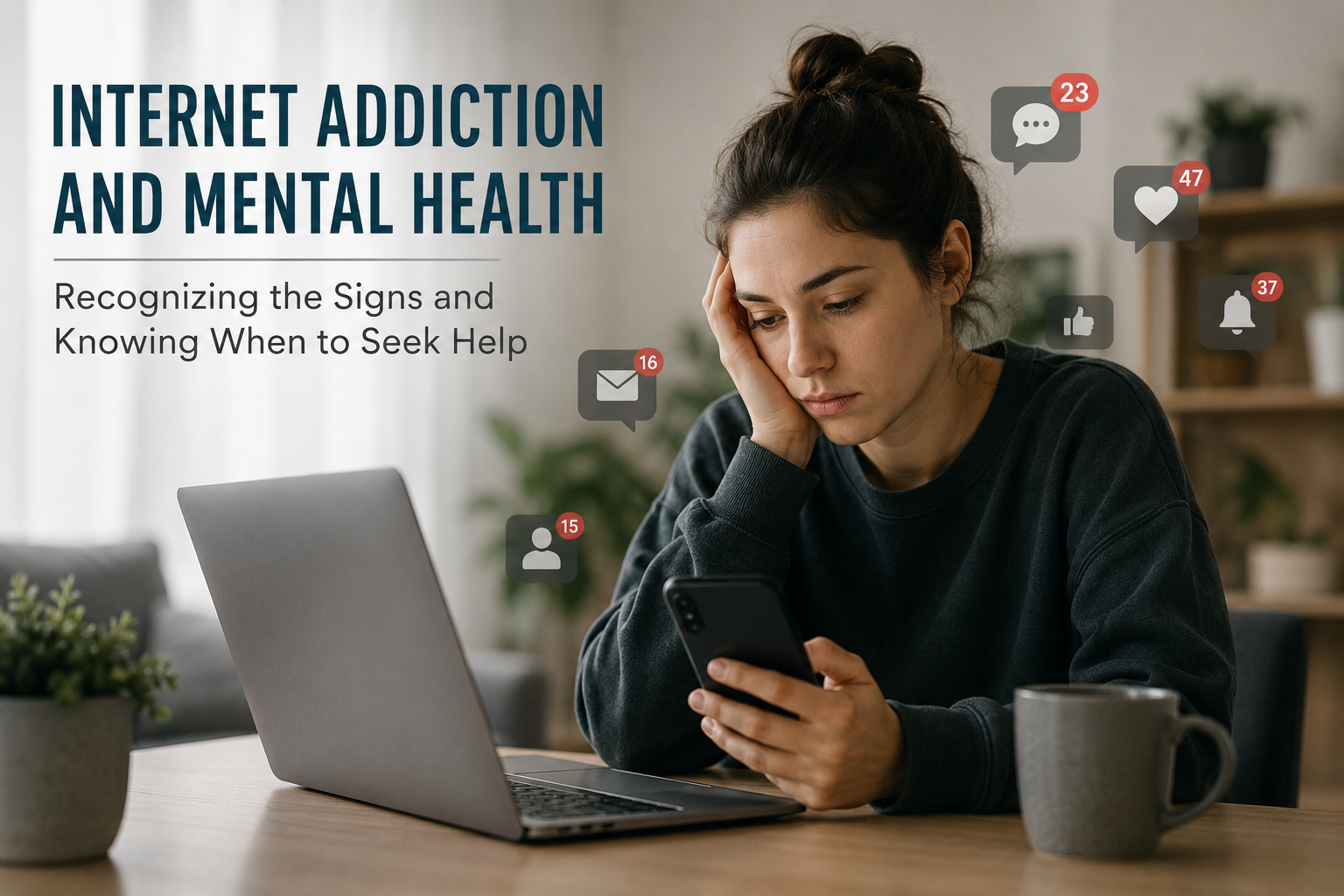

The internet has transformed modern life, making communication, education, work, and entertainment more accessible than ever before. While technology provides countless benefits, excessive internet use can sometimes interfere with emotional well-being, productivity, relationships, and overall quality of life.
Mental health professionals throughout Irvine, Orange County, and California are increasingly seeing adolescents and adults who struggle to manage screen time, social media use, online gaming, and other internet-related behaviors. When internet use begins to negatively affect daily functioning, it may be time to evaluate whether professional support is needed.
What Is Internet Addiction?
Internet addiction refers to excessive or compulsive internet use that becomes difficult to control despite negative consequences. Individuals may spend increasing amounts of time online while neglecting responsibilities, relationships, sleep, physical health, or personal goals.
- Compulsive social media use
- Excessive online gaming
- Constant smartphone checking
- Video streaming for extended periods
- Compulsive web browsing
- Difficulty disconnecting from devices
Common Signs of Internet Addiction
Many people spend significant time online for work or school. However, internet addiction often involves a loss of control and increasing interference with daily life.
- Spending more time online than intended
- Difficulty reducing screen time
- Feeling restless when unable to access the internet
- Neglecting responsibilities
- Declining academic or work performance
- Withdrawal from family and friends
- Using the internet to escape emotional distress
How Internet Addiction Affects Mental Health
Excessive internet use has been associated with increased anxiety, depression, loneliness, emotional dysregulation, and reduced self-esteem. Constant exposure to social comparison and online stimulation may contribute to chronic stress and emotional fatigue.
Social media platforms can create unrealistic expectations and increase feelings of inadequacy. Individuals may compare themselves to carefully curated online content, leading to lower self-confidence and increased emotional distress.
Internet Addiction in Teenagers
Adolescents may be particularly vulnerable because social relationships, identity development, and emotional regulation are still evolving. Excessive screen time can affect concentration, academic performance, sleep quality, and social development.
Parents may notice irritability when devices are removed, declining grades, social withdrawal, or increased conflict surrounding screen time rules.
Sleep Problems and Screen Time
One of the most common consequences of excessive internet use is poor sleep. Late-night screen exposure can suppress melatonin production, delay sleep onset, and reduce overall sleep quality.
Chronic sleep deprivation may worsen anxiety, depression, attention difficulties, irritability, and daytime fatigue.
When Internet Use Becomes a Mental Health Concern
Not every heavy internet user has an addiction. However, internet use may become problematic when it significantly interferes with relationships, work, school performance, physical health, or emotional well-being.
Treatment Options
Treatment often focuses on identifying underlying emotional factors that contribute to excessive internet use. Anxiety, depression, ADHD, loneliness, stress, and low self-esteem may all play a role.
- Cognitive Behavioral Therapy (CBT)
- Screen-time management strategies
- Family support and education
- Treatment of co-occurring mental health conditions
- Development of healthier coping skills
Healthy Strategies for Managing Screen Time
- Set daily screen-time limits
- Create device-free periods during the day
- Avoid screens before bedtime
- Engage in physical activity
- Prioritize face-to-face social interactions
- Practice mindfulness and stress management
When to Seek Professional Help
If internet use is causing significant distress, affecting relationships, interfering with work or school, or contributing to anxiety or depression, professional mental health support may be beneficial.
At Spectrum Psychiatry, we provide comprehensive psychiatric evaluations and personalized treatment plans for individuals experiencing anxiety, depression, ADHD, behavioral concerns, and technology-related mental health challenges throughout Irvine, Orange County, and California.
Final Thoughts
Technology is an important part of modern life, but balance remains essential. Recognizing the warning signs of internet addiction early can help individuals develop healthier habits, improve emotional well-being, and maintain stronger relationships both online and offline.