
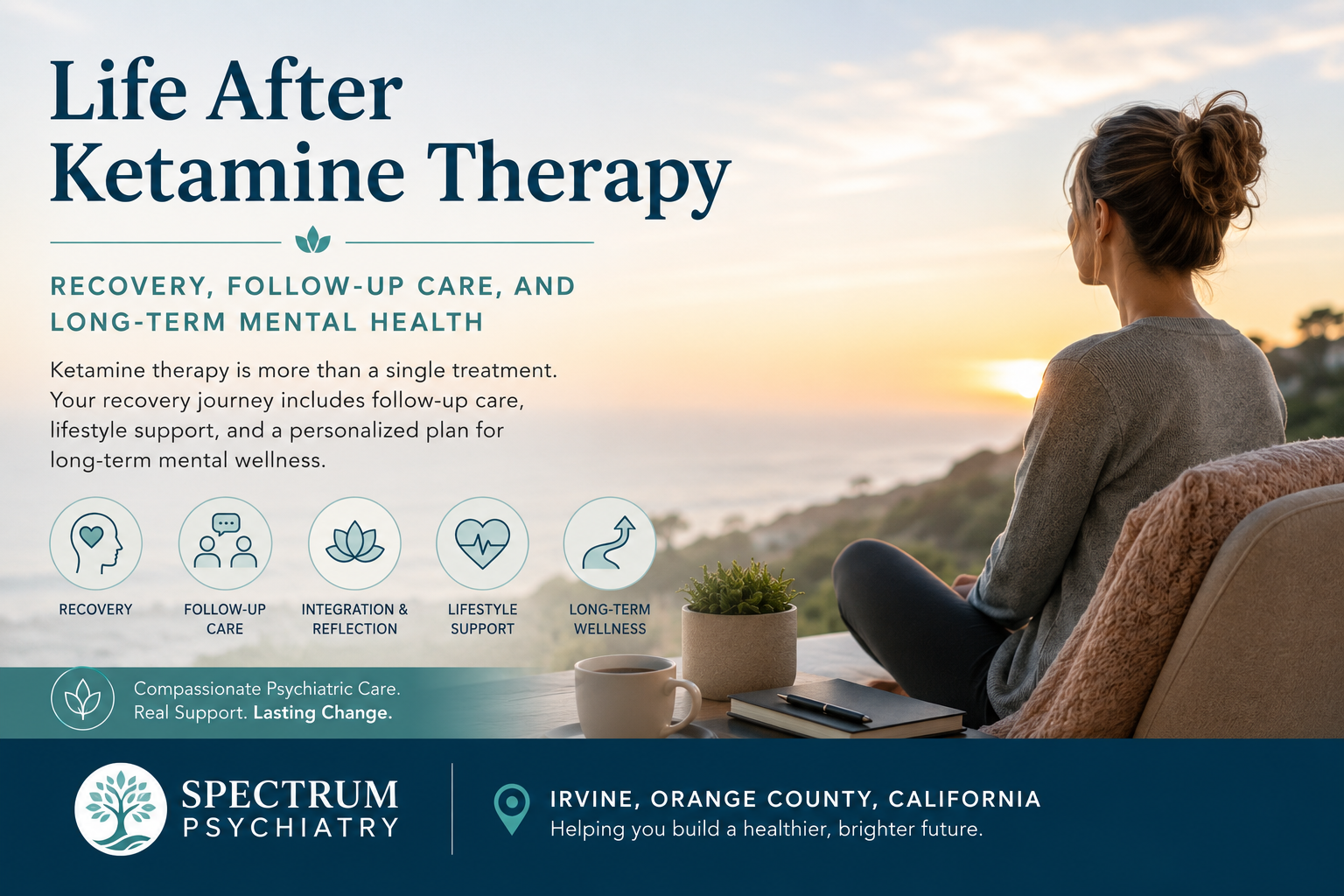
Life After Ketamine Therapy: Recovery, Follow-Up Care, and Long-Term Mental Health
Ketamine therapy can be an important option for some patients struggling with treatment-resistant depression and other mental health concerns. Many people spend time learning what ketamine therapy is, how it works, and whether they may be a candidate. But one of the most important questions comes after treatment begins: what happens after ketamine therapy?
Life after ketamine therapy is not only about what happens during the appointment. It also includes recovery time, follow-up visits, lifestyle support, medication management, therapy planning, and long-term mental health care. At Spectrum Psychiatry in Irvine, Orange County, our goal is to help patients understand the full treatment journey, not just the treatment session itself.
For patients in Irvine and nearby California communities, ketamine therapy may be part of a broader plan for depression, anxiety, trauma-related symptoms, or other psychiatric concerns. The best outcomes often come from combining treatment with ongoing psychiatric care, healthy routines, and careful follow-up.
What to Expect Immediately After Ketamine Therapy
Immediately after a ketamine therapy session, patients are usually monitored until they are ready to leave safely. Some people may feel calm, reflective, tired, emotionally open, or slightly disoriented for a period of time. Because ketamine can affect perception, coordination, and alertness, patients are typically advised not to drive after treatment.
Your provider may recommend arranging transportation, resting for the remainder of the day, avoiding alcohol or sedating substances, and giving yourself time before returning to demanding tasks. The exact aftercare instructions depend on your treatment plan, health history, and how you respond to ketamine therapy.
At Spectrum Psychiatry in Irvine, patient safety and comfort are central parts of care. Follow-up guidance is designed to help patients transition from the treatment experience back into daily life with clarity and support.
Emotional Changes After Treatment
Some patients notice emotional changes after ketamine therapy. These changes may include a sense of relief, emotional distance from painful thoughts, improved perspective, or a temporary reduction in depressive symptoms. Others may feel tired or unsure at first and notice changes more gradually.
It is important to remember that each patient responds differently. Ketamine therapy is not always a single-session solution, and response can vary based on diagnosis, severity of symptoms, medical history, medications, stress level, sleep, and the presence of other mental health conditions.
This is why follow-up care matters. A psychiatrist can help track symptoms over time, identify patterns, and adjust the broader treatment plan when needed.
Why Follow-Up Care Is Important
Follow-up care after ketamine therapy helps determine whether the treatment is helping and what additional support may be needed. During follow-up visits, your provider may ask about mood, anxiety, sleep, energy, motivation, side effects, suicidal thoughts, medication changes, and daily functioning.
These visits are also a time to discuss whether symptoms are improving, staying the same, or returning. Some patients may need a series of treatments, while others may need maintenance care or adjustments to their psychiatric treatment plan.
Spectrum Psychiatry provides ketamine therapy follow-up care in Irvine and Orange County with a focus on safety, individualized planning, and long-term mental health stability.
Integrating the Experience
Many patients find it helpful to reflect after ketamine therapy. This may include journaling, therapy, quiet time, mindfulness, gentle movement, or discussing the experience with a trusted clinician. Integration does not mean forcing a specific meaning from the treatment. It means giving yourself space to process any emotional or psychological shifts that may occur.
For some patients, ketamine therapy may create a window of improved flexibility or emotional openness. That window can be an opportunity to strengthen healthy habits, reconnect with treatment goals, and engage more fully in therapy or lifestyle changes.
If depression, anxiety, PTSD, or chronic stress have made change feel impossible, even a small improvement can become a meaningful opening for recovery. Follow-up care helps patients use that opening wisely.
Does Ketamine Therapy Replace Therapy or Medication?
Ketamine therapy is usually not meant to replace all other mental health care. For many patients, it works best as part of a broader plan that may include therapy, medication management, lifestyle changes, sleep support, and ongoing psychiatric care.
A patient may still benefit from antidepressants, mood stabilizers, anxiety treatment, ADHD care, trauma-focused therapy, or other supports depending on their diagnosis and symptoms. Your psychiatrist can help determine how ketamine therapy fits into the overall treatment plan.
You can learn more about ketamine treatment options at Spectrum Psychiatry.
Maintenance Care After Ketamine Therapy
Some patients may be advised to consider maintenance care after an initial course of ketamine therapy. Maintenance care may be considered when a patient responds well but symptoms begin to return over time. The need for maintenance treatment varies from person to person.
Maintenance planning should always be individualized. Factors may include diagnosis, severity of symptoms, past treatment response, medication history, relapse risk, safety concerns, and overall functioning.
At Spectrum Psychiatry in Irvine, maintenance care decisions are made carefully and collaboratively. The goal is not to provide more treatment than necessary, but to support meaningful improvement and reduce the risk of symptom relapse.
Lifestyle Habits That Support Long-Term Results
Life after ketamine therapy often involves strengthening daily habits that support mental health. Treatment may create an opportunity for change, but long-term progress is supported by what happens between appointments.
- Keeping a consistent sleep schedule
- Following medication instructions carefully
- Attending follow-up appointments
- Participating in therapy when recommended
- Reducing alcohol or substance use
- Building supportive relationships
- Using stress management tools
- Engaging in gentle physical activity when appropriate
- Tracking mood changes over time
These habits may sound simple, but they can make a meaningful difference. Depression and anxiety often disrupt sleep, motivation, structure, and connection. Rebuilding these areas can help support the benefits of treatment.
Ketamine Therapy and Treatment-Resistant Depression
Many patients who explore ketamine therapy have already tried other treatments for depression. Treatment-resistant depression can feel discouraging, especially when multiple medications or therapy approaches have not provided enough relief.
Ketamine therapy may offer another option for selected patients, but it still requires careful evaluation and follow-up. The treatment experience is only one part of care. Long-term planning helps patients continue moving toward stability and improved functioning.
Spectrum Psychiatry provides psychiatric care for patients in Irvine, Orange County, and surrounding California communities who are seeking thoughtful options for depression and other mental health concerns.
When to Contact Your Provider After Treatment
Patients should contact their provider if they experience concerning symptoms, worsening depression, suicidal thoughts, severe anxiety, unusual mood changes, persistent confusion, concerning side effects, or any safety concerns after ketamine therapy.
It is also important to contact your provider if symptoms improve and then begin to return. Early communication allows your care team to adjust the treatment plan before symptoms become more severe.
Mental health care works best when patients and providers stay in communication. Follow-up is not a formality. It is a key part of recovery.
Life After Ketamine Therapy in Irvine and Orange County
Patients in Irvine and Orange County often manage demanding work, school, family, and personal responsibilities. Mental health treatment must fit into real life. That is why aftercare, follow-up, and long-term planning are so important.
Spectrum Psychiatry helps patients understand what to expect after ketamine therapy and how to support progress between sessions. Whether you are considering ketamine therapy for treatment-resistant depression or are already in treatment, a personalized care plan can help guide the next steps.
If you are searching for a psychiatrist in Irvine, CA, Spectrum Psychiatry provides compassionate psychiatric care for adults in Irvine, Orange County, and nearby California communities.
Related Articles

This article has been medically reviewed by Cuneyt Tegin to support accuracy, clarity, and alignment with current mental health education standards.
Last reviewed: June 2026
Ketamine Therapy Follow-Up Care in Irvine
If you are considering ketamine therapy or need support after treatment, Spectrum Psychiatry can help you explore personalized psychiatric care options in Irvine and Orange County.
Contact Spectrum Psychiatry