
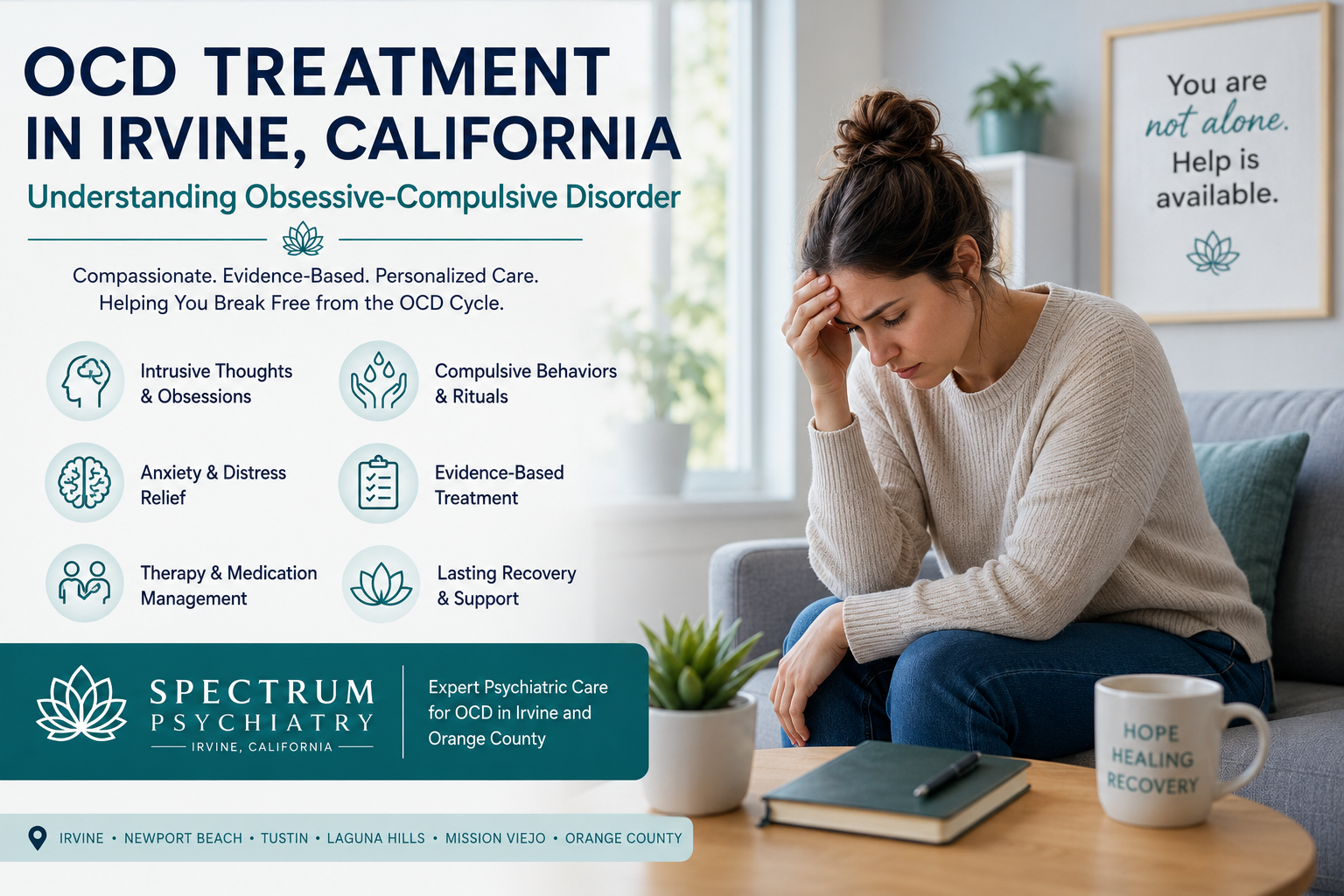
OCD Treatment in Irvine, California: Understanding Obsessive-Compulsive Disorder
Obsessive-Compulsive Disorder, commonly known as OCD, is a mental health condition that can cause unwanted intrusive thoughts, repetitive behaviors, and significant emotional distress. While many people occasionally double-check things or prefer routines, OCD is more persistent and can interfere with daily life, relationships, school, work, and overall well-being.
For individuals and families in Irvine, Orange County, and surrounding California communities, understanding OCD symptoms is an important first step toward getting the right support. OCD is highly treatable, and professional psychiatric care can help patients better understand symptoms, reduce distress, and improve daily functioning.
Spectrum Psychiatry provides compassionate psychiatric evaluation and treatment support for patients experiencing OCD, anxiety, and related mental health concerns in Irvine, California.
What Is OCD?
OCD involves two main parts: obsessions and compulsions. Obsessions are unwanted, intrusive thoughts, images, or urges that cause anxiety or distress. Compulsions are repetitive behaviors or mental rituals a person feels driven to perform in order to reduce anxiety or prevent something feared from happening.
OCD is not simply being organized, clean, or careful. It can be a painful and time-consuming condition that makes people feel trapped in cycles of fear, doubt, and temporary relief.
Common Obsessions in OCD
Obsessions can vary from person to person. They are often distressing because they feel unwanted, repetitive, and difficult to control.
- Fear of contamination, germs, or illness
- Fear of harming oneself or others
- Fear of making a serious mistake
- Unwanted intrusive thoughts
- Excessive doubt or uncertainty
- Need for symmetry, order, or exactness
- Fear that something bad will happen if a ritual is not done
- Distressing religious, moral, or taboo thoughts
- Concerns about safety, locks, appliances, or doors
Common Compulsions in OCD
Compulsions are actions or mental rituals performed to reduce the anxiety caused by obsessions. Although compulsions may provide short-term relief, they often strengthen the OCD cycle over time.
- Repeated handwashing or cleaning
- Checking locks, appliances, or switches repeatedly
- Counting, tapping, or repeating words silently
- Arranging objects in a specific way
- Seeking reassurance from others
- Repeating routines until they feel “right”
- Avoiding situations that trigger obsessive thoughts
- Mental reviewing or replaying events
- Excessive researching for certainty
OCD vs. Everyday Worry
Everyone experiences worries from time to time. The difference with OCD is the intensity, repetition, and level of interference. OCD thoughts often feel intrusive and unwanted, and the person may feel compelled to perform rituals even when they understand the fear may not be realistic.
OCD can take up significant time each day and may interfere with work, school, family responsibilities, relationships, or normal routines. When symptoms begin affecting daily life, professional evaluation can be helpful.
OCD and Anxiety Disorders
OCD is closely related to anxiety because obsessions often create intense fear or discomfort. Many people with OCD also experience generalized anxiety, panic symptoms, social anxiety, depression, or sleep difficulties.
A comprehensive psychiatric evaluation can help determine whether OCD is occurring alone or alongside another mental health condition. This matters because treatment plans should address the full picture, not only one symptom.
If anxiety is also affecting your daily life, you may find our Anxiety Treatment in Irvine page helpful.
How OCD Can Affect Daily Life
OCD can affect many areas of life. A person may spend excessive time checking, cleaning, repeating, or mentally reviewing events. Others may avoid certain places, objects, people, or situations because they trigger obsessive fears.
In work or school settings, OCD may lead to difficulty concentrating, missed deadlines, perfectionism, or spending too much time on tasks. In relationships, reassurance-seeking, avoidance, or irritability may create stress and misunderstanding.
OCD in Children, Teens, and Adults
OCD can affect children, teenagers, and adults. In children and teens, symptoms may appear as repeated questions, bedtime rituals, school avoidance, perfectionism, or distress when routines are interrupted. Adults may experience intrusive thoughts, checking behaviors, cleaning rituals, or mental compulsions that are hidden from others.
Because OCD symptoms are sometimes embarrassing or misunderstood, many people delay seeking help. However, treatment can reduce symptoms and improve quality of life at any age.
How OCD Is Diagnosed
Diagnosing OCD involves a detailed review of symptoms, emotional history, daily functioning, medical history, and any co-occurring mental health concerns. A psychiatric evaluation may explore the frequency of obsessions, the type of compulsions, triggers, avoidance behaviors, and how much time symptoms take each day.
At Spectrum Psychiatry, evaluation focuses on understanding each patient’s unique experience and developing a personalized treatment plan that supports long-term mental health.
Treatment Options for OCD
OCD is treatable. The most effective treatment plan depends on the severity of symptoms, co-occurring conditions, treatment history, and the patient’s goals.
- Comprehensive psychiatric evaluation
- Education about OCD symptoms and treatment
- Therapy recommendations, including ERP when appropriate
- Medication management when clinically indicated
- Support for anxiety, depression, or sleep concerns
- Relapse prevention strategies
- Ongoing psychiatric follow-up
Medication Management for OCD
Medication can be helpful for some patients with OCD, especially when symptoms are moderate to severe or significantly interfere with daily functioning. Medication may help reduce the intensity of obsessive thoughts, anxiety, and compulsive urges.
Medication decisions should always be made with a qualified psychiatric provider. Treatment should be monitored carefully and adjusted based on response, side effects, safety, and individual goals.
You can also learn more about our psychiatrist services in Irvine, CA for broader psychiatric care in Orange County.
Why Local OCD Treatment in Irvine Matters
Seeking OCD treatment locally in Irvine can make care more accessible and consistent. Patients in Irvine and Orange County often benefit from psychiatric support that understands local community needs, school pressures, work demands, and family responsibilities.
Spectrum Psychiatry serves patients throughout Irvine and nearby Orange County communities, including Newport Beach, Costa Mesa, Tustin, Lake Forest, Laguna Hills, Mission Viejo, Santa Ana, and surrounding California areas.
OCD Treatment in Irvine and Orange County
If obsessive thoughts, compulsive behaviors, intrusive fears, or repetitive rituals are affecting your daily life, professional support can help. OCD treatment can provide clarity, structure, and tools for reducing symptoms over time.
Spectrum Psychiatry provides psychiatric evaluation and treatment support for OCD, anxiety disorders, depression, and related mental health concerns in Irvine, Orange County, and surrounding California communities.

Medically Reviewed By
Dr. Cuneyt Tegin
Psychiatrist
This article has been medically reviewed by Dr. Cuneyt Tegin to ensure accuracy and alignment with current evidence-based psychiatric care and OCD treatment practices.
Last reviewed: June 2026
OCD Treatment in Irvine & Orange County
If OCD symptoms are interfering with your thoughts, routines, relationships, or daily life, Spectrum Psychiatry can help you explore evaluation and treatment options.
Contact Spectrum Psychiatry