
Panic Attack vs Anxiety Attack: What's the Difference?
Understanding sudden panic symptoms, ongoing anxiety, physical sensations, triggers, and treatment options in Irvine and Orange County.

This article has been reviewed for educational and clinical accuracy and discusses panic attacks, anxiety disorders, physical symptoms, differential diagnosis, psychiatric evaluation, and treatment planning.
A racing heart, tight chest, shortness of breath, dizziness, or a sudden feeling that something terrible is about to happen can be frightening.
Many people experiencing these symptoms search online for phrases such as "panic attack symptoms," "anxiety attack," or "psychiatrist near me" because they are unsure whether the symptoms are caused by anxiety, a panic attack, or a medical problem.
Although the terms panic attack and anxiety attack are often used interchangeably in everyday conversation, they do not always describe the same pattern of symptoms.
Key Takeaway
Panic attacks usually involve a sudden surge of intense fear and strong physical symptoms. Anxiety often develops more gradually and may involve ongoing worry, tension, restlessness, and anticipation. Both conditions can interfere significantly with everyday life and can be evaluated and treated.
What Is a Panic Attack?
A panic attack is an abrupt episode of intense fear or discomfort. Symptoms can become severe very quickly, sometimes even when there is no obvious danger.
Common panic attack symptoms include:
- ✓ Racing or pounding heartbeat
- ✓ Chest pressure or discomfort
- ✓ Shortness of breath
- ✓ Feeling unable to get enough air
- ✓ Sweating
- ✓ Trembling or shaking
- ✓ Dizziness or lightheadedness
- ✓ Nausea or stomach discomfort
- ✓ Numbness or tingling
- ✓ Feeling detached or unreal
- ✓ Fear of losing control
- ✓ Fear of dying
What Is an Anxiety Attack?
"Anxiety attack" is commonly used to describe periods of intense anxiety, but the experience often develops more gradually than a panic attack.
Anxiety may involve:
- • Persistent worry
- • Restlessness
- • Muscle tension
- • Difficulty concentrating
- • Feeling on edge
- • Irritability
- • Sleep difficulties
- • Fatigue
- • Rapid thoughts
- • Fear about future events
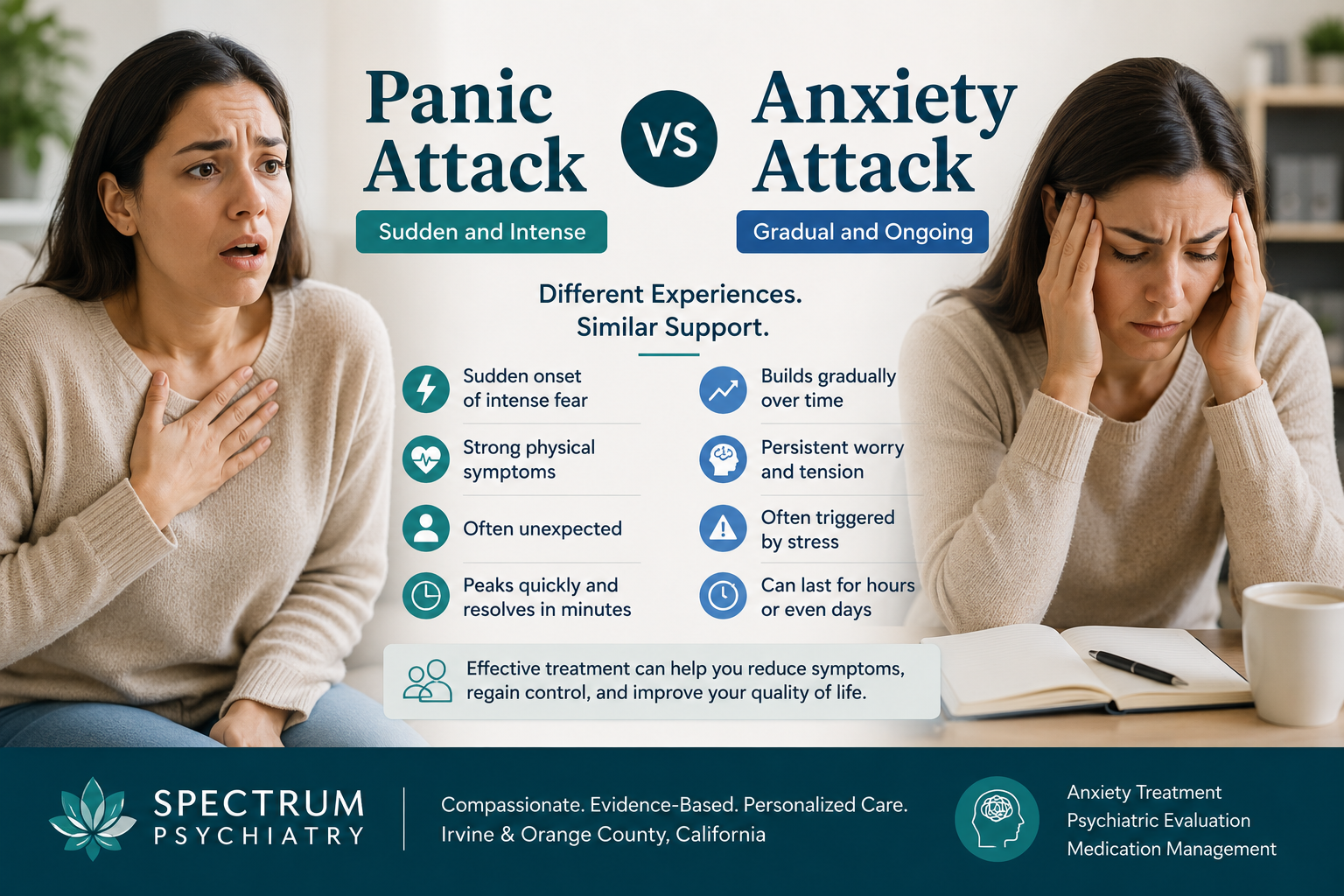
Panic Attack vs Anxiety Attack
| Panic Attack | Anxiety |
|---|---|
| Often begins suddenly | May build gradually |
| Intense physical symptoms are common | Persistent worry may be more prominent |
| May occur unexpectedly | Often associated with ongoing stress or worry |
| Fear may peak rapidly | Symptoms may persist for longer periods |
Why Does a Panic Attack Feel Like a Medical Emergency?
Panic attacks can produce powerful physical sensations involving the heart, breathing, stomach, muscles, and nervous system.
Because chest discomfort, dizziness, shortness of breath, and rapid heartbeat can also occur with medical conditions, new or severe symptoms should not automatically be assumed to be caused by anxiety.
When Physical Symptoms Need Urgent Medical Care
Seek emergency medical care for severe or new chest pain, fainting, severe breathing difficulty, weakness on one side of the body, significant confusion, loss of consciousness, or symptoms suggesting another medical emergency.
What Is Panic Disorder?
Having one panic attack does not necessarily mean someone has panic disorder.
Panic disorder involves recurring unexpected panic attacks and ongoing concern or behavioral changes related to the possibility of having another attack.
The Fear of Having Another Panic Attack
For some people, the most difficult part of panic disorder is not only the attack itself but the fear that another attack may happen unexpectedly.
This may lead to avoidance of:
- • Driving
- • Freeways
- • Airplanes
- • Crowded stores
- • Restaurants
- • Elevators
- • Social events
- • Exercise
- • Being far from home
Can Stress Trigger Panic Attacks?
Stress can contribute to anxiety and panic symptoms, although a panic attack may also occur without an obvious immediate trigger.
Sleep deprivation, caffeine, stimulant use, major life changes, health concerns, relationship stress, work pressure, and substance use may also influence symptoms in some individuals.
When Should You See a Psychiatrist for Panic Attacks?
Consider a psychiatric evaluation if:
- ✓ Panic attacks occur repeatedly
- ✓ You constantly fear another attack
- ✓ You avoid driving, travel, work, or social activities
- ✓ Anxiety is interfering with sleep
- ✓ Symptoms affect work or relationships
- ✓ You frequently visit urgent care because of anxiety symptoms
- ✓ Anxiety is becoming increasingly difficult to control
How Are Panic Attacks Evaluated?
A psychiatric evaluation may include:
- ✓ Description of panic symptoms
- ✓ Frequency and duration of episodes
- ✓ Possible triggers
- ✓ Avoidance behaviors
- ✓ General anxiety symptoms
- ✓ Depression and mood symptoms
- ✓ Sleep patterns
- ✓ Caffeine and stimulant use
- ✓ Alcohol and substance use
- ✓ Current medications
- ✓ Relevant medical history
Panic Attack and Anxiety Treatment
Anxiety treatment is individualized according to the diagnosis, severity, medical history, previous treatment, and patient preferences.
Treatment options may include:
- ✓ Psychiatric evaluation
- ✓ Psychotherapy
- ✓ Cognitive and behavioral strategies
- ✓ Medication management when clinically appropriate
- ✓ Sleep and lifestyle changes
- ✓ Reduction of excessive caffeine or stimulants
- ✓ Treatment of depression or other related conditions
- ✓ Ongoing psychiatric follow-up
Medication Management for Anxiety
Medication is one of the possible treatment options for anxiety and panic disorder.
The appropriate choice depends on the diagnosis, symptom pattern, medical conditions, other medications, substance-use history, side-effect risks, and previous treatment response.
Frequently Asked Questions
What does a panic attack feel like?
A panic attack can feel like a sudden wave of intense fear with racing heartbeat, shortness of breath, chest discomfort, shaking, dizziness, nausea, sweating, or fear of dying or losing control.
Can a panic attack happen without a reason?
Yes. Some panic attacks occur unexpectedly without an obvious immediate trigger.
Can anxiety cause chest pain?
Anxiety may be associated with chest discomfort, muscle tension, rapid breathing, and a racing heart. However, new or severe chest pain should receive appropriate medical evaluation.
Can panic attacks be treated?
Yes. Treatment may include psychotherapy, medication when appropriate, behavioral strategies, and treatment of underlying anxiety or other mental health conditions.
Should I see a psychiatrist for recurring panic attacks?
A psychiatric evaluation may be helpful when panic attacks recur, cause persistent fear, lead to avoidance, or interfere with work, sleep, relationships, driving, or daily activities.
Anxiety and Panic Attack Treatment in Irvine
Spectrum Psychiatry provides individualized psychiatric evaluation and treatment planning for adults experiencing panic attacks, anxiety, persistent worry, sleep difficulties, physical anxiety symptoms, and related concerns.
- ✓ Anxiety evaluation in Irvine
- ✓ Panic attack and panic disorder assessment
- ✓ Psychiatric evaluation
- ✓ Medication management when clinically appropriate
- ✓ Assessment for depression, ADHD, PTSD, and mood disorders
- ✓ Individualized treatment planning
- ✓ Telepsychiatry when clinically appropriate
Finding a Psychiatrist in Irvine and Orange County
If you are searching for a psychiatrist in Irvine, anxiety treatment in Irvine, panic attack treatment in Orange County, or medication management in Irvine, a psychiatric evaluation can help determine what is contributing to your symptoms.
Spectrum Psychiatry serves Irvine and surrounding Orange County communities, with telepsychiatry available when clinically appropriate.
Final Thoughts
Panic attacks can feel overwhelming, particularly when physical symptoms appear suddenly and without warning. Ongoing anxiety can be equally disruptive when worry begins affecting sleep, concentration, relationships, work, or everyday activities.
Understanding the pattern behind the symptoms is the first step. A comprehensive psychiatric evaluation can help distinguish panic disorder from generalized anxiety, depression, medication or substance effects, and other psychiatric or medical conditions.
Medical disclaimer: This article is intended for general educational purposes and does not replace individualized medical or psychiatric evaluation. New or severe chest pain, fainting, serious breathing difficulty, or other concerning physical symptoms require appropriate medical evaluation.