
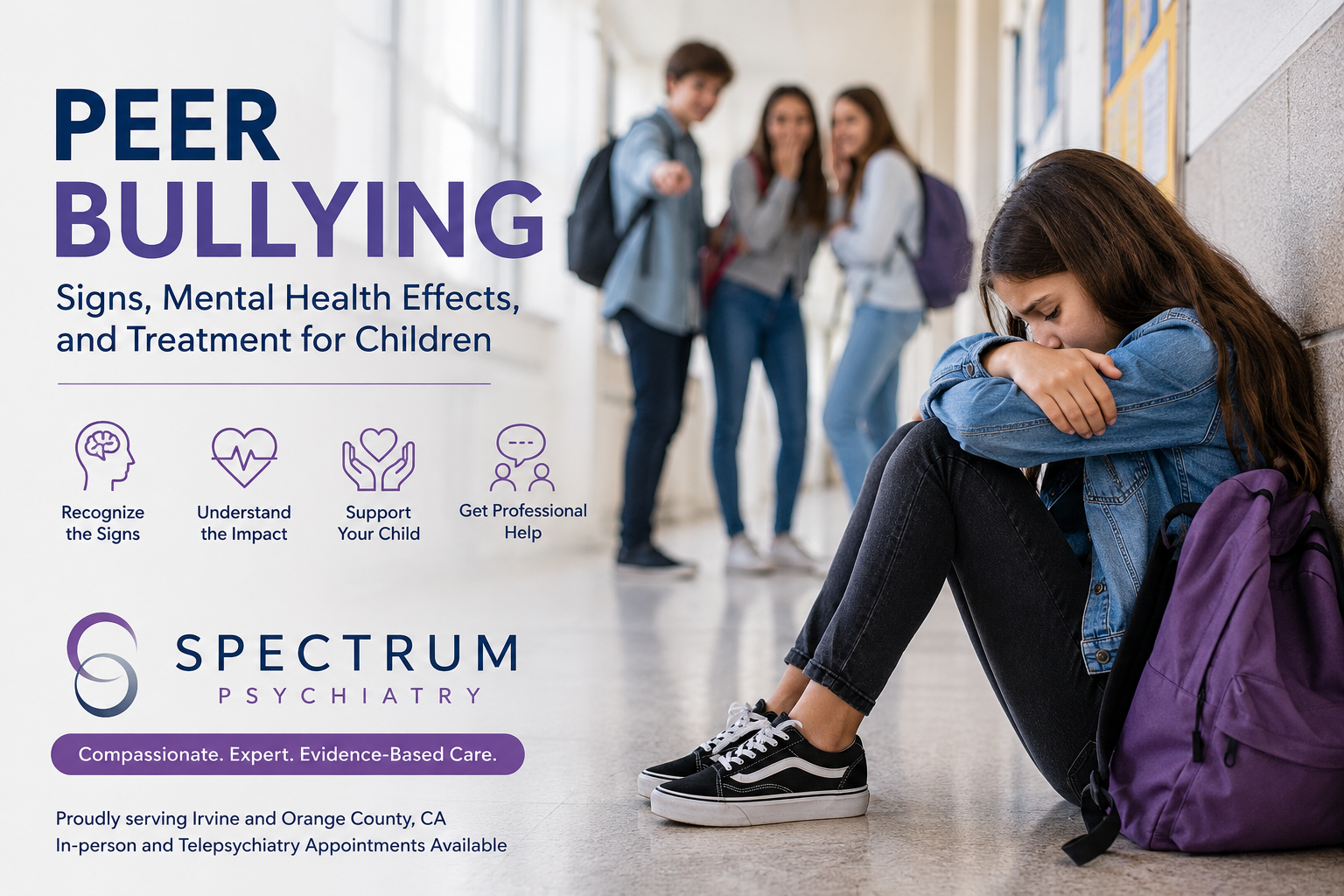
Peer Bullying in Irvine, California: Signs, Mental Health Effects, and How to Help Children and Teens
Understanding school bullying, social exclusion, cyberbullying, warning signs, and mental health support for young people in Irvine and Orange County.

This article has been medically reviewed for educational and clinical accuracy by Ismail Deniz and reflects current evidence-based information about bullying, cyberbullying, child and adolescent mental health, anxiety, depression, and psychiatric support.
Is a Child in Immediate Danger?
Call 911 if a child or teenager is in immediate physical danger, has suffered a serious injury, has been threatened with a weapon, or is experiencing another urgent emergency.
If a young person is talking about suicide, self-harm, hopelessness, or having no reason to live, take the statements seriously. In the United States, call or text 988 for immediate crisis support.
Spectrum Psychiatry is not an emergency response service, crisis hotline, school disciplinary authority, or law enforcement agency.
Peer bullying can affect a child's sense of safety, confidence, education, friendships, and emotional well-being. Although disagreements and occasional conflicts are a normal part of growing up, bullying involves unwanted aggressive behavior, repetition or a likelihood of repetition, and an actual or perceived imbalance of power.
Bullying may happen at school, during extracurricular activities, on transportation, in a neighborhood, through social media, inside online games, or anywhere young people interact. It can be physical, verbal, social, sexual, discriminatory, or digital.
Children and teenagers do not always report bullying directly. They may feel ashamed, fear retaliation, believe adults will not understand, or worry that reporting the behavior will make the situation worse. Recognizing changes in mood, behavior, health, friendships, and school attendance can help adults respond earlier.
What Is Peer Bullying?
Peer bullying is unwanted aggressive behavior by another child, teenager, or group of young people. It involves a real or perceived power imbalance and is repeated over time or is highly likely to be repeated.
The power imbalance may involve physical size, strength, popularity, social influence, age, access to embarrassing information, financial resources, athletic ability, or the number of people participating in the behavior.
Bullying can cause physical, psychological, social, and educational harm. Even when no physical contact occurs, repeated humiliation, exclusion, threats, rumor-spreading, or online harassment can significantly affect a young person's mental health.
Bullying or Normal Peer Conflict?
Not every argument, unkind comment, or disagreement is bullying. Ordinary conflict generally occurs between people with relatively equal power who can both express their concerns and participate in resolving the disagreement.
Bullying is more likely when:
- • The behavior is intended to hurt, frighten, humiliate, or exclude
- • One person or group has greater physical or social power
- • The behavior happens repeatedly
- • There is a credible likelihood that it will happen again
- • The targeted child feels unable to make it stop
- • The behavior causes fear, distress, isolation, or educational harm
Distinguishing bullying from conflict is important because the appropriate response may differ. Requiring a targeted student to mediate directly with a student who is intimidating them may not be appropriate when a meaningful power imbalance exists.
Types of Peer Bullying
Physical Bullying
Physical bullying involves using force, intimidation, or damage to belongings to frighten, control, or harm another young person. Examples include:
- • Hitting, kicking, punching, slapping, or pushing
- • Tripping, pinching, restraining, or blocking an exit
- • Taking, hiding, or destroying personal belongings
- • Throwing food, objects, or liquids
- • Forcing someone to perform humiliating actions
- • Threatening physical violence
Verbal Bullying
Verbal bullying uses spoken or written language to humiliate, intimidate, or harm another person. It may include:
- • Name-calling and repeated insults
- • Threats of harm
- • Cruel teasing or taunting
- • Mocking appearance, voice, behavior, or abilities
- • Sexual comments or harassment
- • Racist, religious, homophobic, or ableist language
- • Public humiliation in front of peers
Social or Relational Bullying
Social bullying is intended to damage a person's friendships, reputation, social position, or sense of belonging. Examples include:
- • Deliberately excluding someone from a group
- • Encouraging others not to speak to a student
- • Spreading rumors or false information
- • Publicly embarrassing or humiliating someone
- • Manipulating friendships as punishment
- • Sharing private information without permission
Cyberbullying
Cyberbullying occurs through phones, computers, tablets, social media, text messages, group chats, online games, email, or other digital platforms.
- • Sending repeated cruel or threatening messages
- • Posting humiliating photographs or videos
- • Sharing private information without permission
- • Creating fake accounts to impersonate someone
- • Excluding someone from online groups or activities
- • Spreading rumors through social media
- • Encouraging others to attack or ridicule a person
- • Sharing sexual or intimate content without consent
Digital content can be copied, stored, shared widely, and viewed repeatedly. This can make cyberbullying feel continuous and difficult to escape, even when the child is at home.
Identity-Based and Disability-Related Bullying
Identity-based bullying targets actual or perceived personal characteristics such as race, ethnicity, religion, national origin, language, disability, appearance, gender, sexual orientation, family structure, or socioeconomic background. Children with developmental, learning, sensory, physical, or psychiatric conditions may also be targeted because of perceived differences or support needs.
Sexual Bullying and Harassment
Sexual bullying may involve unwanted sexual jokes, rumors, comments about a young person's body, pressure to send sexual images, unwanted touching, or sharing intimate content without consent. Sexual assault, exploitation, coercion, or distribution of sexual images involving a minor may require immediate safety measures and reporting to appropriate authorities.
Why Does Bullying Happen?
There is no single explanation for bullying. Behavior may be influenced by peer approval, social status, learned aggression, limited empathy, prejudice, family stress, exposure to violence, poor emotional regulation, or a school environment where harmful behavior is ignored or rewarded.
Some children who bully others have also experienced bullying, trauma, rejection, discipline problems, or mental health difficulties. These circumstances may help explain behavior, but they do not excuse harming another person. Effective intervention should protect the targeted child, establish appropriate accountability, and evaluate whether either student needs additional support.
Warning Signs Parents Should Watch For
Bullying is not always obvious. Possible warning signs include:
- • Unexplained injuries or damaged belongings
- • Frequent headaches, stomachaches, or requests to stay home
- • Difficulty sleeping or recurring nightmares
- • Sudden sadness, anxiety, irritability, or tearfulness
- • Avoiding school, transportation, sports, or social activities
- • Declining grades or reduced classroom participation
- • Loss of friends or sudden social isolation
- • Changes in appetite or eating patterns
- • Increased secrecy around a phone or computer
- • Negative statements about self-worth
- • Self-harm or suicidal statements
No single sign proves that bullying is occurring. Persistent or unexplained changes deserve calm, private, and compassionate attention.
Signs Teachers and School Staff May Notice
- • A student regularly sits or eats alone
- • Frequent absence, tardiness, or visits to the nurse
- • Sudden academic decline
- • Avoidance of particular locations, classes, or students
- • Visible fear during group work or transitions
- • Frequent loss or damage of school materials
- • Withdrawal from classroom participation
- • Peer laughter, whispering, or coordinated exclusion
- • Emotional distress after checking a phone or device
Mental Health Effects of Bullying
Bullying affects more than a child's social life. Repeated intimidation, exclusion, or humiliation can influence emotional health, academic performance, sleep, physical symptoms, and the ability to trust other people.
Anxiety and Panic Symptoms
A child may become highly alert, worry constantly about the next incident, avoid school, or experience a rapid heartbeat, trembling, nausea, dizziness, shortness of breath, and other panic symptoms. New or severe physical symptoms should be medically evaluated rather than automatically attributed to anxiety.
Depression and Loss of Self-Esteem
Repeated rejection or criticism may contribute to sadness, hopelessness, loss of interest, low motivation, shame, and reduced self-worth. Young people may begin to believe the negative messages directed at them or assume they are responsible for the abuse.
Trauma-Related Symptoms
Severe or prolonged bullying may contribute to intrusive memories, nightmares, avoidance, emotional numbness, heightened alertness, concentration problems, or fear associated with school and social settings. A qualified clinician can determine whether symptoms are consistent with PTSD, another trauma-related condition, anxiety, depression, or a combination of concerns.
School Refusal and Academic Difficulties
A child may refuse school because the environment feels unsafe. Emotional distress can also interfere with memory, concentration, attendance, classroom participation, and academic performance. School refusal should be addressed with both safety planning and appropriate mental health evaluation rather than punishment alone.
Self-Harm and Suicide Risk
Bullying can be associated with self-harm, suicidal thoughts, and severe emotional distress, particularly when a child feels trapped, isolated, publicly humiliated, or unsupported.
Statements such as “I wish I were dead,” “Everyone would be better without me,” or “There is no way out” require immediate attention. Ask directly about safety, remain with the young person, reduce access to dangerous items when possible, and obtain urgent professional or emergency support.
How Parents Can Respond
Listen Without Blame
Allow the child to explain what happened without interruption. Helpful statements include “I am glad you told me,” “This is not your fault,” and “We will work through this together.”
Avoid Telling the Child to Ignore It or Fight Back
Ignoring bullying may not stop it, and physical retaliation can increase danger or lead to disciplinary consequences. Help the child identify safer responses and trusted adults.
Document Incidents
Record dates, locations, witnesses, injuries, damaged belongings, school communications, and screenshots of digital harassment. Preserve original messages when doing so is safe and appropriate.
Contact the School
Share specific information with a teacher, counselor, administrator, or designated school staff member. Ask how the school will protect the student, investigate the behavior, monitor retaliation, and communicate progress while respecting privacy.
Responding to Cyberbullying
- • Save screenshots, links, usernames, dates, and messages
- • Report abusive content through the platform
- • Block accounts when appropriate
- • Review privacy and location settings with the child
- • Avoid publicly arguing with the person posting the content
- • Inform the school when online behavior affects school safety
- • Contact law enforcement when credible threats or illegal conduct may be involved
Removing a child's device as the only response may discourage future disclosure. The goal should be to reduce harm while preserving safe access to supportive friends, schoolwork, and healthy activities.
How Schools Can Help
- • Maintain clear reporting and anti-bullying procedures
- • Respond consistently to reported incidents
- • Increase adult supervision in higher-risk locations
- • Protect the targeted student from retaliation
- • Provide confidential access to counseling support
- • Address discriminatory or identity-based harassment
- • Coordinate academic or attendance accommodations when needed
- • Evaluate the needs of the student using bullying behavior
Supporting a Child Who Has Bullied Others
Children who bully others need clear limits and accountability, but humiliation or harsh labeling can make change more difficult. Adults should state that the behavior is unacceptable, identify the harm caused, and establish fair consequences.
It may also be important to assess empathy, impulse control, peer pressure, family stress, exposure to violence, academic difficulties, trauma, substance use, and mental health symptoms. Understanding contributing factors does not remove accountability; it helps guide more effective intervention.
When to Seek Professional Mental Health Support
Consider a professional evaluation when symptoms persist, worsen, or interfere with daily life. Warning signs include:
- • Persistent anxiety or depressed mood
- • Frequent panic attacks
- • School refusal or major attendance changes
- • Social isolation
- • Severe sleep disturbance
- • Significant appetite or weight changes
- • Declining ability to function at home or school
- • Substance use
- • Self-harm or suicidal thoughts
Psychiatric Evaluation
A psychiatric evaluation may review the child's current symptoms, developmental history, school functioning, medical history, sleep, medications, family circumstances, previous treatment, and immediate safety concerns.
The goal is to understand the complete clinical picture and determine whether symptoms may reflect anxiety, depression, panic disorder, trauma-related difficulties, attention problems, another mental health condition, or a combination of factors.
Therapy and Treatment Options
Treatment should be individualized. Depending on the child's needs, recommendations may include cognitive behavioral therapy, supportive psychotherapy, trauma-focused treatment, family therapy, social skills support, school collaboration, or another evidence-based intervention.
Therapy may help children identify unhelpful beliefs, reduce anxiety, process distressing experiences, rebuild confidence, improve emotional regulation, and develop safer coping and communication skills.
Medication Management
Medication does not stop bullying or replace school safety measures. However, medication may be considered when a young person has a diagnosable psychiatric condition whose symptoms are significantly affecting daily functioning.
Decisions about medication should follow a careful psychiatric evaluation and discussion of potential benefits, limitations, side effects, medical history, and treatment preferences. Medication should not be started, stopped, or changed without guidance from the prescribing clinician.
Recovery After Bullying
Recovery may take time, especially when bullying has continued for months or has been shared publicly online. A child may continue to feel unsafe after the behavior has stopped.
Recovery may involve:
- • Re-establishing physical and emotional safety
- • Restoring regular school attendance
- • Rebuilding supportive friendships
- • Treating anxiety, depression, or trauma symptoms
- • Strengthening confidence and personal boundaries
- • Returning gradually to enjoyable activities
- • Coordinating support among family, school, and clinicians
Frequently Asked Questions
Is bullying a mental illness?
Bullying itself is not a psychiatric diagnosis. However, being bullied or repeatedly bullying others may occur alongside mental health, behavioral, family, social, or educational difficulties that require assessment.
Can bullying cause anxiety or depression?
Bullying can contribute to anxiety, depression, panic symptoms, social withdrawal, reduced self-esteem, sleep difficulties, and school avoidance. A clinician can evaluate persistent or severe symptoms.
Should parents contact the other child's family?
Direct contact may increase conflict in some situations. It is often safer to begin with the school, program, or organization responsible for supervising the students and follow its reporting process.
Can cyberbullying be as harmful as in-person bullying?
Yes. Cyberbullying may reach a large audience, continue outside school hours, and remain visible through copied or shared content. These features can intensify distress and the feeling that there is no safe place to escape.
When should a child see a psychiatrist?
Psychiatric evaluation may be appropriate when symptoms are severe, persist over time, interfere with school or relationships, involve panic attacks or major mood changes, or include self-harm or suicidal thoughts.
Mental Health Support in Irvine and Orange County
Spectrum Psychiatry provides psychiatric evaluations and individualized treatment planning for children and teenagers experiencing anxiety, depression, panic symptoms, school refusal, or other emotional difficulties associated with peer bullying or cyberbullying.
- ✓ Comprehensive psychiatric evaluations
- ✓ Anxiety and depression assessment
- ✓ Trauma-related symptom evaluation
- ✓ School refusal and panic symptom assessment
- ✓ Psychiatric medication management when appropriate
- ✓ Family education and treatment planning
- ✓ Coordination with therapists and pediatric clinicians
- ✓ Referrals for specialized therapy and community support
Peer Bullying Support Across Orange County
Spectrum Psychiatry serves families in Irvine, Newport Beach, Costa Mesa, Tustin, Lake Forest, Mission Viejo, Laguna Niguel, Huntington Beach, Santa Ana, Orange, and surrounding Orange County communities. Telepsychiatry may be available when clinically appropriate and permitted by applicable requirements.
Schedule an Appointment
If bullying has contributed to persistent anxiety, depression, panic attacks, school refusal, sleep problems, or major changes in your child's functioning, professional support may be helpful. Contact Spectrum Psychiatry to learn more about psychiatric evaluation and treatment options in Irvine and Orange County.
Medical disclaimer: This article is intended for general educational purposes and does not replace individualized medical, psychiatric, school, legal, or emergency advice. Call 911 for immediate danger. Call or text 988 in the United States for urgent suicide or emotional crisis support.
Related Articles

Child Psychiatry in Irvine, California: Supporting Children's Mental Health and Development
Learn how child psychiatry can help children experiencing anxiety, ADHD, behavioral challenges, depression, and emotional difficulties. Discover treatment options available in Irvine and Orange County.
Read article →
Anxiety Disorders in Children: When Worry Becomes More Than a Phase
Learn the signs of anxiety disorders in children, when parents should seek help, and treatment options available in Irvine, Orange County, and California.
Read article →
ADHD in Children and Teens: Signs, Diagnosis, and Treatment Options in Irvine, California
Learn the signs of ADHD in children and teens, how ADHD is diagnosed, and what treatment options are available for families in Irvine, Orange County, and California.
Read article →