
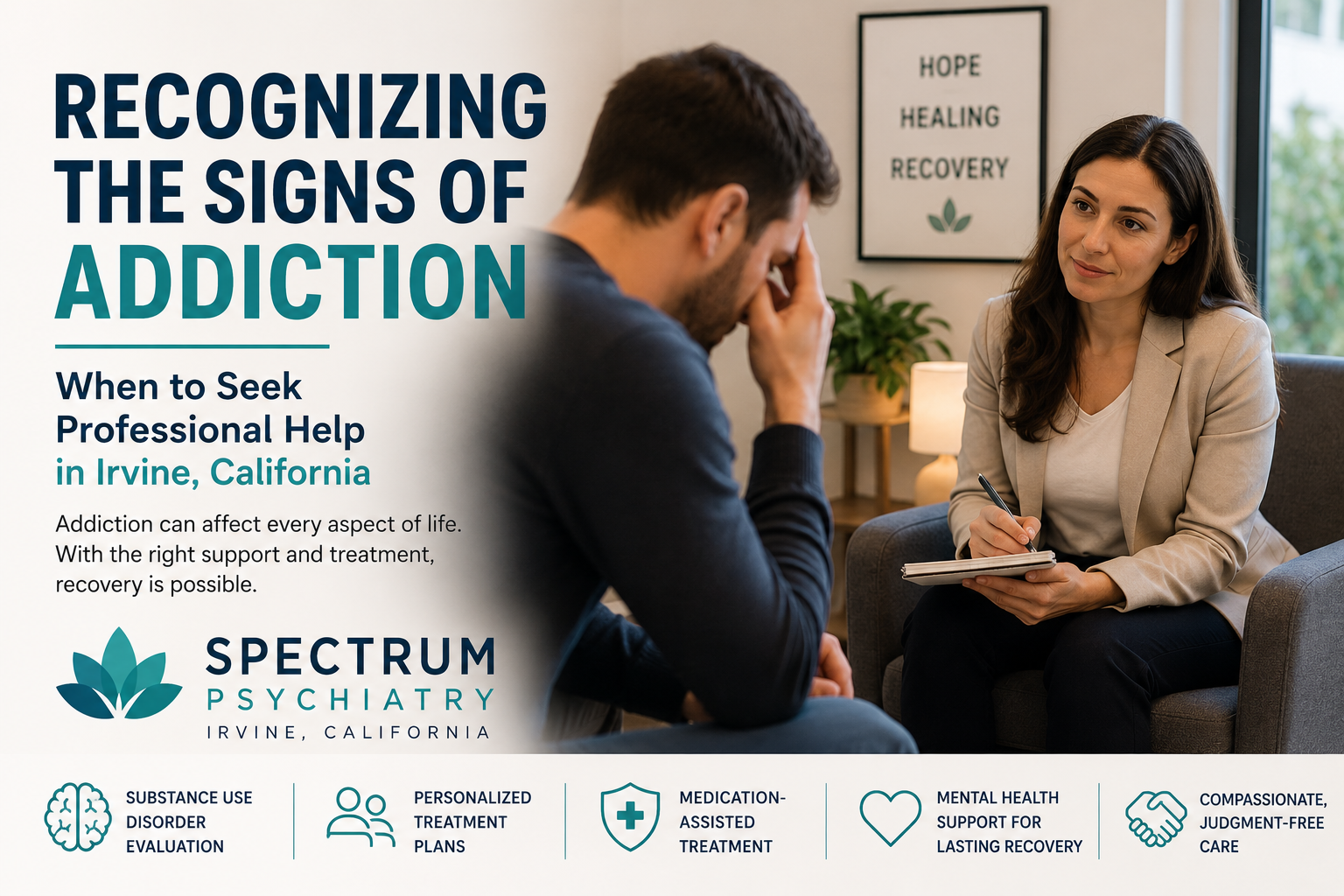
Recognizing the Signs of Addiction: When to Seek Professional Help in Irvine, California
Addiction can affect every part of a person's life, including physical health, mental health, relationships, work, finances, and daily responsibilities. It can develop gradually, and many people do not realize how serious the problem has become until it begins to interfere with their ability to function.
Substance use disorders are medical conditions, not personal failures. With the right treatment and support, recovery is possible. Recognizing the signs of addiction early can help people seek care before consequences become more severe.
At Spectrum Psychiatry, we provide addiction-related psychiatric care for adults in Irvine, Orange County, and surrounding communities.
What Is Addiction?
Addiction, also known as a substance use disorder, is a condition in which a person continues using alcohol, opioids, stimulants, or other substances despite harmful consequences. It can involve cravings, loss of control, tolerance, withdrawal symptoms, and difficulty stopping even when the person wants to change.
Addiction can affect the brain's reward, motivation, stress, and decision-making systems. Over time, substance use may become less about pleasure and more about avoiding withdrawal, emotional pain, anxiety, depression, or feeling unable to function without the substance.
Because addiction often overlaps with mental health concerns, psychiatric evaluation can be an important part of recovery.
Common Signs of Addiction
Addiction may look different from person to person. Some people hide their substance use, while others may appear to function well for a period of time. Warning signs may become more noticeable as the condition progresses.
- Using more of a substance than intended
- Repeated unsuccessful attempts to cut down or stop
- Strong cravings or urges to use
- Needing more of the substance to feel the same effect
- Withdrawal symptoms when not using
- Spending significant time obtaining, using, or recovering
- Neglecting work, school, family, or personal responsibilities
- Continuing use despite health or relationship problems
- Loss of interest in activities that used to matter
- Secretive behavior or withdrawing from loved ones
- Financial, legal, or occupational problems related to use
- Using substances to cope with stress, anxiety, or depression
One sign alone does not always mean someone has an addiction, but a pattern of ongoing substance use despite negative consequences may indicate the need for professional help.
Emotional and Mental Health Signs
Addiction can affect mood, motivation, sleep, concentration, and emotional stability. Some people experience anxiety, depression, irritability, shame, guilt, or emotional numbness related to substance use.
Others may use substances to manage difficult emotions. While this may seem to provide short-term relief, it can make symptoms worse over time and create a cycle that becomes increasingly difficult to break.
Mental health symptoms may also come before substance use. Anxiety, depression, ADHD, trauma, and sleep problems can increase vulnerability to substance misuse. Treating these concerns can support recovery and reduce relapse risk.
Physical Signs of Substance Use Problems
Substance use can also lead to physical changes. Depending on the substance, warning signs may include changes in sleep, appetite, weight, energy, coordination, hygiene, or overall health.
- Frequent fatigue or low energy
- Changes in appetite or weight
- Sleep problems or sleeping at unusual times
- Frequent nausea, sweating, shaking, or body aches
- Changes in appearance or hygiene
- Unexplained injuries or accidents
- Withdrawal symptoms between periods of use
- Increased tolerance to alcohol or drugs
Medical evaluation is important when physical symptoms are present, especially if withdrawal symptoms, overdose risk, or significant health concerns may be involved.
Addiction and Opioid Use Disorder
Opioid use disorder can involve prescription opioids, fentanyl, heroin, or other opioid substances. It may cause intense cravings, withdrawal symptoms, and repeated relapse even when a person wants to stop.
For some patients, medication-assisted treatment may be an important part of recovery. Medications such as Suboxone can help reduce cravings and withdrawal symptoms when used under medical supervision.
You can learn more about our Suboxone Treatment services for opioid addiction recovery.
Why People Delay Getting Help
Many people delay treatment because they feel ashamed, afraid of judgment, or unsure whether their substance use is serious enough. Others believe they should be able to stop on their own.
Addiction is not a character flaw. It is a treatable medical condition that often requires professional care, ongoing support, and a plan tailored to the individual.
Seeking help early can reduce health risks, improve functioning, strengthen relationships, and create a clearer path toward recovery.
How Psychiatric Treatment Can Help
Addiction psychiatry focuses on both substance use and mental health. A psychiatric evaluation can help identify substance use patterns, withdrawal risks, coexisting anxiety or depression, sleep problems, ADHD symptoms, trauma history, and medication needs.
Treatment may include medication management, Suboxone treatment when appropriate, therapy recommendations, relapse prevention planning, lifestyle support, and coordination with other healthcare providers.
A personalized treatment plan can help patients reduce cravings, manage mood symptoms, improve stability, and build healthier routines that support long-term recovery.
If you are also experiencing anxiety or depression, you may find our Anxiety Treatment in Irvine and Depression Treatment in Irvine pages helpful.
When Should You Seek Professional Help?
It may be time to seek professional help if substance use is affecting your health, relationships, work, school, finances, or ability to meet daily responsibilities.
Professional support is especially important if you experience withdrawal symptoms, intense cravings, repeated relapse, risky use, legal problems, or thoughts that life feels unmanageable.
If there is an immediate risk of overdose, severe withdrawal, danger to yourself or others, or a medical emergency, seek urgent medical care immediately.
Addiction Psychiatry in Irvine and Orange County
Spectrum Psychiatry serves patients in Irvine and throughout Orange County, including Newport Beach, Costa Mesa, Tustin, Lake Forest, Mission Viejo, Santa Ana, Laguna Hills, and nearby communities.
If you or someone you care about is struggling with substance use, professional treatment can help. Recovery can begin with one conversation and a treatment plan that supports safety, stability, and long-term wellness.
You can also learn more about our psychiatrist services in Irvine, CA for broader psychiatric care in Orange County.

Medically Reviewed By
Dr. Gulay Tegin, MD
Psychiatrist
This article has been medically reviewed by Dr. Gulay Tegin, MD to ensure accuracy and alignment with current psychiatric and addiction treatment practices.
Last reviewed: June 2026
Addiction Psychiatry in Irvine & Orange County
If substance use is affecting your health, relationships, work, or daily responsibilities, Spectrum Psychiatry can help you explore treatment options.
Contact Spectrum Psychiatry