
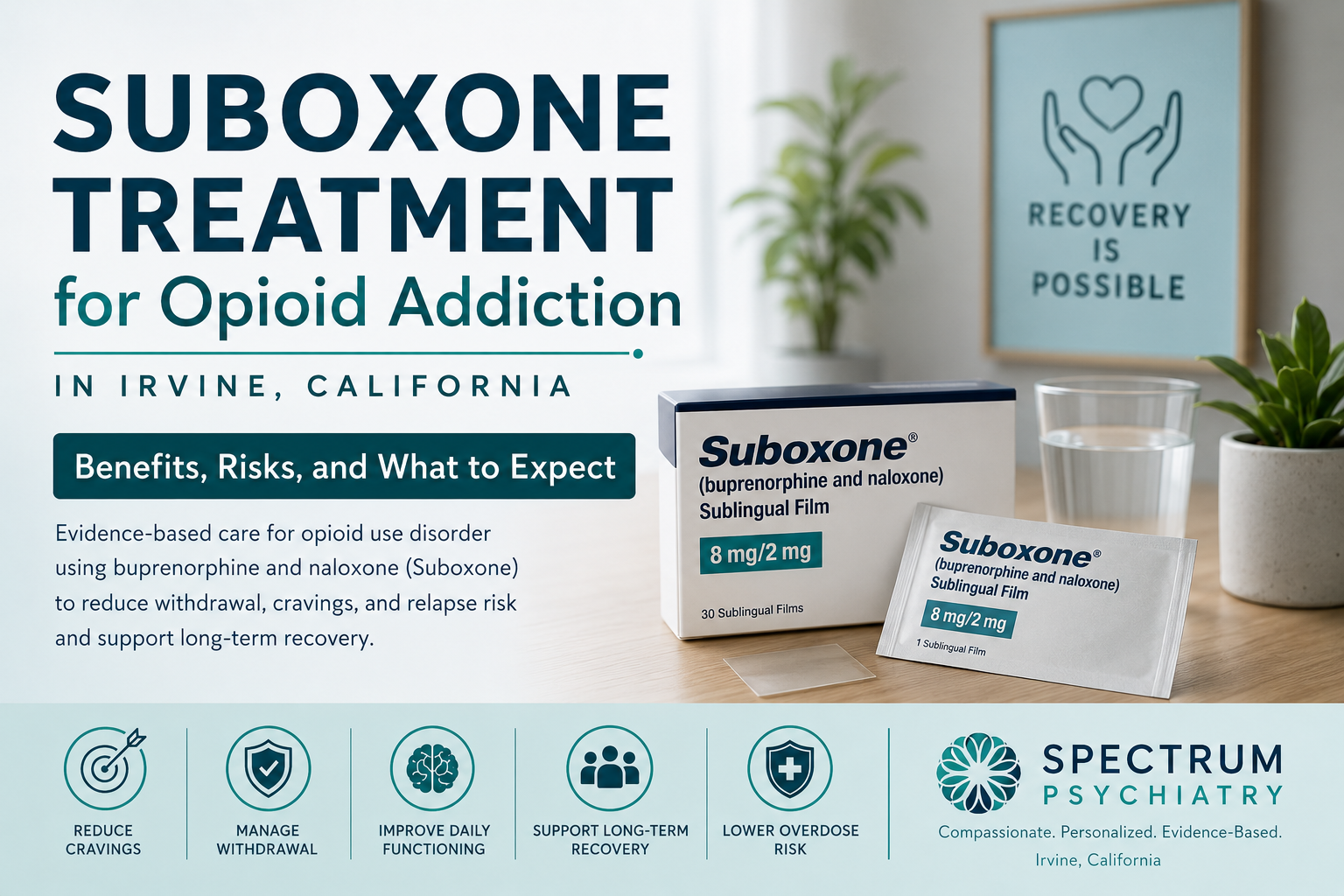
Suboxone Treatment for Opioid Addiction in Irvine, California: Benefits, Risks, and What to Expect
Understanding buprenorphine, naloxone, opioid withdrawal, treatment induction, safety monitoring, and long-term recovery support.

This article has been reviewed for educational and clinical accuracy and discusses Suboxone, buprenorphine, naloxone, opioid withdrawal, induction, medication safety, overdose risk, and long-term recovery planning.
Suspected Opioid Overdose Is an Emergency
Call 911 immediately if someone has very slow or stopped breathing, blue or gray lips, cannot be awakened, has pinpoint pupils with severe sleepiness, makes choking or gurgling sounds, or may have taken fentanyl, heroin, prescription opioids, or an unknown substance.
Administer naloxone if available and trained to do so, but do not delay emergency medical care. Spectrum Psychiatry is not an emergency response service.
Opioid use disorder can develop after the use of heroin, fentanyl, prescription pain medication, or other opioids. The condition may involve intense cravings, withdrawal symptoms, loss of control, repeated relapse, overdose risk, and continued use despite serious consequences.
Suboxone is one of several medications used in the treatment of opioid use disorder. It combines buprenorphine and naloxone and may help reduce withdrawal symptoms and cravings when prescribed as part of a structured treatment plan.
Medication is not a cure by itself. Effective treatment also considers psychiatric symptoms, overdose prevention, recovery support, therapy, living environment, medical health, and the patient's long-term goals.
Key Takeaway
Suboxone can be an effective medication for opioid use disorder, but treatment must be started at the correct time and monitored carefully. Beginning buprenorphine too soon after a full opioid agonist may trigger precipitated withdrawal, and combining it with alcohol, benzodiazepines, opioids, or other sedatives can increase overdose risk.
What Is Suboxone?
Suboxone is a brand-name prescription medication that contains two active ingredients: buprenorphine and naloxone. It is available in films or tablets that dissolve under the tongue or against the inside of the cheek, depending on the product and instructions.
Buprenorphine is the main therapeutic ingredient. It interacts with opioid receptors and can reduce withdrawal symptoms, cravings, and the reinforcing effects of other opioids.
Naloxone is included to discourage certain forms of misuse. When Suboxone is taken as directed under the tongue or in the cheek, naloxone has limited absorption. If the medication is misused by injection, naloxone may trigger withdrawal in an opioid-dependent person.
What Is Buprenorphine?
Buprenorphine is a partial opioid agonist. This means it activates opioid receptors but generally produces a more limited effect than full opioid agonists such as heroin, fentanyl, oxycodone, or hydrocodone.
Its partial-agonist action can help stabilize opioid receptors, reduce withdrawal, and decrease cravings without producing the same pattern of intoxication associated with uncontrolled use of full opioid agonists.
Buprenorphine also has a ceiling effect for some opioid effects, which may reduce but does not eliminate the risk of respiratory depression and overdose. Serious harm can still occur, especially when it is combined with other sedating substances.
What Is Naloxone and Why Is It Included?
Naloxone is an opioid antagonist. It blocks opioid receptors and is also used as an emergency medication to reverse opioid overdose.
In Suboxone, naloxone is included mainly as a misuse-deterrent component. It does not replace the separate naloxone rescue medication that patients and families may keep for overdose emergencies.
Patients receiving buprenorphine treatment should still discuss overdose prevention and access to naloxone rescue medication with their healthcare professional.
How Does Suboxone Help Opioid Use Disorder?
Opioid use disorder changes the way the brain responds to reward, stress, withdrawal, and cravings. After repeated opioid exposure, stopping may produce severe physical and emotional discomfort.
Suboxone treatment may help by:
- ✓ Reducing opioid withdrawal symptoms
- ✓ Decreasing cravings
- ✓ Helping stabilize opioid receptor activity
- ✓ Reducing the rewarding effect of other opioids
- ✓ Supporting engagement in treatment
- ✓ Improving the ability to maintain daily routines
- ✓ Lowering exposure to unsafe or contaminated opioids
- ✓ Supporting longer-term recovery planning
Treatment is most effective when the dose is individualized and the patient receives ongoing medical, psychiatric, behavioral, and recovery support.
Is Suboxone Replacing One Opioid With Another?
This is a common concern. Buprenorphine is an opioid medication, but medically supervised treatment is different from uncontrolled opioid use.
The goal is not intoxication. The goal is to stabilize withdrawal and cravings, reduce overdose risk, improve functioning, and help the patient remain engaged in recovery.
Physical dependence may occur during treatment, but physical dependence alone is not the same as addiction. Addiction involves compulsive use, loss of control, and continued use despite harm.
Who May Be Considered for Suboxone Treatment?
Suboxone may be considered for individuals diagnosed with opioid use disorder involving heroin, fentanyl, or prescription opioids. Eligibility requires an individualized medical and psychiatric evaluation.
A clinician may review:
- • Which opioids are being used
- • Dose, frequency, and duration of use
- • Time since the last opioid dose
- • Current withdrawal symptoms
- • Previous treatment attempts
- • Previous overdose history
- • Use of fentanyl or multiple substances
- • Alcohol or benzodiazepine use
- • Medical and liver history
- • Pregnancy or breastfeeding considerations
- • Psychiatric symptoms and suicide risk
- • Recovery support and living environment
What Is Suboxone Induction?
Induction is the process of starting buprenorphine treatment. The timing is important because buprenorphine binds strongly to opioid receptors and can displace other opioids.
In many standard induction approaches, treatment begins after the patient has stopped using opioids and developed sufficient objective withdrawal symptoms.
The exact waiting period varies according to the opioid used, route, dose, frequency, metabolism, fentanyl exposure, and other individual factors. Patients should follow clinician instructions rather than choosing a start time on their own.
What Is Precipitated Withdrawal?
Precipitated withdrawal is a sudden and potentially severe onset of opioid withdrawal after buprenorphine is started too soon while other opioids are still strongly occupying opioid receptors.
Symptoms may include:
- • Severe anxiety or agitation
- • Sweating and chills
- • Muscle and joint pain
- • Nausea, vomiting, or diarrhea
- • Runny nose and tearing
- • Restlessness
- • Rapid heart rate
- • Intense cravings
Fentanyl can make induction more complex because it may remain in the body differently from shorter-acting opioids. A clinician may adjust the induction strategy based on the patient's specific history and clinical condition.
Do Not Start Suboxone Based Only on the Clock
The correct start time depends on the opioid used and the patient's objective withdrawal symptoms. Taking Suboxone too early may cause precipitated withdrawal. Treatment should be started according to an individualized clinical plan.
Traditional Induction and Low-Dose Approaches
Standard induction generally begins after sufficient withdrawal is present. In selected cases, clinicians may use alternative low-dose approaches designed to introduce buprenorphine gradually while reducing the risk of abrupt withdrawal.
Alternative approaches can be complex and are not appropriate for unsupervised self-treatment. The clinician should determine which method is suitable based on opioid exposure, medical risks, withdrawal history, and treatment setting.
What Happens During the Stabilization Phase?
After induction, the dose may be adjusted to reduce withdrawal and cravings without causing excessive sedation or other significant side effects.
Follow-up may include:
- ✓ Review of withdrawal symptoms and cravings
- ✓ Assessment of ongoing opioid use
- ✓ Side-effect monitoring
- ✓ Medication adherence
- ✓ Review of alcohol and sedative use
- ✓ Prescription monitoring
- ✓ Toxicology testing when clinically appropriate
- ✓ Mood, anxiety, sleep, and suicide-risk assessment
- ✓ Recovery and relapse-prevention planning
Suboxone Maintenance Treatment
Maintenance refers to continuing buprenorphine treatment after the patient has stabilized. The goal is to reduce cravings, prevent withdrawal, lower relapse risk, and support everyday functioning.
Some patients use Suboxone for several months. Others benefit from longer-term maintenance. There is no single treatment duration that is correct for everyone.
Decisions about continuing, reducing, or discontinuing medication should consider stability, relapse history, overdose risk, cravings, support systems, psychiatric symptoms, and patient preference.
Common Side Effects
Possible side effects may include:
- • Headache
- • Nausea or vomiting
- • Constipation
- • Sweating
- • Sleep difficulties
- • Dizziness
- • Fatigue or drowsiness
- • Mouth irritation with dissolving products
- • Reduced libido or sexual side effects
- • Mild withdrawal symptoms during dose adjustment
Patients should report significant sedation, breathing difficulty, severe dizziness, fainting, jaundice, allergic symptoms, or other concerning reactions promptly.
Suboxone, Alcohol, and Benzodiazepines
Combining buprenorphine with alcohol, benzodiazepines, sleep medications, opioids, gabapentinoids, or other central nervous system depressants can increase sedation and suppress breathing.
Patients should disclose every prescription medication, nonprescription medication, supplement, and substance they use. Medications should not be hidden or stopped abruptly without medical guidance.
The presence of benzodiazepine use does not always mean buprenorphine treatment must be withheld, but it requires careful risk assessment, coordination, overdose education, and monitoring.
Dangerous Sedation and Breathing Problems
Call emergency services for slowed or stopped breathing, inability to wake the person, blue or gray lips, severe confusion, collapse, or suspected overdose. Do not assume that Suboxone completely prevents opioid overdose.
Dental and Oral Health Considerations
Buprenorphine products that dissolve in the mouth have been associated with dental problems, including cavities, tooth decay, oral infections, and tooth loss. These problems have been reported even in some patients without a previous history of significant dental disease.
Patients using dissolving buprenorphine products should:
- ✓ Allow the medication to dissolve completely as directed
- ✓ After it dissolves, take a large sip of water and gently rinse it around the teeth and gums
- ✓ Swallow the water after rinsing
- ✓ Wait at least one hour before brushing the teeth after the dose
- ✓ Maintain regular dental examinations and preventive care
- ✓ Report tooth pain, sensitivity, or oral infection promptly
Dental risks should be discussed and monitored, but patients should not abruptly stop buprenorphine without medical guidance. Untreated opioid use disorder carries serious risks, including relapse and fatal overdose.
Can Suboxone Cause Dependence or Withdrawal?
Physical dependence can develop during buprenorphine treatment. If the medication is stopped suddenly, withdrawal symptoms may occur.
Physical dependence is not the same as addiction. A patient may be physically dependent on a medication while using it exactly as prescribed, without compulsive behavior, intoxication-seeking, or continued use despite harm.
When discontinuation is appropriate, the dose is usually reduced gradually according to an individualized plan. The decision should consider cravings, relapse history, overdose risk, housing stability, mental health, social support, and patient preference.
Should Suboxone Be Tapered?
Some patients eventually choose to taper, while others benefit from long-term maintenance. There is no medical requirement that every patient discontinue buprenorphine after a fixed period.
Before tapering, it is helpful to consider:
- • Duration of recovery stability
- • Current cravings
- • Previous relapses after stopping treatment
- • Ongoing exposure to fentanyl or other opioids
- • Housing, employment, and relationship stability
- • Anxiety, depression, trauma, or sleep symptoms
- • Availability of therapy and peer support
- • Access to naloxone and overdose education
A rapid or pressured taper may increase relapse risk. Decisions should be collaborative and based on clinical stability rather than shame or the belief that medication-supported recovery is somehow less valid.
Suboxone During Pregnancy
Opioid use disorder during pregnancy requires specialized medical care. Untreated opioid use, repeated withdrawal, overdose, and unstable access to opioids can create significant risks for both the pregnant patient and the developing baby.
Buprenorphine may be considered during pregnancy, but the exact product and treatment plan require individualized obstetric and addiction-care coordination. Patients should not stop opioids or buprenorphine abruptly without medical guidance.
Pregnancy, breastfeeding, neonatal withdrawal, medication formulation, and follow-up should be discussed with clinicians experienced in perinatal opioid use disorder.
Suboxone and Co-Occurring Mental Health Conditions
Opioid use disorder frequently occurs alongside depression, anxiety, PTSD, ADHD, bipolar disorder, insomnia, chronic pain, and other psychiatric concerns.
A person may use opioids to escape emotional distress, improve sleep, reduce traumatic memories, manage pain, or cope with severe anxiety. Opioid use may then worsen mood, motivation, relationships, and daily functioning.
Treating opioid use disorder without addressing significant psychiatric symptoms may leave important relapse triggers unresolved. A comprehensive treatment plan considers both conditions.
Depression and Opioid Use Disorder
Depression may increase hopelessness and relapse risk, while opioid use may worsen low mood, isolation, motivation, and suicide risk. Any suicidal thoughts or major decline in functioning require prompt clinical assessment.
Anxiety and Opioid Use Disorder
Opioids may temporarily reduce emotional or physical distress, but repeated use can create a cycle of relief, withdrawal, rebound anxiety, and cravings. Anxiety treatment should avoid medication combinations that create unacceptable sedation or overdose risk.
Trauma and Opioid Use Disorder
Trauma-related symptoms may include nightmares, hypervigilance, avoidance, shame, emotional numbness, and intrusive memories. Trauma-informed treatment can help patients build safer coping strategies without forcing disclosure before they are ready.
ADHD and Opioid Use Disorder
ADHD may contribute to impulsivity, difficulty maintaining routines, emotional dysregulation, and treatment nonadherence. Diagnosis should be careful because withdrawal, sleep deprivation, depression, and active substance use can also affect attention.
Is Therapy Required With Suboxone?
Buprenorphine is an effective medical treatment for opioid use disorder. Therapy, counseling, peer support, case management, and recovery services can add important benefits, but access to medication should not be made unnecessarily dependent on perfect participation in every supportive service.
Behavioral treatment may help patients:
- ✓ Identify triggers and high-risk situations
- ✓ Improve emotional regulation
- ✓ Develop craving-management strategies
- ✓ Address trauma, grief, or relationship problems
- ✓ Rebuild daily routines and responsibilities
- ✓ Strengthen motivation and relapse-prevention skills
- ✓ Improve family communication and boundaries
Suboxone Compared With Methadone and Naltrexone
| Medication | How It Works | Important Considerations |
|---|---|---|
| Buprenorphine / Naloxone | Partial opioid agonist combined with an opioid antagonist | Can reduce withdrawal and cravings; timing of induction and sedative interactions require care |
| Methadone | Long-acting full opioid agonist | Effective for opioid use disorder and generally provided through certified opioid treatment programs |
| Extended-Release Naltrexone | Opioid antagonist that blocks opioid receptors | Requires completion of an opioid-free period before treatment to avoid precipitated withdrawal |
No single medication is best for every patient. The choice depends on treatment history, opioid tolerance, access, pregnancy, medical conditions, relapse risk, patient preference, and the ability to follow the treatment plan.
Why Naloxone Rescue Medication Still Matters
Patients receiving Suboxone can still experience overdose, especially if other opioids, fentanyl, alcohol, benzodiazepines, or sedating drugs are involved.
A separate naloxone rescue product should be discussed with the clinician. Family members and close contacts may also benefit from knowing where it is stored and how to use it.
Naloxone may wear off before the opioid does. Emergency services should always be called after a suspected overdose, even if the person wakes up after naloxone.
Safe Storage and Medication Diversion
Suboxone is a controlled medication and should be stored securely. Accidental exposure can be dangerous, particularly for children or individuals without opioid tolerance.
- • Keep medication in its original packaging
- • Store it in a locked location
- • Do not share medication with another person
- • Keep doses away from children and pets
- • Follow local medication-disposal instructions
- • Report lost or stolen medication promptly
Frequently Asked Questions
What is Suboxone?
Suboxone is a prescription medication containing buprenorphine and naloxone. It is used as part of treatment for opioid use disorder.
How does Suboxone help opioid addiction?
Buprenorphine partially activates opioid receptors and may reduce withdrawal symptoms and cravings. Naloxone is included to discourage certain forms of misuse.
When can Suboxone treatment begin?
Standard treatment generally begins after sufficient opioid withdrawal is present. The correct timing depends on the opioid used, last use, symptoms, fentanyl exposure, and the clinician's treatment plan.
What is precipitated withdrawal?
Precipitated withdrawal is a rapid and sometimes severe onset of withdrawal that may occur when buprenorphine is started before clinical conditions are appropriate.
Is Suboxone replacing one opioid with another?
Buprenorphine is an opioid medication, but supervised treatment is designed to stabilize withdrawal and cravings, reduce harmful opioid use, lower overdose exposure, and improve daily functioning.
Can Suboxone cause dependence?
Yes, physical dependence may occur. The medication should not be stopped abruptly without guidance. Physical dependence during prescribed treatment is not the same as uncontrolled addiction.
Can Suboxone be combined with alcohol or benzodiazepines?
Combining buprenorphine with alcohol, benzodiazepines, opioids, sleeping medications, or other sedatives can increase the risk of dangerous sedation, breathing problems, overdose, and death.
How long does Suboxone treatment last?
Treatment length varies. Some patients use buprenorphine for months, while others benefit from longer-term maintenance. There is no universal deadline for stopping.
Does Suboxone prevent every overdose?
No. Overdose remains possible, especially when fentanyl, other opioids, alcohol, benzodiazepines, or additional sedatives are involved. Naloxone access and overdose education remain important.
Does Spectrum Psychiatry provide Suboxone treatment?
Spectrum Psychiatry provides individualized psychiatric evaluation and treatment planning. Patients should contact the practice directly to confirm whether Suboxone or another buprenorphine service is currently available and clinically appropriate.
Opioid Use Disorder Evaluation in Irvine
Spectrum Psychiatry provides individualized psychiatric evaluations for adults experiencing opioid use, withdrawal, cravings, relapse, anxiety, depression, trauma, insomnia, or other co-occurring mental health concerns.
Treatment recommendations depend on opioid history, current withdrawal, fentanyl exposure, overdose risk, medications, medical health, psychiatric symptoms, and personal recovery goals.
- ✓ Comprehensive psychiatric evaluation
- ✓ Opioid use and withdrawal assessment
- ✓ Review of fentanyl and polysubstance exposure
- ✓ Evaluation of co-occurring psychiatric conditions
- ✓ Medication management when clinically appropriate
- ✓ Overdose education and naloxone planning
- ✓ Relapse-prevention and recovery planning
- ✓ Coordination with therapists and treatment programs
- ✓ Referral to higher levels of care when needed
Opioid Addiction Treatment Across Orange County
Spectrum Psychiatry serves patients in Irvine, Newport Beach, Costa Mesa, Tustin, Lake Forest, Mission Viejo, Laguna Niguel, Huntington Beach, Santa Ana, Orange, and surrounding Orange County communities. Telepsychiatry may be available when clinically appropriate and permitted by applicable requirements.
Final Thoughts
Suboxone can be an important treatment option for opioid use disorder. By reducing withdrawal and cravings, it may help patients move away from repeated opioid use and engage more consistently in recovery.
Safe treatment requires correct induction timing, individualized dosing, careful review of sedating substances, ongoing monitoring, secure storage, overdose prevention, and attention to co-occurring medical and psychiatric conditions.
Recovery is not defined by whether someone uses an evidence-based medication. The goal is improved health, safety, stability, functioning, and quality of life.
Medical disclaimer: This article is intended for general educational purposes and does not replace individualized medical, psychiatric, or addiction treatment. Do not start, stop, or change Suboxone without guidance from a qualified clinician. Contact Spectrum Psychiatry directly to confirm which services are currently available.
Emergency warning: Call 911 for suspected overdose, slowed or stopped breathing, blue or gray lips, loss of consciousness, seizure, severe chest pain, or inability to awaken the person. Administer naloxone when available, but do not delay emergency medical care.