
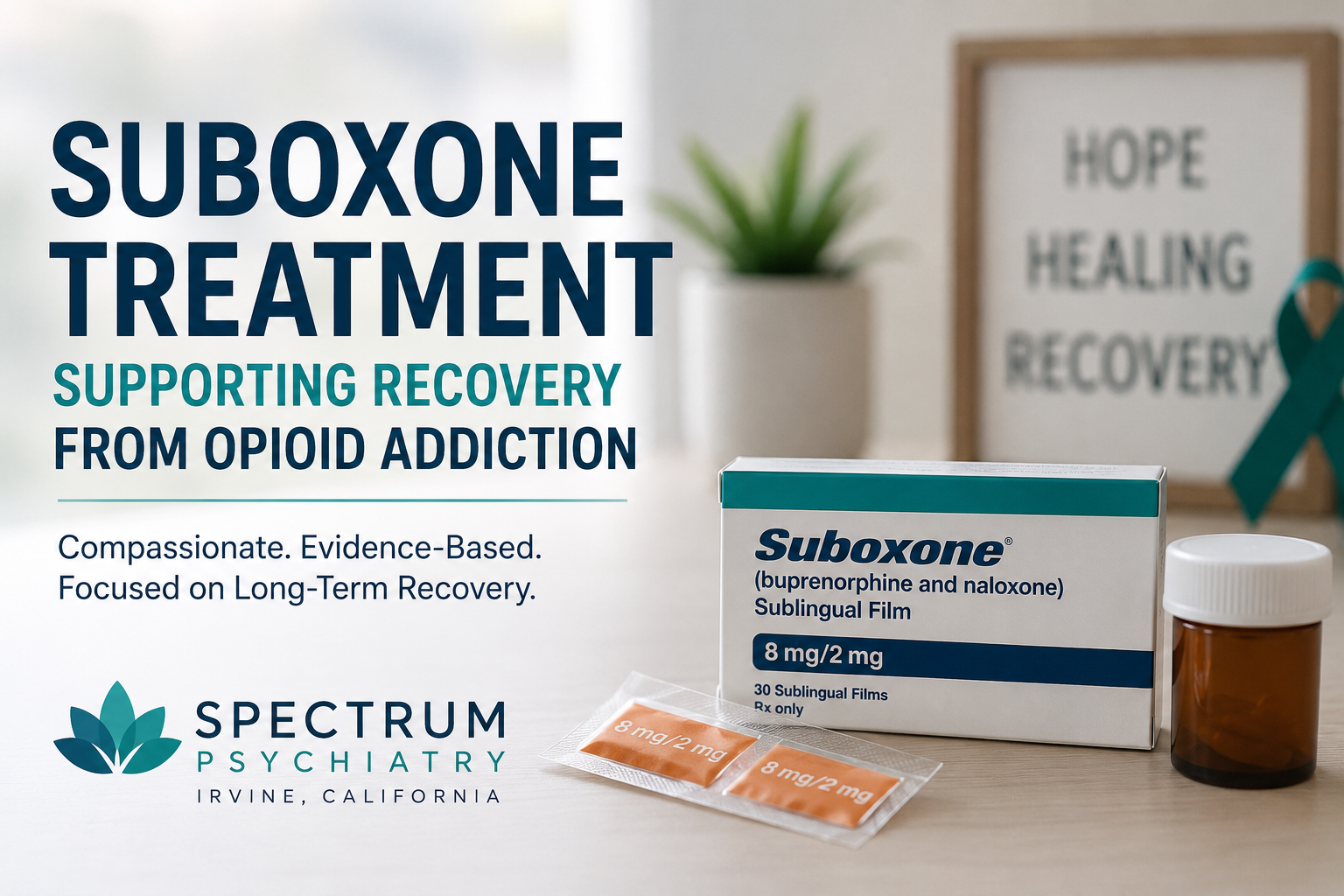
How Suboxone Treatment Helps Opioid Recovery: A Guide for Patients in Irvine and Orange County
Opioid addiction can affect health, relationships, work, family life, and emotional well-being. For many people, stopping opioid use is not simply a matter of willpower. Opioid dependence can involve powerful cravings, withdrawal symptoms, and changes in the brain that make recovery difficult without proper support.
Suboxone treatment can be an important part of opioid addiction recovery. When used appropriately under medical supervision, Suboxone may help reduce cravings, ease withdrawal symptoms, and support long-term recovery.
At Spectrum Psychiatry, we provide addiction-related psychiatric care for adults in Irvine, Orange County, and surrounding communities.
What Is Suboxone?
Suboxone is a prescription medication used in the treatment of opioid use disorder. It contains buprenorphine and naloxone. Buprenorphine helps reduce opioid cravings and withdrawal symptoms, while naloxone is included to help reduce misuse.
Suboxone is commonly used as part of medication-assisted treatment, also known as MAT. MAT combines medication with clinical support, counseling recommendations, lifestyle changes, and ongoing medical monitoring.
How Suboxone Supports Opioid Recovery
Opioid withdrawal can be uncomfortable and difficult to manage alone. Symptoms may include anxiety, body aches, nausea, sweating, insomnia, irritability, and strong cravings. These symptoms can increase the risk of relapse.
Suboxone may help by reducing withdrawal symptoms and cravings, allowing patients to focus more clearly on recovery, stability, work, relationships, and long-term health.
Treatment should always be personalized. The right plan depends on the patient's history, opioid use pattern, medical concerns, mental health symptoms, and recovery goals.
Who May Benefit from Suboxone Treatment?
Suboxone treatment may be appropriate for adults who are struggling with opioid dependence or opioid use disorder. This may include people who have used prescription opioids, fentanyl, heroin, or other opioid substances.
Some patients seek help after repeated attempts to stop using opioids on their own. Others may be concerned about withdrawal, relapse, or the effect opioid use has had on their relationships, responsibilities, or health.
- Strong opioid cravings
- Withdrawal symptoms when trying to stop
- Repeated unsuccessful attempts to quit
- Using opioids despite negative consequences
- Difficulty functioning without opioids
- Concern from family, friends, or healthcare providers
- History of relapse after stopping opioids
Suboxone Is Not Replacing One Addiction with Another
One common misunderstanding is that Suboxone simply replaces one addiction with another. In reality, when prescribed and monitored appropriately, Suboxone is a medical treatment for opioid use disorder.
The goal is not intoxication. The goal is stability, reduced cravings, lower relapse risk, and improved daily functioning. Medication-assisted treatment can help patients rebuild their lives while working toward long-term recovery.
What to Expect During Suboxone Treatment
Treatment usually begins with a careful evaluation. Your provider may ask about opioid use history, withdrawal symptoms, medical history, mental health concerns, medications, previous treatment, and recovery goals.
If Suboxone is appropriate, your provider will discuss how the medication works, how it should be taken, possible side effects, safety considerations, and follow-up care.
Ongoing appointments are important. Follow-up visits allow your provider to monitor symptoms, adjust treatment when needed, answer questions, and support progress over time.
The Role of Psychiatric Care in Addiction Recovery
Addiction often occurs alongside other mental health concerns such as anxiety, depression, trauma, ADHD, sleep problems, or mood symptoms. Treating opioid use disorder without addressing mental health can make recovery more difficult.
Psychiatric care can help identify and treat coexisting conditions that may contribute to substance use or relapse risk. A complete treatment plan may include medication management, therapy referrals, lifestyle support, and coordination with other healthcare professionals.
You can learn more about our Suboxone Treatment services for opioid addiction recovery.
Suboxone Treatment and Relapse Prevention
Recovery is not only about stopping opioid use. It is also about building a plan that reduces relapse risk and supports long-term stability. Suboxone may help reduce cravings, but recovery often also requires structure, support, coping strategies, and ongoing care.
Patients may benefit from identifying triggers, improving sleep, managing stress, strengthening support systems, and addressing anxiety, depression, or trauma symptoms that may increase relapse risk.
When Should You Seek Help?
It may be time to seek professional help if opioid use is causing problems in your health, relationships, work, finances, school, or daily responsibilities.
You should also consider seeking care if you experience withdrawal symptoms, strong cravings, repeated relapse, or fear that stopping opioids on your own may be unsafe or unsuccessful.
Asking for help is not a failure. Addiction is a medical condition, and treatment can support recovery, stability, and improved quality of life.
Suboxone Treatment in Irvine and Orange County
Spectrum Psychiatry serves patients in Irvine and throughout Orange County, including Newport Beach, Costa Mesa, Tustin, Lake Forest, Mission Viejo, Santa Ana, Laguna Hills, and nearby communities.
If you or someone you care about is struggling with opioid use, professional treatment can help. Suboxone treatment may be one part of a comprehensive recovery plan.
You can also learn more about our psychiatrist services in Irvine, CA for broader psychiatric care in Orange County.

Medically Reviewed By
Dr. Gulay Tegin, MD
Psychiatrist
This article has been medically reviewed by Dr. Gulay Tegin, MD to ensure accuracy and alignment with current psychiatric and addiction treatment practices.
Last reviewed: June 2026
Suboxone Treatment in Irvine & Orange County
If opioid cravings, withdrawal symptoms, or relapse are affecting your life, Spectrum Psychiatry can help you explore treatment options.
Contact Spectrum Psychiatry