
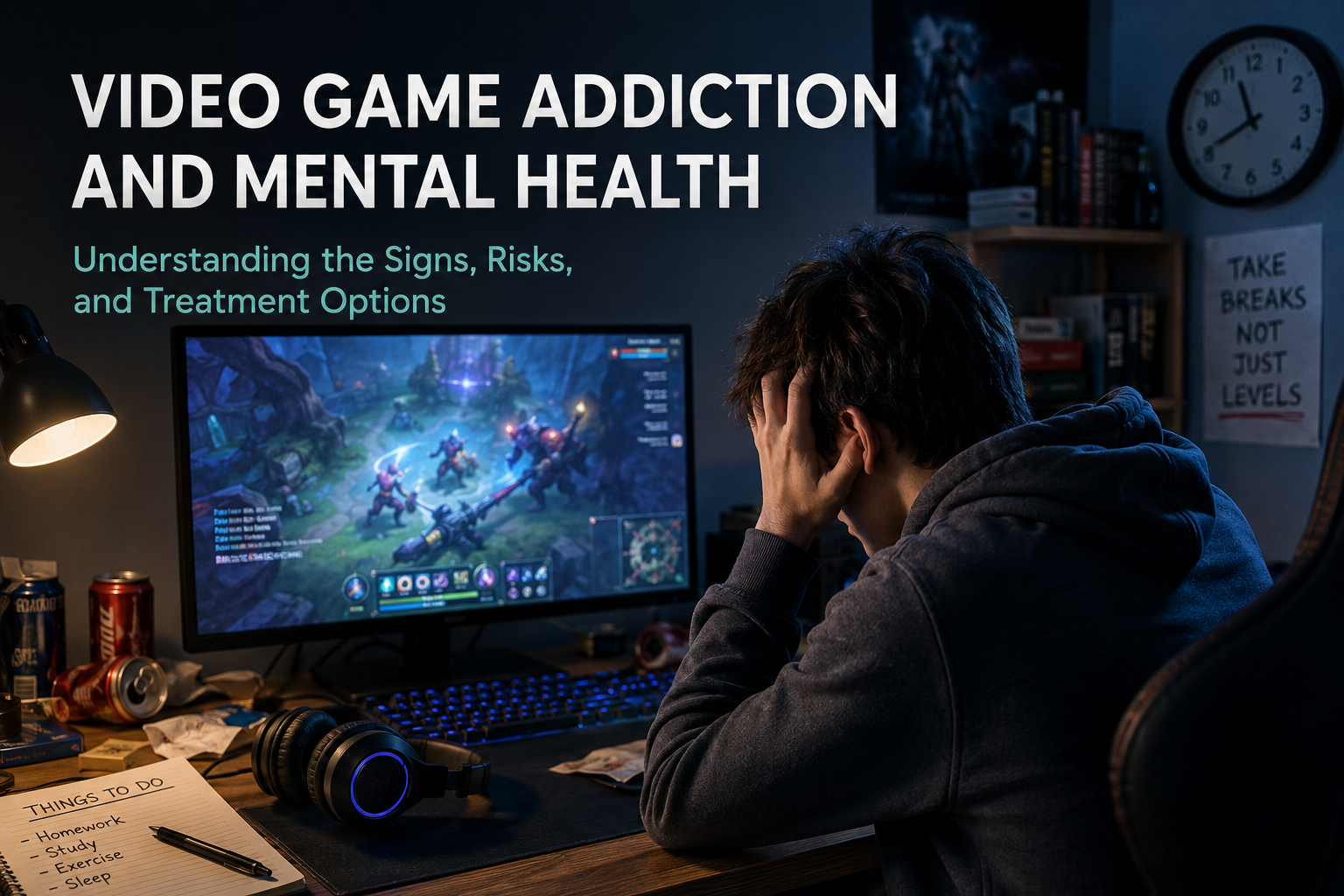

Video games have become one of the most popular forms of entertainment worldwide. Millions of children, teenagers, and adults play video games regularly for recreation, social interaction, stress relief, and competition. While gaming can provide enjoyment and even cognitive benefits, excessive gaming may sometimes lead to significant problems that affect mental health, physical well-being, academic performance, work productivity, and personal relationships.
Mental health professionals throughout Irvine, Orange County, and California are increasingly evaluating individuals whose gaming habits have become difficult to control. In some cases, gaming can develop into a behavioral addiction that interferes with daily life and emotional functioning.
Understanding the signs of problematic gaming can help individuals and families recognize when professional support may be beneficial.
What Is Video Game Addiction?
Video game addiction refers to persistent and excessive gaming behavior that becomes difficult to control despite negative consequences. Individuals may spend increasing amounts of time playing games while neglecting important responsibilities, relationships, sleep, physical health, or personal goals.
Not everyone who enjoys video games has an addiction. The difference often lies in how much gaming affects daily functioning and quality of life.
Common Signs of Video Game Addiction
Many people play video games regularly without experiencing significant problems. However, problematic gaming often involves several warning signs.
- Spending more time gaming than originally intended
- Difficulty stopping or reducing gaming
- Constant thoughts about gaming when not playing
- Losing interest in hobbies or activities previously enjoyed
- Neglecting school, work, or family responsibilities
- Using gaming to escape emotional distress
- Becoming irritable when unable to play
- Staying awake late into the night to continue gaming
- Declining academic or work performance
- Relationship conflicts related to gaming habits
Why Video Games Can Become Addictive
Modern video games are designed to keep players engaged. Many games use reward systems, achievements, rankings, social interactions, and progression mechanics that activate the brain's reward pathways.
Players may experience feelings of accomplishment, excitement, social connection, or temporary relief from stress while gaming. For some individuals, gaming can become a coping mechanism for anxiety, depression, loneliness, low self-esteem, social difficulties, academic stress, family conflict, or work-related stress.
Although gaming may temporarily reduce emotional discomfort, it often fails to address the underlying causes of distress.
How Video Game Addiction Affects Mental Health
Anxiety
Many individuals use gaming to escape feelings of anxiety. While gaming may provide temporary distraction, excessive use can worsen anxiety over time by reducing opportunities to develop healthy coping skills.
Gaming-related stress, online competition, and fear of missing in-game events may also contribute to increased anxiety.
Depression
Problematic gaming may contribute to social isolation, reduced physical activity, poor sleep, decreased motivation, and lower self-esteem. Individuals experiencing depression may also become more vulnerable to excessive gaming as a way to avoid difficult emotions.
Emotional Dysregulation
Some individuals experience increased irritability, frustration, anger, or mood swings when gaming is interrupted or restricted. Emotional regulation skills may become less developed when gaming becomes the primary method of managing stress.
Gaming Addiction and Social Isolation
Although online games often involve social interaction, virtual relationships do not always replace meaningful face-to-face connections. Individuals struggling with gaming addiction may gradually withdraw from family activities, friendships, school events, workplace relationships, and community involvement.
Over time, social isolation can worsen feelings of loneliness and contribute to depression or anxiety.
Effects on Academic Performance
Video game addiction can significantly affect students. Common academic consequences include difficulty concentrating, reduced study time, incomplete assignments, declining grades, poor attendance, and reduced motivation.
Students may prioritize gaming over educational responsibilities, leading to long-term academic challenges.
Effects on Work Performance
Adults may also experience professional consequences from excessive gaming. These may include reduced productivity, difficulty meeting deadlines, fatigue at work, poor concentration, increased absenteeism, and job performance concerns.
Gaming late into the night can significantly affect workplace performance the following day.
Sleep Problems and Gaming
Sleep disturbances are among the most common consequences of excessive gaming. Gaming may interfere with sleep through late-night gaming sessions, exposure to blue light, increased mental stimulation, and difficulty disengaging from games.
Poor sleep can worsen anxiety, depression, attention problems, irritability, and stress management difficulties. Healthy sleep habits are an important part of recovery from problematic gaming.
Video Game Addiction in Teenagers
Teenagers may be particularly vulnerable because emotional regulation, decision-making, and self-control continue developing throughout adolescence. Excessive gaming during this period may affect emotional development, social skills, academic achievement, and family relationships.
Parents may notice increased irritability, defensiveness about gaming habits, withdrawal from family activities, academic struggles, and sleep disruption.
Physical Health Consequences
Video game addiction can also affect physical health. Potential concerns include a sedentary lifestyle, weight gain, poor posture, neck and back pain, eye strain, headaches, and fatigue.
Maintaining physical activity and healthy routines is important for both mental and physical well-being.
When Gaming Becomes a Mental Health Concern
Gaming may become a significant concern when it interferes with relationships, causes academic decline, affects work performance, contributes to emotional distress, leads to sleep problems, causes social withdrawal, or becomes difficult to control.
Recognizing these warning signs early can help prevent more serious complications.
Treatment Options for Video Game Addiction
Treatment typically focuses on understanding the emotional factors that contribute to excessive gaming and building healthier coping strategies.
Cognitive Behavioral Therapy
Cognitive Behavioral Therapy may help individuals identify unhealthy thought patterns, reduce avoidance behaviors, and develop healthier ways of managing stress, anxiety, boredom, and emotional discomfort.
Behavioral Modification
Treatment may include structured gaming limits, goal setting, technology-free periods, healthier daily routines, and gradual replacement of excessive gaming with meaningful offline activities.
Family Support
Family involvement can improve communication and create healthier boundaries around technology use. For teenagers, parent guidance and consistent household expectations are often important parts of treatment.
Treatment of Co-Occurring Conditions
Anxiety, depression, ADHD, trauma, and social difficulties may contribute to problematic gaming and should be addressed when present. A comprehensive psychiatric evaluation can help clarify the role of these factors.
Healthy Strategies for Managing Gaming Habits
- Establish daily gaming limits
- Create technology-free periods
- Prioritize sleep and consistent bedtime routines
- Engage in physical activity
- Spend time with friends and family offline
- Develop hobbies outside of gaming
- Practice mindfulness and stress management
- Seek support when gaming becomes difficult to control
When to Seek Professional Help
Professional evaluation may be beneficial if gaming is causing significant distress, affecting school or work performance, damaging relationships, contributing to anxiety or depression, or becoming increasingly difficult to control.
Mental health professionals can help identify underlying factors and develop personalized treatment plans that support healthier habits and improved emotional well-being.
Video Game Addiction Treatment in Irvine and Orange County
At Spectrum Psychiatry, we provide comprehensive psychiatric evaluations and individualized treatment plans for individuals experiencing behavioral addictions, anxiety, depression, ADHD, and technology-related mental health concerns throughout Irvine, Orange County, and California.
Our goal is to help patients develop healthier habits, improve emotional well-being, strengthen relationships, and regain balance in their daily lives.
Final Thoughts
Video games can be a valuable source of entertainment, learning, and social connection. However, when gaming begins to interfere with emotional health, relationships, school, work, or daily functioning, it may be time to seek support.
Recognizing the signs of video game addiction early can help individuals develop healthier habits, improve mental health, and build a more balanced and fulfilling life.