
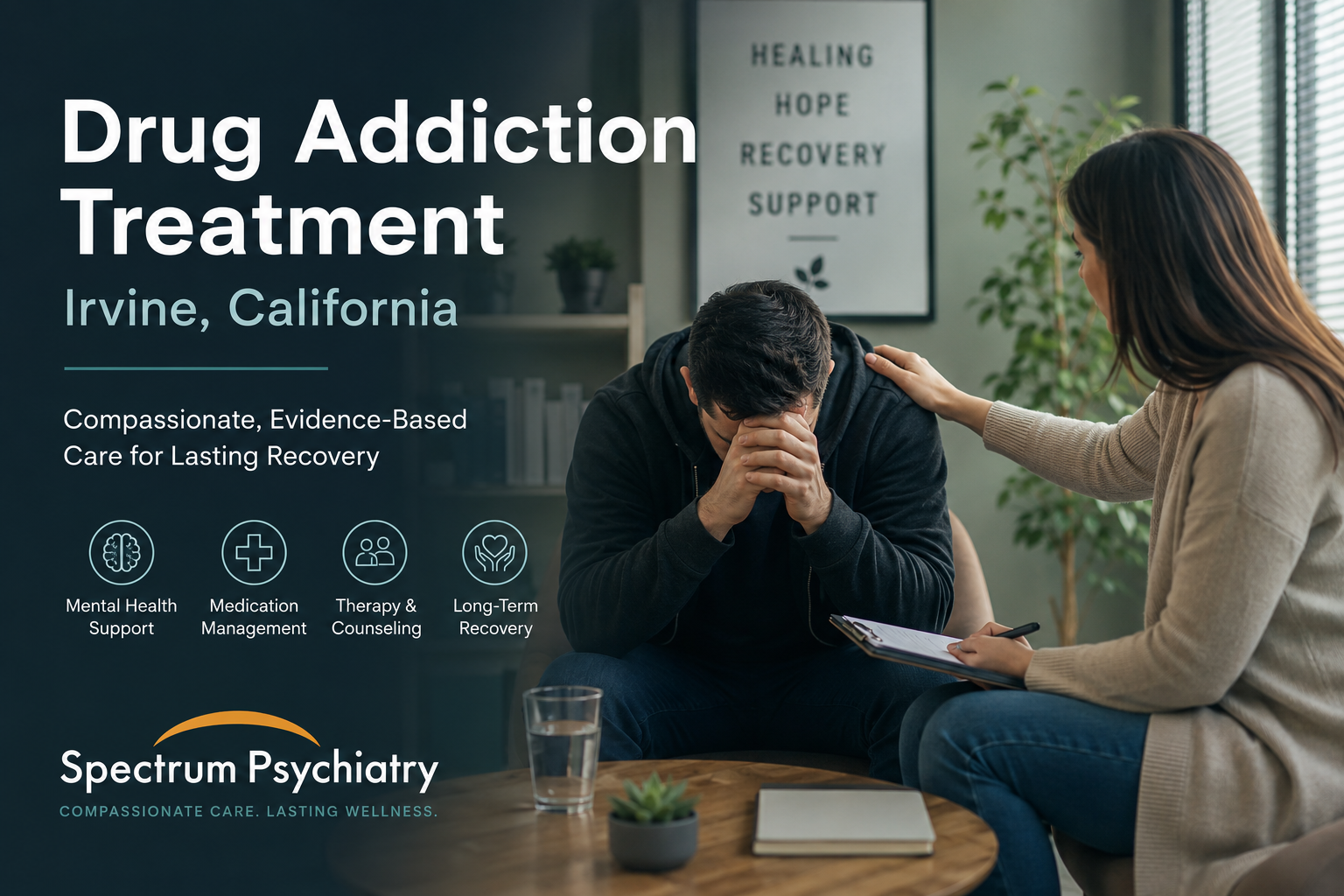
Drug Addiction Treatment in Irvine, California: Signs, Mental Health Effects, and Recovery Options
Understanding drug addiction recovery, social exclusion, substance use disorder, warning signs, and mental health support for young people in Irvine and Orange County.

This article has been reviewed for educational and clinical accuracy by Cuneyt Tegin and discusses substance use disorder, drug addiction, dual diagnosis, psychiatric evaluation, and recovery support available through Spectrum Psychiatry in Irvine and Orange County.
Is Someone in Immediate Danger?
Call 911 or go to the nearest emergency department if someone has lost consciousness, cannot be awakened, is having difficulty breathing, has severe chest pain, is experiencing a seizure, has taken an unknown substance, or may have overdosed.
Do not leave the person alone. Spectrum Psychiatry is not an emergency response service, detoxification facility, crisis hotline, or inpatient hospital.
Drug addiction can affect physical health, mental health, relationships, employment, education, finances, and a person's ability to complete everyday responsibilities. Substance use disorder is not simply a lack of willpower. It is a complex health condition that can alter motivation, judgment, reward processing, impulse control, and behavior.
People may begin using a drug for pain relief, experimentation, social pressure, increased energy, improved concentration, emotional escape, sleep difficulties, or an attempt to cope with anxiety, depression, trauma, loneliness, or chronic stress.
Spectrum Psychiatry provides psychiatric evaluation and individualized treatment planning for patients in Irvine, Orange County, and surrounding California communities. Cuneyt Tegin and the clinical team understand that addiction frequently occurs alongside anxiety, depression, ADHD, bipolar disorder, trauma-related symptoms, sleep problems, and other mental health concerns.
What Is Drug Addiction?
Drug addiction is commonly understood as a severe form of substance use disorder. It involves a pattern of drug use that becomes difficult to control and continues despite significant physical, emotional, social, occupational, financial, or legal consequences.
Addiction can involve prescription medications, illegal drugs, or substances that were initially used for a legitimate medical reason. The condition may develop gradually, and family members may notice changes before the individual recognizes how serious the problem has become.
Substance Use, Misuse, Dependence, and Addiction
Substance Use
Substance use refers broadly to taking alcohol, medication, or another drug. The term itself does not automatically indicate a disorder.
Substance Misuse
Misuse may include taking a prescription medication differently from the instructions, taking medication prescribed to someone else, combining substances unsafely, or using a drug for intoxication.
Physical Dependence
Physical dependence means the body has adapted to repeated exposure. Stopping suddenly may produce withdrawal symptoms. Dependence can occur even when certain medications are taken as prescribed and does not automatically mean addiction.
Addiction
Addiction generally involves compulsive use, impaired control, cravings, and continued use despite harm.
Common Warning Signs of Drug Addiction
- • Using larger amounts or for longer than intended
- • Repeated unsuccessful efforts to reduce or stop
- • Strong cravings or preoccupation with obtaining drugs
- • Missing work, school, appointments, or responsibilities
- • Continuing use despite health or relationship problems
- • Giving up hobbies, friendships, or important activities
- • Needing increasing amounts to experience the same effect
- • Experiencing withdrawal symptoms when stopping
- • Hiding drug use or becoming increasingly secretive
- • Experiencing financial, legal, or housing difficulties
Behavioral, Social, and Physical Changes
- • Sudden changes in friends or social groups
- • Increasing secrecy or unexplained absences
- • Frequent requests for money
- • Declining performance at work or school
- • Loss of interest in previously enjoyable activities
- • Irritability, defensiveness, or mood swings
- • Changes in sleep, appetite, or weight
- • Unusual sleepiness, agitation, or impaired coordination
- • Tremors, sweating, nausea, or withdrawal symptoms
Commonly Misused Drugs
Opioids
Opioids include heroin, fentanyl, and prescription pain medications. They may slow breathing and cause fatal overdose. Opioid use disorder can involve intense cravings, tolerance, withdrawal symptoms, and repeated use despite serious consequences.
Stimulants
Stimulants include cocaine, methamphetamine, and certain prescription medications. Misuse may cause anxiety, paranoia, insomnia, aggression, heart problems, hallucinations, and severe mood changes.
Sedatives and Anti-Anxiety Medications
Certain sedatives can impair memory, coordination, and breathing. Combining them with opioids, alcohol, or other substances can be especially dangerous. Some sedatives should not be stopped suddenly without medical guidance.
Cannabis
Cannabis can affect attention, memory, motivation, coordination, anxiety, mood, and perception. High-potency products may increase severe anxiety, panic, paranoia, or psychotic symptoms in vulnerable individuals.
Mental Health and Drug Addiction
Mental health conditions and substance use disorders frequently occur together. Many people begin using drugs to reduce symptoms of anxiety, depression, PTSD, ADHD, insomnia, or overwhelming emotional distress. Temporary relief may be followed by worsening symptoms, impaired judgment, and increased dependence.
At Spectrum Psychiatry, patients throughout Irvine and Orange County receive individualized psychiatric evaluations to identify both addiction and underlying mental health concerns.
What Is Dual Diagnosis?
Dual diagnosis means that an individual experiences both a mental health disorder and a substance use disorder. Treating only one condition while ignoring the other may increase the risk of relapse or incomplete recovery.
- • Depression and opioid addiction
- • Anxiety disorders and alcohol or sedative misuse
- • ADHD and stimulant misuse
- • PTSD and polysubstance use
- • Bipolar disorder and stimulant use
Evidence-Based Treatment Options
Comprehensive Psychiatric Evaluation
A psychiatrist reviews substance use, current symptoms, previous treatment, medications, family history, medical concerns, and recovery goals before creating an individualized care plan.
Medication Treatment
Medication may be considered when clinically appropriate. For opioid use disorder, certain medications may reduce cravings and withdrawal symptoms. Decisions require individualized assessment, informed consent, monitoring, and coordination with other providers.
Therapy
Individual therapy, cognitive behavioral therapy, motivational interviewing, family support, and relapse-prevention planning may help patients understand triggers, improve coping skills, and strengthen motivation for recovery.
Recovery and Relapse Prevention
Recovery rarely happens overnight. Substance use disorder often requires ongoing treatment, monitoring, and support. A setback does not mean that treatment has failed; it may indicate that the plan or level of care needs to change.
- • Identify personal triggers and warning signs
- • Build a consistent daily routine
- • Maintain regular psychiatric follow-up
- • Attend therapy consistently
- • Prioritize sleep, nutrition, and exercise
- • Avoid environments associated with drug use
- • Strengthen family and social support
- • Ask for help early when cravings increase
When Should You Seek Professional Help?
Consider scheduling a psychiatric evaluation if drug use is affecting work, school, relationships, physical health, emotional well-being, finances, or daily responsibilities. Seeking help early may reduce the risk of serious medical, psychological, financial, and legal consequences.
Frequently Asked Questions
Is drug addiction considered a mental illness?
Substance use disorder is a medical and psychiatric condition that affects brain function and behavior. It frequently occurs alongside depression, anxiety, PTSD, ADHD, bipolar disorder, and other mental health conditions.
Can someone recover from drug addiction?
Yes. Recovery is possible with appropriate treatment, individualized psychiatric care, therapy, family support, healthy lifestyle changes, and long-term follow-up.
What is dual diagnosis?
Dual diagnosis means that a person has both a substance use disorder and another mental health condition. Treating both conditions together generally leads to better outcomes.
Does Spectrum Psychiatry provide addiction treatment?
Spectrum Psychiatry provides psychiatric evaluations, medication management when clinically appropriate, and individualized treatment planning. Referrals for detoxification, intensive outpatient care, residential treatment, therapy, or other specialized services may be recommended when needed.
Addiction and Mental Health Support in Irvine
Spectrum Psychiatry provides psychiatric evaluation and individualized treatment planning for adults experiencing substance use concerns and co-occurring mental health conditions in Irvine and Orange County.
- ✓ Comprehensive psychiatric evaluations
- ✓ Substance use and mental health assessment
- ✓ Dual-diagnosis treatment planning
- ✓ Medication management when appropriate
- ✓ Family education and recovery planning
- ✓ Coordination with therapists and treatment programs
- ✓ Referrals to higher levels of care when needed
Addiction Treatment Support Across Orange County
Spectrum Psychiatry serves patients in Irvine, Newport Beach, Costa Mesa, Tustin, Lake Forest, Mission Viejo, Laguna Niguel, Huntington Beach, Santa Ana, Orange, and surrounding Orange County communities. Telepsychiatry may be available when clinically appropriate and permitted by applicable requirements.
Schedule an Appointment
If drug use is affecting your health, relationships, mood, work, or ability to function, contact Spectrum Psychiatry to learn more about psychiatric evaluation and individualized treatment options in Irvine and Orange County.
Medical disclaimer: This article is intended for general educational purposes and does not replace individualized medical, psychiatric, addiction, legal, or emergency advice. Call 911 for suspected overdose, severe breathing problems, loss of consciousness, seizure, chest pain, or immediate danger.
Related Articles
Pornography Addiction: Signs, Mental Health Effects, and When to Seek Professional Help
Learn how pornography addiction can affect anxiety, depression, relationships, self-esteem, and daily life. Discover treatment options available at Spectrum Psychiatry in Irvine and Orange County.
Read article →
Addiction Treatment in Irvine, California: Recovery, Support, and Psychiatric Care
Learn about addiction treatment in Irvine, California, including signs of addiction, dual diagnosis care, recovery support, and psychiatric treatment options for individuals and families throughout Orange County.
Read article →
How Suboxone Treatment Helps Opioid Recovery: A Guide for Patients in Irvine and Orange County
Learn how Suboxone treatment supports opioid addiction recovery, how medication-assisted treatment works, and when to seek professional help in Irvine and Orange County.
Read article →