
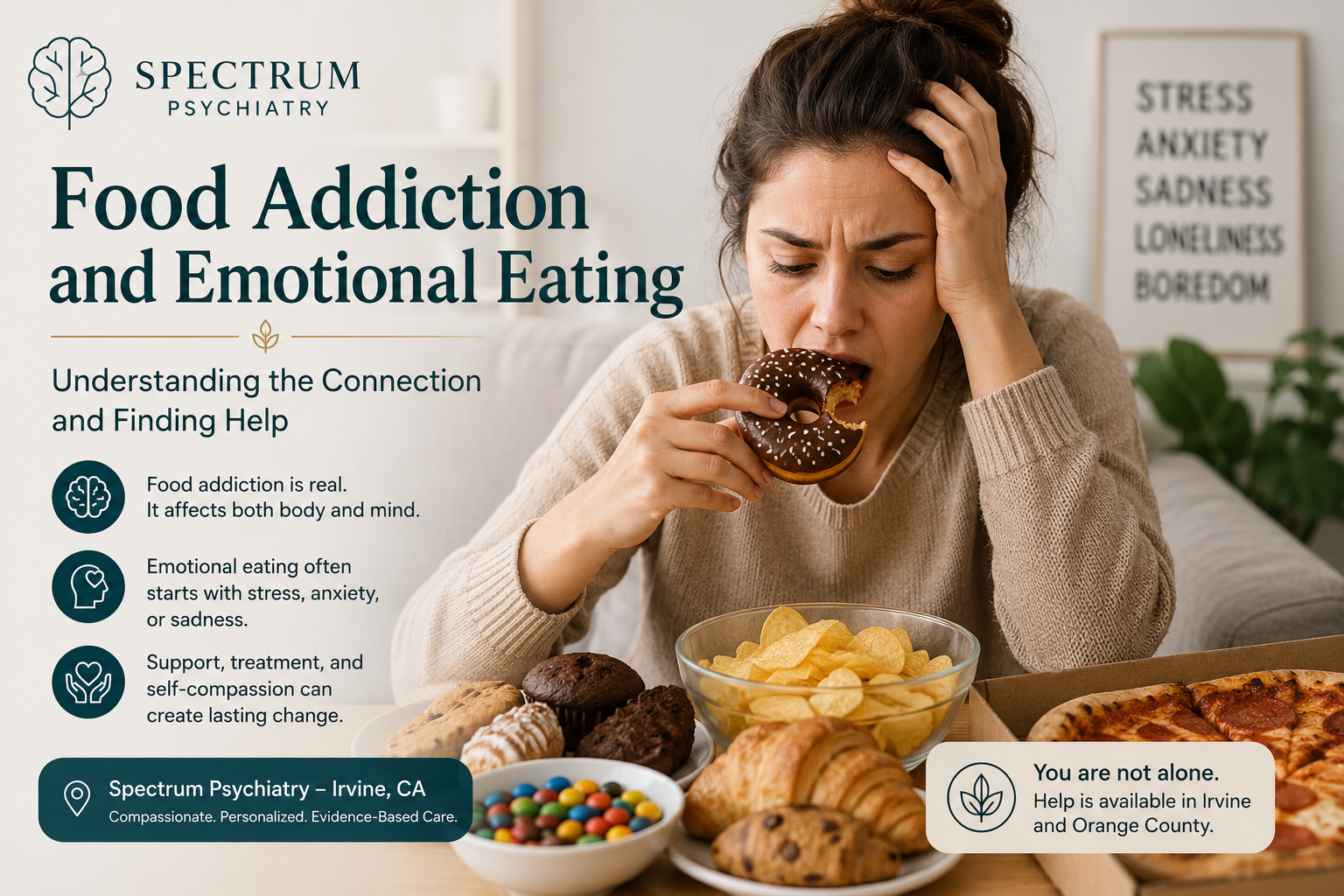
Food Addiction and Emotional Eating: When Eating Becomes Hard to Control
Food is more than fuel. It is connected to comfort, family, culture, celebration, stress relief, and emotional coping. For many people in Irvine, Orange County, and across California, eating can become closely tied to anxiety, depression, stress, boredom, loneliness, or emotional pain.
Sometimes, eating patterns begin to feel difficult to control. A person may eat when they are not physically hungry, feel intense cravings, continue eating despite discomfort, or feel guilt and shame afterward. This pattern is often described as food addiction, emotional eating, compulsive overeating, or binge eating.
At Spectrum Psychiatry in Irvine, Orange County, we understand that problematic eating patterns are often connected to mental health. Food addiction is not simply a lack of willpower. It may involve anxiety, depression, ADHD symptoms, trauma, sleep problems, stress, impulse control, and the brain's reward system.
What Is Food Addiction?
Food addiction is a term used to describe a pattern of compulsive eating that feels difficult to stop, even when it causes emotional, physical, or social consequences. People may feel especially drawn to highly rewarding foods, such as sugary, salty, or processed foods.
Food addiction is not always a formal diagnosis by itself, but the symptoms are real and can be very distressing. Some people who describe food addiction may also meet criteria for binge eating disorder, depression, anxiety, ADHD, or another mental health condition.
At Spectrum Psychiatry, we help patients in Irvine and Orange County look beyond the surface behavior. Instead of asking only what someone is eating, we also ask why the pattern is happening, what emotions are involved, and what mental health symptoms may be contributing to the cycle.
Emotional Eating vs. Physical Hunger
Physical hunger usually builds gradually. It may be satisfied by a variety of foods, and it often goes away after eating enough. Emotional eating is different. It may appear suddenly, feel urgent, and involve cravings for specific comfort foods.
Emotional eating often happens in response to stress, sadness, anger, loneliness, boredom, anxiety, or feeling overwhelmed. The food may provide temporary relief, but the emotional discomfort often returns. This can create a cycle of craving, eating, guilt, and more emotional distress.
- Eating when not physically hungry
- Craving specific foods during stress
- Eating quickly or secretly
- Feeling unable to stop once eating begins
- Feeling guilt, shame, or regret afterward
- Using food to calm anxiety or sadness
- Eating to avoid difficult emotions
Why Food Can Feel Addictive
Highly rewarding foods can affect the brain's reward system. Sweet, salty, fatty, and processed foods may create a temporary sense of comfort or pleasure. When someone is stressed or emotionally overwhelmed, the brain may learn to seek that quick relief again and again.
Over time, food can become a coping tool. A person may reach for food after a difficult workday, during relationship stress, while studying, after feeling rejected, or when trying to manage anxiety. The behavior may become automatic before the person fully notices what they are feeling.
This is why food addiction treatment should be compassionate and personalized. At Spectrum Psychiatry in Irvine, we do not view compulsive eating as a character flaw. We view it as a pattern that deserves careful clinical attention.
Food Addiction and Anxiety
Anxiety can strongly influence eating patterns. Some people lose their appetite when anxious, while others feel intense cravings. Eating may temporarily calm the nervous system or distract from worry. However, emotional eating may later increase anxiety because the person feels guilty, uncomfortable, or out of control.
In Irvine and Orange County, many patients manage demanding work, school, family, and social responsibilities. High stress can make emotional eating more likely. Food may become a fast and private way to cope when a person feels overwhelmed.
You can learn more about our anxiety treatment services at Spectrum Psychiatry.
Food Addiction and Depression
Depression can also contribute to food addiction and compulsive overeating. Low mood, fatigue, loneliness, low motivation, and emotional emptiness may increase the desire for comfort foods. Eating may briefly create relief, but it may not address the underlying depression.
Depression can also reduce energy for exercise, meal planning, sleep routines, and social connection. When these protective habits decrease, emotional eating may become more frequent. This can create a painful cycle that affects both physical and mental health.
Spectrum Psychiatry provides depression treatment and psychiatric care for adults in Irvine, Orange County, and surrounding California communities.
Binge Eating and Loss of Control
Some people with food addiction symptoms experience binge eating. Binge eating may involve eating a large amount of food in a short period of time while feeling unable to stop. It may happen in secret and may be followed by guilt, shame, or emotional distress.
Binge eating disorder is a recognized mental health condition. It is not the same as occasional overeating. It can affect emotional health, self-esteem, relationships, physical health, and daily functioning.
If binge eating is happening regularly, professional support can be important. A psychiatrist can help evaluate whether binge eating is connected to depression, anxiety, ADHD, trauma, medication effects, sleep disruption, or other concerns.
Food Addiction and ADHD Symptoms
ADHD symptoms can also play a role in compulsive eating. People with ADHD may struggle with impulsivity, planning, emotional regulation, and reward-seeking behaviors. Food can become a quick source of stimulation, comfort, or distraction.
Some people with ADHD may skip meals during the day because of distractibility or busy schedules, then overeat later when hunger and emotional fatigue combine. Others may snack frequently while trying to focus or manage boredom.
At Spectrum Psychiatry in Irvine, ADHD care often includes a discussion of sleep, appetite, routines, impulsive behaviors, and emotional regulation. You can learn more about our ADHD treatment options.
Signs You May Need Help for Food Addiction
It may be time to seek help if eating feels out of control or if food is becoming your main way to manage emotions. You do not need to wait until the problem becomes severe before asking for support.
- You often eat when you are not physically hungry
- You feel unable to stop eating once you start
- You hide food or eat secretly
- You feel guilt, shame, or distress after eating
- You use food to cope with anxiety, sadness, or stress
- You have repeated cycles of restriction and overeating
- Your eating habits affect your mood or self-esteem
- You avoid social situations because of eating concerns
- Your sleep, energy, or daily functioning is affected
Treatment Options for Food Addiction
Treatment for food addiction depends on the person. There is no single solution that works for everyone. A helpful plan may include psychiatric evaluation, therapy, nutrition support, medication management when appropriate, sleep improvement, stress management, and lifestyle changes.
Therapy can help patients identify emotional triggers, reduce shame, build coping skills, and change automatic eating patterns. Psychiatric care can help when food addiction is connected to anxiety, depression, ADHD, insomnia, trauma, or mood symptoms.
Medication may be appropriate for some patients, especially when there is an underlying mental health condition. Medication decisions should always be individualized and discussed carefully with a qualified medical provider.
Practical Steps That May Help
While professional care may be needed, some daily changes can help reduce emotional eating. The goal is not strict control or shame. The goal is to create more awareness, structure, and emotional support.
- Notice emotional triggers before eating
- Eat regular meals to avoid extreme hunger
- Improve sleep routines
- Reduce all-or-nothing dieting patterns
- Practice stress management skills
- Build non-food coping strategies
- Limit eating while distracted
- Seek support instead of managing shame alone
How Spectrum Psychiatry Can Help
Spectrum Psychiatry provides personalized psychiatric care for adults in Irvine, Orange County, and nearby California communities. If you are struggling with food addiction, emotional eating, binge eating, anxiety, depression, or ADHD symptoms, we can help evaluate the full picture.
A psychiatric evaluation may explore your mood, anxiety level, eating patterns, sleep, stress, attention, medications, medical history, and daily functioning. This helps determine whether food addiction symptoms are part of a broader mental health concern.
If you are searching for a psychiatrist in Irvine, CA, Spectrum Psychiatry offers thoughtful care for patients in Irvine, Orange County, and surrounding areas.
Food Addiction Treatment in Irvine and Orange County
Food addiction can affect people from many backgrounds. It may affect professionals, parents, students, caregivers, and adults managing high levels of stress. In Irvine and Orange County, many people live busy lives and may use food as a private way to cope with pressure.
Spectrum Psychiatry serves patients in Irvine, Orange County, Newport Beach, Costa Mesa, Tustin, Lake Forest, Mission Viejo, Santa Ana, Laguna Hills, and surrounding California communities.
Seeking help for food addiction is not a sign of weakness. It is a step toward understanding your emotions, improving your health, and building a more balanced relationship with food.

Medically Reviewed By
Cuneyt Tegin
Medical Reviewer
This article has been medically reviewed by Cüneyt Tegin to support accuracy, clarity, and alignment with current mental health education standards.
Last reviewed: June 2026
Related Articles
Food Addiction and Emotional Eating Support in Irvine
If food addiction, emotional eating, anxiety, depression, or binge eating patterns are affecting your life, Spectrum Psychiatry can help you explore personalized treatment options in Irvine and Orange County.
Contact Spectrum Psychiatry