
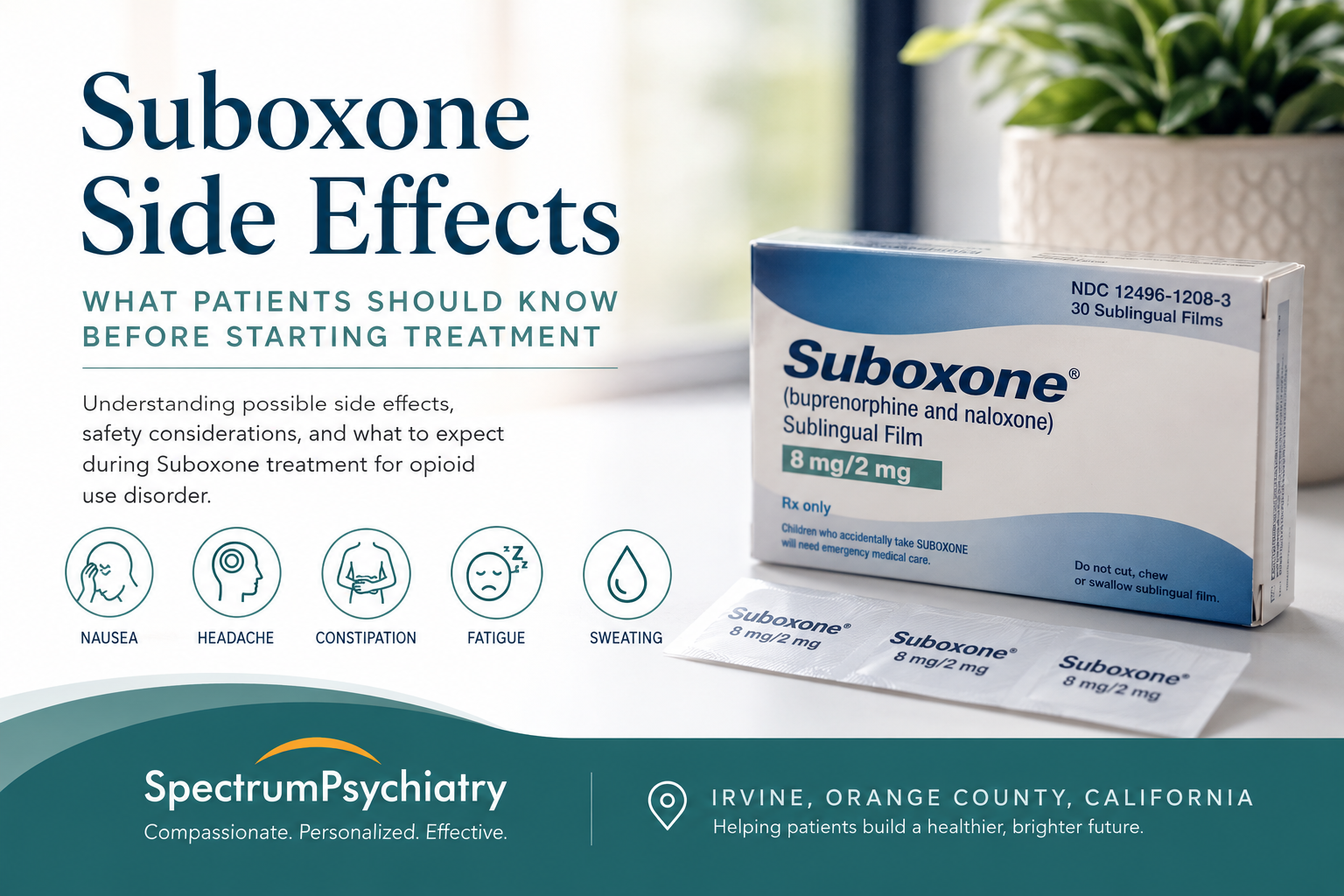
Suboxone Side Effects: What Patients Should Know Before Starting Treatment
Suboxone can be an important treatment option for people struggling with opioid use disorder. For many patients, it may help reduce cravings, ease withdrawal symptoms, and support recovery when used as part of a complete treatment plan.
Like any prescription medication, Suboxone can also cause side effects. Understanding possible Suboxone side effects can help patients feel more prepared, ask better questions, and work closely with their provider during treatment.
At Spectrum Psychiatry in Irvine, Orange County, we provide addiction-related psychiatric care with a personalized approach. Our goal is to help patients understand both the benefits and safety considerations of Suboxone treatment.
What Is Suboxone?
Suboxone is a prescription medication used to treat opioid use disorder. It contains buprenorphine and naloxone. Buprenorphine helps reduce cravings and withdrawal symptoms, while naloxone is included to help reduce misuse.
Suboxone is commonly used as part of medication-assisted treatment, also known as MAT. MAT may include medication, psychiatric care, therapy recommendations, recovery planning, relapse prevention, and ongoing monitoring.
Common Suboxone Side Effects
Not every patient experiences side effects. Some people tolerate Suboxone well, while others notice temporary symptoms as their body adjusts to treatment.
- Nausea or upset stomach
- Headache
- Constipation
- Sweating
- Dry mouth
- Fatigue or sleepiness
- Dizziness
- Sleep changes
- Mild mood changes
- Changes in appetite
Many side effects improve with time, dosage adjustment, hydration, sleep support, or changes in routine. Patients should not change or stop Suboxone without medical guidance.
Serious Side Effects and Safety Concerns
Serious reactions are less common, but they require immediate attention. Patients should contact their provider or seek urgent care if they experience severe sleepiness, trouble breathing, confusion, fainting, allergic symptoms, severe abdominal pain, or symptoms that feel unsafe.
Suboxone may be more risky when combined with alcohol, sedatives, benzodiazepines, sleep medications, or other substances that slow breathing. This is why honest communication with your provider is essential.
Does Suboxone Cause Dependence?
Suboxone can cause physical dependence. This means the body may adapt to the medication over time. Physical dependence is not the same as uncontrolled addiction.
In opioid use disorder treatment, the goal is not intoxication. The goal is stability, reduced cravings, lower relapse risk, and improved daily functioning. If a patient eventually stops Suboxone, tapering should be done gradually with medical support.
Suboxone and Mental Health
Opioid addiction often occurs alongside anxiety, depression, ADHD, trauma, sleep problems, or other mental health concerns. Side effects may also feel worse when a patient is under stress, sleeping poorly, or struggling emotionally.
Spectrum Psychiatry evaluates the full picture, including mental health symptoms, substance use history, medications, sleep, medical concerns, and recovery goals.
You can learn more about our Suboxone treatment services in Irvine and Orange County.
How Providers Monitor Suboxone Treatment
Ongoing monitoring is an important part of Suboxone treatment. Follow-up visits allow your provider to review cravings, withdrawal symptoms, side effects, medication safety, mood, sleep, and progress in recovery.
Your provider may adjust the treatment plan if side effects become difficult or if symptoms are not well controlled. The goal is to find a balance between symptom relief, safety, and long-term stability.
When to Call Your Provider
Patients should contact their provider if side effects are persistent, worsening, or interfering with daily life. It is also important to report new medications, alcohol use, sedative use, or any relapse risk.
- Side effects are becoming hard to tolerate
- You feel overly sedated or confused
- You have trouble breathing
- You experience strong cravings or withdrawal symptoms
- You are considering stopping Suboxone
- You start a new medication
- You feel depressed, anxious, or emotionally unstable
Suboxone Treatment in Irvine and Orange County
Spectrum Psychiatry serves patients in Irvine, Orange County, Newport Beach, Costa Mesa, Tustin, Lake Forest, Mission Viejo, Santa Ana, Laguna Hills, and nearby California communities.
If you are considering Suboxone treatment or are concerned about Suboxone side effects, professional support can help you make informed decisions. A personalized treatment plan can reduce risk and support long-term recovery.
If you are searching for a psychiatrist in Irvine, CA, Spectrum Psychiatry provides addiction-related psychiatric care for patients in Orange County.
Related Articles

This article has been medically reviewed by Cuneyt Tegin to support accuracy, clarity, and alignment with current mental health education standards.
Last reviewed: June 2026
Suboxone Treatment in Irvine & Orange County
If you are concerned about opioid cravings, withdrawal symptoms, relapse risk, or Suboxone side effects, Spectrum Psychiatry can help you explore personalized treatment options.
Contact Spectrum Psychiatry