
Spravato Treatment in Irvine, California
Individualized evaluation and supervised esketamine nasal-spray treatment planning for eligible adults with treatment-resistant depression.
What Is Spravato?
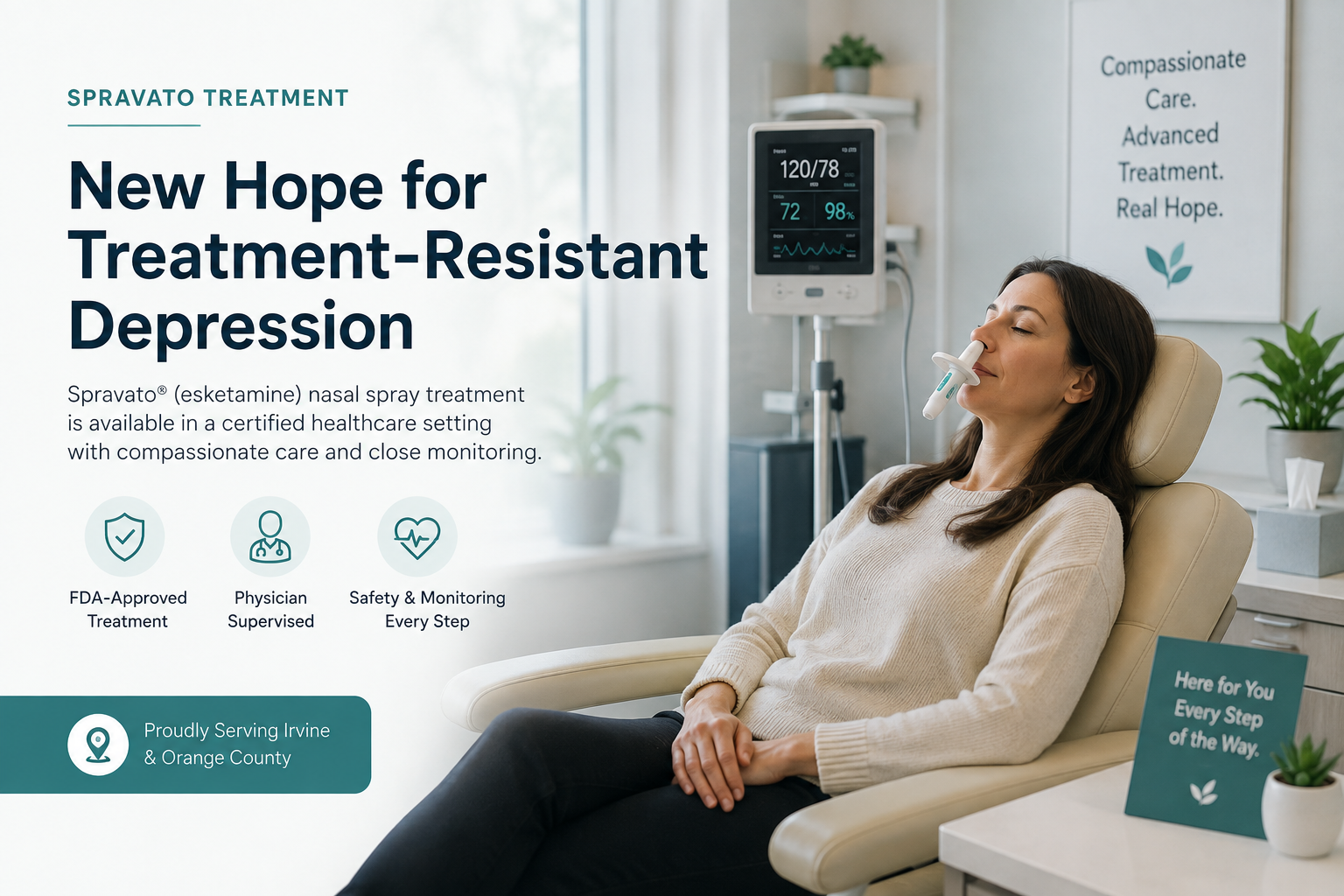
Spravato® (esketamine) is an FDA-approved prescription nasal spray that may be used for eligible adults with treatment-resistant depression. Unlike traditional antidepressants, Spravato is administered only in a certified healthcare setting under direct medical supervision.
Treatment includes psychiatric evaluation, eligibility assessment, supervised administration, post-treatment monitoring, and ongoing follow-up. Every treatment decision is individualized according to the patient's medical history, psychiatric condition, previous treatment response, and safety considerations.
Spravato is not appropriate for every patient experiencing depression. A comprehensive psychiatric evaluation helps determine whether this treatment should be considered as part of an overall treatment plan.
Who May Be a Candidate?
Eligibility is determined through a comprehensive psychiatric evaluation and review of previous treatment history.
Adults experiencing treatment-resistant depression
Patients whose depression has not improved adequately with previous treatment
Adults seeking an evaluation for persistent depressive symptoms
Patients able to attend treatment in a certified healthcare setting
Patients able to remain for required post-dose monitoring
Adults without a medical or psychiatric contraindication to treatment
Patients willing to follow transportation and safety instructions
Adults who can participate in ongoing psychiatric follow-up
Symptoms of Treatment-Resistant Depression
Individuals considering Spravato often continue experiencing significant depression despite previous treatment attempts.

Evaluation Before Treatment
Careful evaluation helps determine whether Spravato is an appropriate treatment option.
Comprehensive Psychiatric Evaluation
We review depressive symptoms, treatment history, current medications, medical conditions, psychiatric history, substance use, safety concerns, functioning, and personal treatment goals.
Review Previous Depression Treatment
The evaluation considers previous antidepressants, medication doses, treatment duration, adherence, psychotherapy, side effects, clinical response, and reasons treatment may have been discontinued.
Assess Safety and Eligibility
We review blood pressure, cardiovascular history, pregnancy considerations, substance-use risk, psychosis, bipolar symptoms, medication interactions, and other factors that may affect treatment suitability.
Create an Individualized Plan
If Spravato is clinically appropriate and available, the treatment plan includes dosing, monitoring, transportation requirements, follow-up care, and coordination with other depression treatments.
How Spravato Treatment Works
Spravato is administered only in a certified healthcare setting with direct observation and required monitoring after each dose.
Treatment in a Certified Setting
Spravato is self-administered as a nasal spray under the direct observation of a healthcare professional in a healthcare setting certified through the Spravato REMS program.
Pre-Treatment Assessment
Before treatment, the clinical team reviews current symptoms, medications, safety concerns, and blood pressure. Patients receive preparation instructions before each scheduled visit.
Clinical Monitoring
Patients are monitored after administration for sedation, dissociation, respiratory effects, changes in blood pressure, and other clinically significant reactions.
Transportation Planning
Patients should arrange transportation home and must not drive, operate machinery, or perform activities requiring complete alertness until the following day after restful sleep.
Possible Side Effects
Side effects vary between patients. Some are temporary and improve during the monitoring period, while others may require additional evaluation or changes to the treatment plan.
Blood Pressure Monitoring
Spravato may temporarily increase blood pressure. Blood pressure is assessed before treatment and monitored again after administration according to the patient's clinical condition.
Sedation and Dissociation
Some patients may experience sedation, altered perception, or a temporary sense of disconnection. These effects are a major reason treatment must occur under direct observation in a monitored healthcare setting.
Driving Restrictions
Patients must arrange transportation home and should not drive, operate machinery, or perform activities requiring full alertness until the following day after restful sleep.
Related Depression Treatment Options
Spravato may be one part of a broader treatment plan that also includes psychiatric medication management, psychotherapy, and ongoing follow-up.
Psychiatric Evaluation
A comprehensive evaluation helps confirm the diagnosis, review previous treatments, identify overlapping conditions, and determine whether Spravato evaluation is appropriate.
Explore Psychiatric EvaluationMedication Management
Ongoing psychiatric medication management may remain an important part of treatment before, during, or after Spravato therapy.
Explore Medication ManagementIndividual Therapy
Psychotherapy may help patients address avoidance, hopelessness, behavioral patterns, relationships, stress, and recovery goals alongside medical treatment.
Explore Individual TherapyKetamine Treatment
Spravato and ketamine are not interchangeable treatments. A psychiatric evaluation can help explain their differences, evidence, administration, risks, and availability.
Explore Ketamine TreatmentWhy Choose Spectrum Psychiatry?
Advanced depression treatment should begin with an accurate diagnosis, a careful review of previous treatment, and a clear understanding of medical and psychiatric risks.

Advanced Care With Required Monitoring
Treatment recommendations consider diagnosis, previous response, medical history, blood pressure, substance-use risk, medication interactions, functioning, and personal goals.
Frequently Asked Questions
What is Spravato?
Spravato is the brand name for esketamine nasal spray, a prescription Schedule III controlled medication used for certain adults with treatment-resistant depression and, in a separate indication, depressive symptoms associated with major depressive disorder with acute suicidal ideation or behavior.
Can Spravato be used without an oral antidepressant?
For adults with treatment-resistant depression, current FDA labeling permits Spravato as monotherapy or together with an oral antidepressant. For depressive symptoms in adults with major depressive disorder with acute suicidal ideation or behavior, it is used together with an oral antidepressant.
Can I take Spravato at home?
No. Spravato is administered only in a certified healthcare setting under direct observation. It is not dispensed directly to patients for unsupervised home use.
How long am I monitored after treatment?
Patients are monitored by a healthcare professional for at least two hours after administration. The clinician determines when the patient is medically ready to leave.
Can I drive after a Spravato appointment?
No. Patients must arrange transportation home and should not drive, operate machinery, or perform activities requiring full alertness until the next day after restful sleep.
Is Spravato the same as ketamine?
No. Spravato contains esketamine and is administered as an FDA-approved nasal spray through a restricted REMS program. Ketamine may be administered through other routes and has different regulatory, dosing, monitoring, and clinical considerations.
Does Spravato replace emergency psychiatric care?
No. Spravato does not replace hospitalization, emergency assessment, crisis intervention, or other urgent treatment when clinically necessary.
Does Spectrum Psychiatry provide Spravato treatment?
Patients should contact Spectrum Psychiatry directly to confirm current Spravato availability, REMS-certified treatment arrangements, insurance participation, eligibility requirements, and appointment scheduling.
Related Services
Emergency warning: Spravato does not replace emergency psychiatric care, hospitalization, or crisis treatment. Call 911 or go to the nearest emergency department for suicidal intent, suicide attempt, severe confusion, psychosis, overdose, loss of consciousness, breathing difficulty, or immediate danger.
Medical disclaimer: This page provides general educational information and does not replace individualized medical or psychiatric evaluation, diagnosis, or treatment. Contact Spectrum Psychiatry directly to confirm Spravato service availability, REMS-certified treatment arrangements, insurance participation, and clinical eligibility.