
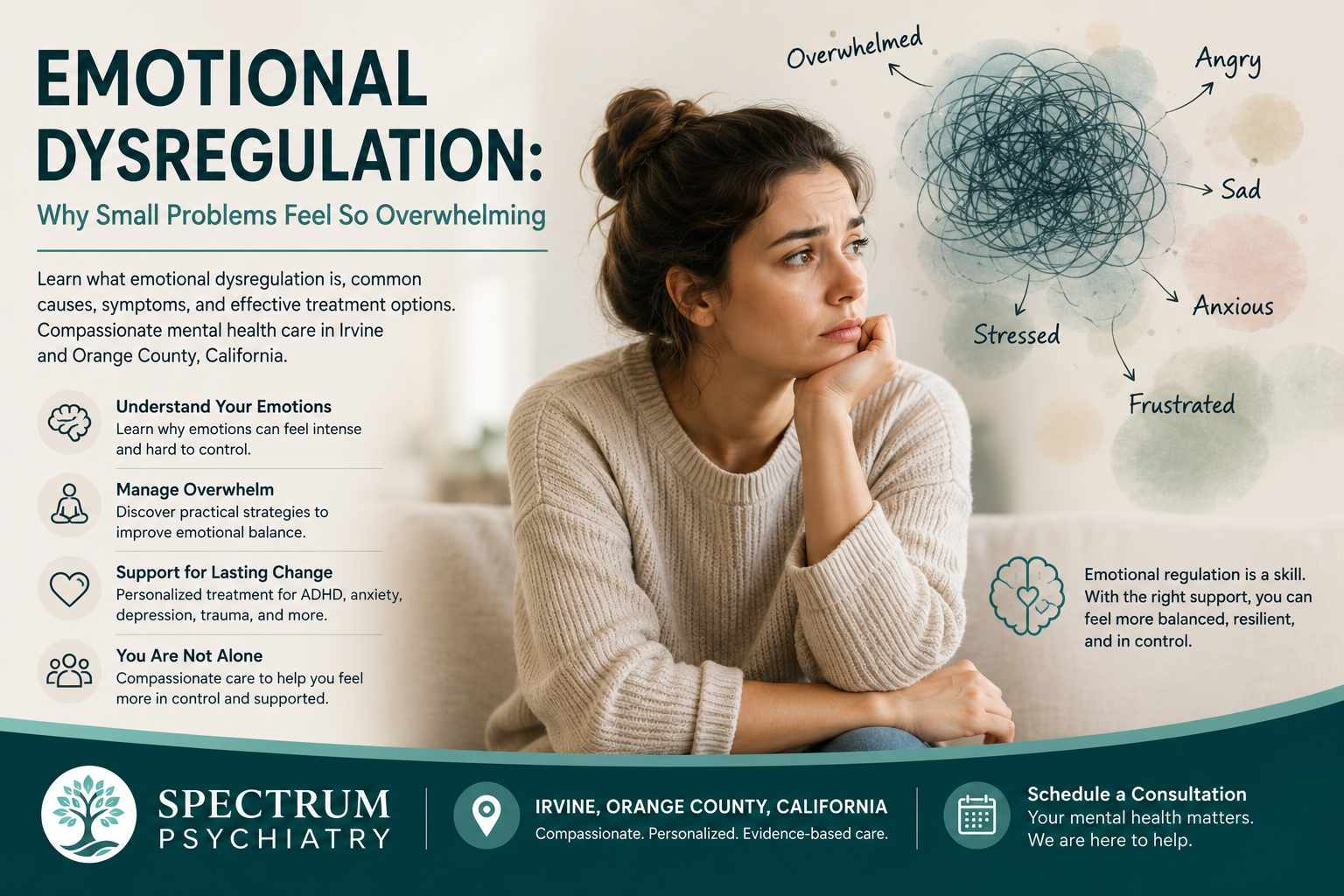
Emotional Dysregulation: Why Small Problems Feel So Overwhelming
Emotional dysregulation can make everyday problems feel much bigger than they appear to others. A small disagreement, a delayed reply, a stressful task, or an unexpected change in plans may trigger intense sadness, anger, anxiety, shame, panic, or emotional shutdown.
Many people in Irvine, Orange County, and across California experience emotional overwhelm but do not know how to describe it. They may say, “I overreact,” “I cannot calm down,” “small things ruin my whole day,” or “I know my reaction is too strong, but I cannot stop it.”
At Spectrum Psychiatry in Irvine, we understand that emotional dysregulation is not simply being dramatic or too sensitive. It may be connected to ADHD, anxiety, depression, trauma, chronic stress, burnout, poor sleep, substance use, or other mental health concerns. With the right evaluation and support, emotional regulation can improve.
What Is Emotional Dysregulation?
Emotional dysregulation means having difficulty managing the intensity, duration, or expression of emotions. Everyone feels strong emotions sometimes, but emotional dysregulation can make emotions feel overwhelming, unpredictable, or difficult to recover from.
A person may feel calm one moment and deeply upset the next. They may know logically that a situation is manageable, but their body and emotions react as if there is a major threat. This can affect relationships, work, school, parenting, decision-making, and self-confidence.
Emotional dysregulation is not always a diagnosis by itself. Instead, it is a symptom pattern that may appear with many mental health conditions. A careful psychiatric evaluation can help identify what may be contributing to the emotional intensity.
Common Signs of Emotional Dysregulation
- Strong emotional reactions to small triggers
- Difficulty calming down after becoming upset
- Feeling emotionally flooded or overwhelmed
- Irritability, anger, or sudden frustration
- Rapid mood shifts during the day
- Feeling rejected or criticized very intensely
- Impulsive words or actions during emotional moments
- Emotional shutdown or withdrawal after conflict
- Guilt or shame after reacting strongly
- Difficulty explaining feelings clearly
- Relationship conflict caused by emotional intensity
- Using food, screens, substances, or avoidance to cope
Why Emotions Can Feel So Overwhelming
Emotional regulation depends on several systems working together: attention, memory, stress response, sleep, nervous system regulation, coping skills, and mental health. When these systems are overloaded, emotions may become harder to manage.
For example, a person who is sleep deprived, anxious, burned out, or under chronic stress may have less emotional reserve. A problem that would normally feel manageable may suddenly feel unbearable. This does not mean the person is weak. It means their system may be overwhelmed.
Emotional Dysregulation and ADHD
Emotional dysregulation is common among adults with ADHD. ADHD is often associated with attention problems, procrastination, and disorganization, but emotional regulation can also be a major part of the experience.
Adults with ADHD may feel emotions quickly and intensely. They may struggle with frustration tolerance, impatience, rejection sensitivity, irritability, or emotional impulsivity. A small mistake, criticism, or change in plans may feel much larger than it appears externally.
Learn more about ADHD treatment in Irvine and how psychiatric care may help.
Emotional Dysregulation and Anxiety
Anxiety can make emotions feel harder to control. When the nervous system is on high alert, the brain may interpret uncertainty, conflict, or criticism as a threat. This can lead to panic, irritability, overthinking, reassurance-seeking, or emotional shutdown.
Spectrum Psychiatry provides anxiety treatment in Irvine and Orange County for adults experiencing worry, panic, stress, and emotional overwhelm.
Emotional Dysregulation and Depression
Depression can affect emotional regulation in several ways. Some people become more tearful, irritable, sensitive, or overwhelmed. Others feel emotionally numb and disconnected. Both patterns can be signs that mood symptoms are affecting the nervous system.
Depression may also reduce emotional resilience. When energy, motivation, and sleep are poor, it can be harder to cope with stress. A small problem may feel like confirmation that things are hopeless or unmanageable.
Read more about depression treatment in Irvine.
Trauma, Stress, and Emotional Regulation
Trauma and chronic stress can train the nervous system to respond quickly to perceived danger. This can make emotional reactions feel sudden, intense, or confusing. A present-day situation may trigger feelings that are connected to past experiences.
Emotional dysregulation related to trauma may involve panic, anger, shutdown, avoidance, hypervigilance, or difficulty trusting others. Professional support can help patients understand triggers, build coping skills, and address underlying trauma or stress-related symptoms when appropriate.
How Emotional Dysregulation Affects Daily Life
Emotional dysregulation can affect more than mood. It can influence work performance, communication, relationships, parenting, decision-making, and self-esteem. A person may spend hours recovering from an emotional trigger and then feel guilty for losing control.
At work or school, emotional dysregulation may cause difficulty receiving feedback, managing deadlines, handling conflict, or staying focused after a stressful interaction. In relationships, it may lead to arguments, withdrawal, or fear of abandonment.
Emotional Dysregulation vs. Mood Swings
Emotional dysregulation and mood swings can overlap, but they are not always the same. Emotional dysregulation often refers to difficulty managing reactions to triggers. Mood swings may involve broader shifts in mood that can last hours, days, or longer.
If mood changes are intense, persistent, occur without clear triggers, or include periods of unusually elevated energy, decreased need for sleep, impulsivity, or risky behavior, a psychiatric evaluation is especially important.
Practical Strategies That May Help
- Pause before responding during emotional moments
- Name the emotion clearly: anger, shame, fear, sadness, stress
- Notice physical signs such as tension, heat, or racing heart
- Use grounding skills before continuing a difficult conversation
- Reduce sleep deprivation whenever possible
- Limit alcohol or substances that worsen emotional control
- Write down triggers and patterns after calming down
- Use routines to reduce daily stress and decision fatigue
- Ask for space instead of reacting impulsively
- Seek professional care if emotions feel unmanageable
Treatment Options for Emotional Dysregulation
Treatment depends on what is contributing to the symptoms. A psychiatric evaluation may explore ADHD, anxiety, depression, trauma, sleep, substance use, medical history, medications, relationship stress, and daily functioning.
Treatment may include therapy recommendations, medication management when appropriate, ADHD treatment, anxiety treatment, depression treatment, sleep support, lifestyle changes, and coping skills for emotional regulation.
You can learn more about medication management for mental health at Spectrum Psychiatry.
When to Seek Professional Help
It may be time to seek help if emotional reactions feel too intense, hard to control, or damaging to your quality of life. You do not need to wait until relationships, work, or health are in crisis before asking for support.
- Your emotions feel stronger than the situation seems to warrant
- You often regret what you say or do when upset
- You shut down or withdraw after conflict
- Emotional reactions affect relationships or work
- You feel ashamed, guilty, or confused after emotional episodes
- You use avoidance, substances, screens, or food to cope
- You also struggle with anxiety, depression, ADHD, or trauma symptoms
- You feel unable to calm yourself once triggered
If emotional dysregulation includes thoughts of self-harm, suicidal thoughts, violence, or unsafe behavior, seek immediate emergency help or call 988 in the United States.
Emotional Dysregulation Treatment in Irvine and Orange County
Spectrum Psychiatry provides psychiatric care for adults in Irvine, Orange County, and nearby California communities. We help patients better understand emotional dysregulation and the mental health conditions that may contribute to it.
A personalized evaluation can help clarify whether emotional overwhelm is connected to ADHD, anxiety, depression, trauma, burnout, sleep problems, or another concern. From there, treatment can be designed around your symptoms, goals, and daily life.
If you are searching for a psychiatrist in Irvine, CA, Spectrum Psychiatry offers compassionate mental health care for adults in Irvine, Orange County, and surrounding California communities.
Related Articles

This article has been medically reviewed by Cuneyt Tegin to support accuracy, clarity, and alignment with current mental health education standards.
Last reviewed: July 2026
Emotional Regulation Support in Irvine
If emotional dysregulation, anxiety, depression, ADHD symptoms, or chronic stress are affecting your daily life, Spectrum Psychiatry can help you explore personalized treatment options.
Contact Spectrum Psychiatry