
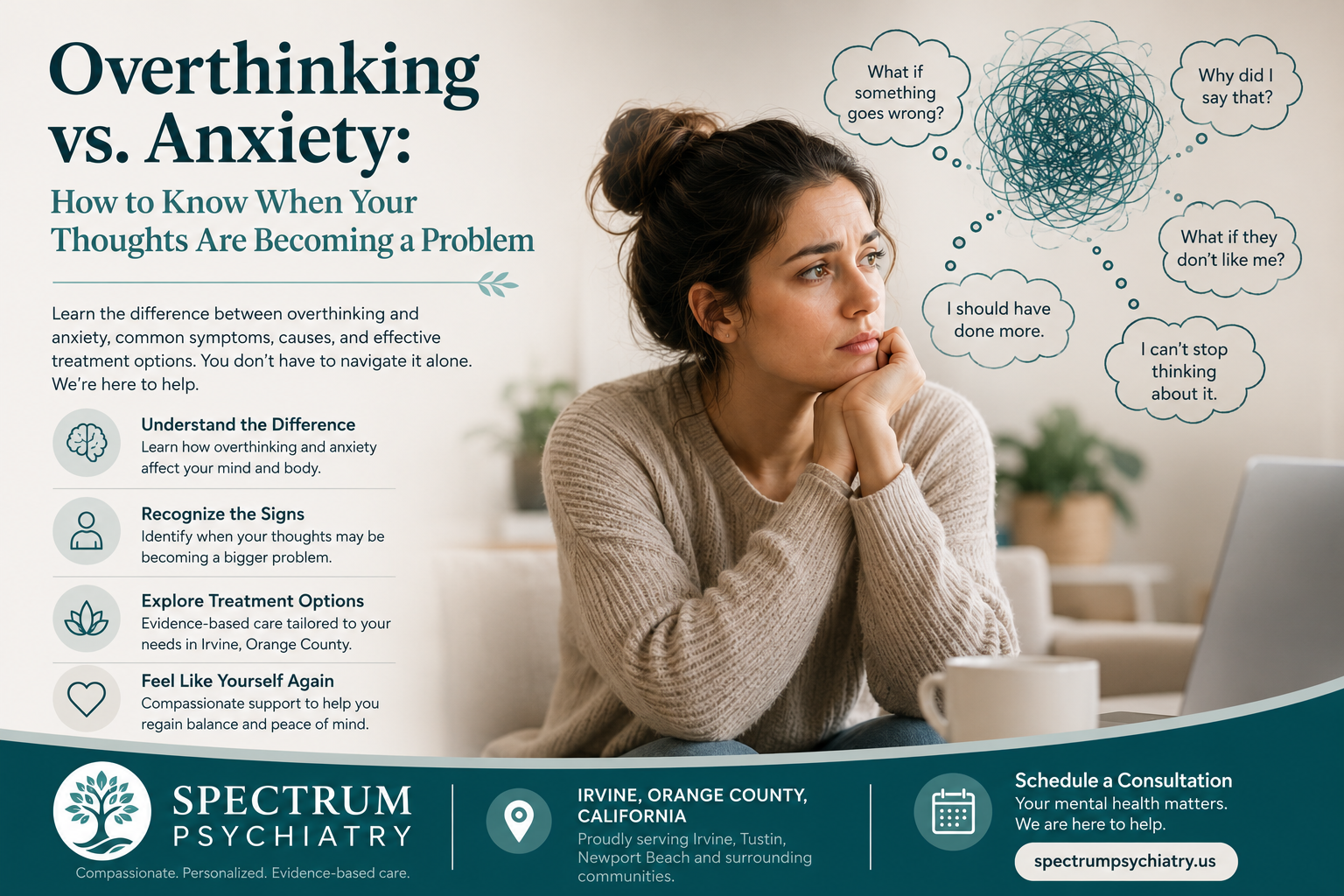
Overthinking vs. Anxiety: How to Know When Your Thoughts Are Becoming a Problem
Everyone overthinks sometimes. You may replay a conversation, second-guess a decision, or wonder whether you said the wrong thing. Occasional overthinking is part of being human. But when thoughts become repetitive, distressing, hard to control, or begin affecting sleep and daily functioning, overthinking may be related to anxiety or another mental health concern.
Many adults in Irvine, Orange County, and across California live with busy schedules, professional pressure, family responsibilities, financial decisions, and constant digital stimulation. These demands can make the mind feel crowded and difficult to quiet.
At Spectrum Psychiatry in Irvine, we often work with patients who describe racing thoughts, excessive worry, mental exhaustion, difficulty relaxing, and trouble sleeping. Understanding the difference between overthinking and anxiety can help you know when professional support may be helpful.
What Is Overthinking?
Overthinking means spending excessive time analyzing, replaying, or worrying about thoughts, decisions, memories, or future possibilities. It may involve repeatedly asking yourself what you should have done differently, what might happen next, or whether you made the right choice.
Some overthinking is problem-solving. For example, thinking through a work challenge or planning an important conversation can be useful. But overthinking becomes less helpful when the mind keeps circling the same thoughts without reaching clarity or action.
A person who is overthinking may feel mentally stuck. They may replay the same event again and again, compare every possible outcome, or feel unable to make a decision because no option feels safe enough.
What Is Anxiety?
Anxiety is more than thinking too much. Anxiety often involves persistent worry, fear, nervous system activation, physical tension, restlessness, and a sense that something bad might happen. Anxiety may affect the body, emotions, thoughts, and behavior.
A person with anxiety may experience racing thoughts, muscle tension, chest tightness, stomach discomfort, irritability, difficulty sleeping, panic symptoms, or avoidance of situations that feel overwhelming.
Anxiety can make overthinking more intense. The mind may try to predict every possible outcome in an attempt to feel safe. But instead of creating relief, this cycle often increases distress.
Learn more about anxiety treatment in Irvine at Spectrum Psychiatry.
When Overthinking Becomes a Mental Health Concern
Overthinking becomes a concern when it is frequent, distressing, hard to stop, or interferes with daily life. If your thoughts keep you awake at night, make it difficult to focus, cause you to avoid decisions, or create emotional exhaustion, it may be more than a normal thinking pattern.
Some people overthink because they want to avoid mistakes. Others overthink because uncertainty feels unsafe. Some use overthinking as a way to feel prepared, but the mental effort can become exhausting over time.
- You replay conversations for hours or days
- You frequently worry about future outcomes
- You struggle to make decisions
- Your thoughts interfere with sleep
- You feel mentally exhausted from thinking
- You avoid tasks because you fear making mistakes
- You seek reassurance repeatedly
- You feel unable to relax even when nothing urgent is happening
Key Differences Between Overthinking and Anxiety
Overthinking is usually a thought pattern. Anxiety is a broader mental and physical state. Overthinking may involve repeated analysis, while anxiety often includes worry, physical tension, fear, avoidance, and nervous system activation.
For example, someone may overthink what to write in an email. But if that overthinking comes with a racing heart, fear of criticism, sleep disruption, and avoidance of sending the email, anxiety may be playing a larger role.
Another difference is persistence. Occasional overthinking may pass after a decision is made. Anxiety-related overthinking often continues even after reassurance or problem-solving because the underlying worry remains active.
Why You Cannot “Just Stop Thinking”
People who overthink are often told to “just stop worrying” or “stop thinking about it.” While this advice may be well intended, it usually does not help. Overthinking is rarely a simple choice. It may be connected to anxiety, stress, trauma, perfectionism, ADHD symptoms, depression, or chronic uncertainty.
The brain may keep returning to the same thoughts because it is trying to solve a problem, prevent danger, avoid embarrassment, or create a sense of control. The problem is that repeated thinking does not always produce safety or clarity. Sometimes it only increases mental exhaustion.
This is why treatment focuses not on blaming the person, but on understanding what the thought cycle is trying to do and helping the brain respond in healthier ways.
Overthinking, ADHD, and Depression
Overthinking is not always caused by anxiety alone. Adults with ADHD may overthink because they have experienced years of missed deadlines, forgotten responsibilities, or criticism about being disorganized. They may repeatedly question whether they forgot something important or whether they handled a situation correctly.
Depression may also contribute to repetitive negative thinking. Someone experiencing depression may dwell on past mistakes, self-criticism, feelings of guilt, or hopelessness. These thought patterns can make it difficult to enjoy the present or feel confident about the future.
Learn more about Adult ADHD vs. Anxiety and High-Functioning Depression.
The Effects of Overthinking on Daily Life
Persistent overthinking can affect many areas of life. At work, it may lead to procrastination, difficulty making decisions, or spending too much time perfecting small details. In relationships, it may cause repeated reassurance seeking, fear of saying the wrong thing, or constant worry about how others perceive you.
Overthinking can also contribute to poor sleep. Many people notice that their thoughts become louder at night when distractions are gone. This can make it difficult to fall asleep or stay asleep, leading to fatigue and reduced concentration the next day.
Healthy Ways to Reduce Overthinking
- Notice when thoughts become repetitive instead of productive.
- Set realistic time limits for making routine decisions.
- Practice mindfulness or grounding techniques.
- Reduce unnecessary digital distractions.
- Maintain a consistent sleep schedule.
- Write worries down instead of carrying them mentally.
- Focus on actions you can control today.
- Talk with a trusted mental health professional if symptoms persist.
These strategies may help reduce mental overload, but they are not a substitute for professional evaluation when overthinking is persistent or connected to anxiety, depression, ADHD, or other mental health concerns.
Treatment Options
Treatment depends on the underlying cause. If overthinking is related to anxiety, depression, ADHD, trauma, or chronic stress, addressing those conditions often reduces the intensity of repetitive thinking.
A psychiatric evaluation may include discussion of mood, anxiety, attention, sleep, stress, medical history, medications, and daily functioning. Treatment may include medication management when appropriate, therapy recommendations, sleep improvement, stress management, and practical coping strategies.
When Should You Seek Professional Help?
You do not need to wait until overthinking becomes overwhelming. If repetitive thoughts are affecting your quality of life, relationships, work, or sleep, professional support may help.
- You feel mentally exhausted most days.
- You cannot stop worrying despite reassurance.
- You avoid decisions because they feel overwhelming.
- Your sleep is affected by racing thoughts.
- You feel anxious, depressed, or emotionally drained.
- Your thoughts interfere with work or relationships.
Overthinking Treatment in Irvine and Orange County
Spectrum Psychiatry provides personalized psychiatric care for adults in Irvine, Orange County, and surrounding California communities. Whether overthinking is connected to anxiety, depression, ADHD, burnout, or another concern, we work with patients to understand the underlying causes and create an individualized treatment plan.
If you are searching for a psychiatrist in Irvine, CA, Spectrum Psychiatry offers compassionate, evidence-based mental health care tailored to your needs.
Related Articles

This article has been medically reviewed by Cuneyt Tegin to support accuracy, clarity, and alignment with current mental health education standards.
Last reviewed: July 2026
Find Peace of Mind with Personalized Mental Health Care
If overthinking, anxiety, or racing thoughts are affecting your daily life, Spectrum Psychiatry can help you understand the underlying causes and explore personalized treatment options.
Contact Spectrum Psychiatry