
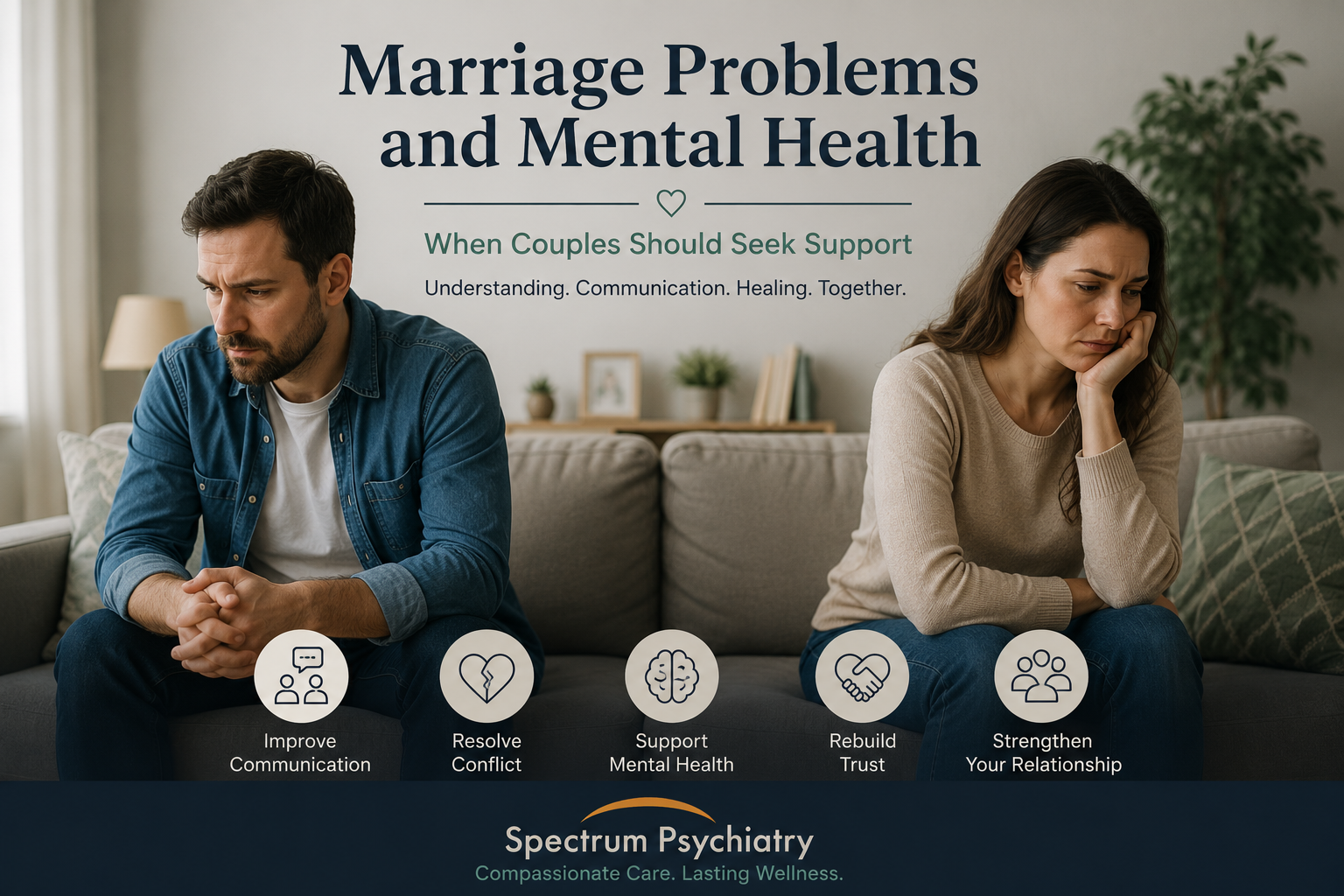
Marriage Problems and Mental Health: When Couples Should Seek Support
Understanding communication problems, repeated conflict, emotional distance, trust issues, and the mental health conditions that may affect relationships.

This article has been reviewed for educational and clinical accuracy and discusses relationship stress, communication difficulties, and mental health symptoms that may affect spouses and families.
Every marriage experiences disagreement. Differences in personality, expectations, finances, parenting, intimacy, work, and family responsibilities are normal. Problems become more concerning when conflict is constant, communication becomes hostile, trust is damaged, or one or both spouses begin to feel emotionally alone.
Relationship problems may also interact with anxiety, depression, ADHD, trauma, sleep difficulties, bipolar disorder, or substance use. In these situations, addressing only the argument may not be enough. The underlying mental health concern may also need professional evaluation.
Common Problems Between Spouses
- • Repeated arguments about the same subjects
- • Criticism, defensiveness, sarcasm, or contempt
- • Emotional distance and reduced affection
- • Financial disagreements or hidden spending
- • Parenting differences
- • Unequal household or childcare responsibilities
- • Sexual or intimacy concerns
- • Jealousy, secrecy, or trust problems
- • Interference from extended family
- • Work stress and lack of quality time
Communication Problems
Many couples believe they are arguing about money, housework, or parenting, but the deeper problem is often how they communicate. Conversations may quickly become accusatory, one spouse may withdraw, or both may focus on proving who is right rather than understanding each other.
Healthier communication includes listening without interruption, describing specific behaviors instead of attacking character, acknowledging the other person's feelings, and taking a short break when emotions become too intense.
How Mental Health Can Affect Marriage
Depression may reduce energy, interest, affection, and motivation. Anxiety may lead to reassurance-seeking, irritability, avoidance, or constant worry. ADHD may contribute to forgetfulness, disorganization, impulsive decisions, and unfinished responsibilities.
Trauma-related symptoms may make trust, emotional closeness, or conflict feel unsafe. Bipolar disorder may affect mood, sleep, spending, judgment, and energy. Substance use can contribute to secrecy, financial problems, instability, and repeated broken promises.
What Couples Can Try at Home
- • Choose a calm time for difficult conversations
- • Discuss one issue at a time
- • Avoid insults, threats, and humiliating language
- • Use specific examples rather than words such as “always”
- • Make responsibilities clear and realistic
- • Schedule regular time together without phones
- • Apologize clearly when harm has been caused
- • Seek help before resentment becomes permanent
When to Seek Professional Help
Professional support may be helpful when:
- • The same conflicts continue without resolution
- • Communication has become hostile or has stopped
- • Trust has been damaged by secrecy or infidelity
- • One or both spouses feel persistently anxious or depressed
- • Sleep, work, parenting, or daily functioning is affected
- • Substance use is contributing to the conflict
- • A mental health condition may be present
- • Separation or divorce is being seriously considered
Couples therapy may focus directly on the relationship. Individual psychiatric evaluation may also be appropriate when anxiety, depression, ADHD, trauma, bipolar disorder, sleep problems, or substance use are contributing to marital distress.
When the Relationship Is Unsafe
Threats, physical violence, sexual coercion, stalking, intimidation, destruction of property, or controlling access to money and communication are not ordinary relationship disagreements. Prioritize safety and seek appropriate emergency, legal, or domestic violence support. Call 911 for immediate danger.
Frequently Asked Questions
Can marriage problems affect mental health?
Yes. Ongoing conflict, criticism, emotional distance, financial stress, and trust problems may contribute to anxiety, depressed mood, irritability, sleep problems, and difficulty concentrating.
When should a couple seek professional help?
It is reasonable to seek support when problems keep repeating, communication has broken down, trust has been damaged, or relationship stress is affecting mental health and daily life.
Can psychiatric treatment improve relationship problems?
Psychiatric treatment may help when a mental health condition is contributing to conflict. It does not replace couples therapy, but treating depression, anxiety, ADHD, bipolar disorder, trauma, sleep problems, or substance use may improve functioning and communication.
Mental Health Support in Irvine and Orange County
Spectrum Psychiatry provides psychiatric evaluation and individualized treatment planning for adults experiencing anxiety, depression, ADHD, trauma-related symptoms, bipolar disorder, sleep problems, and other concerns that may affect relationships and family life.
- ✓ Comprehensive psychiatric evaluations
- ✓ Anxiety and depression assessment
- ✓ ADHD and mood disorder evaluation
- ✓ Medication management when appropriate
- ✓ Referrals for couples or individual therapy
- ✓ Individualized treatment planning
Medical disclaimer: This article is for general educational purposes and does not replace individualized medical, psychiatric, relationship, legal, or emergency advice.
Related Articles
Relationship Conflict: Why Couples Keep Having the Same Arguments
Discover why recurring relationship conflicts happen and how mental health, communication, and emotional regulation can influence healthy relationships.
Read article →
Cell Phone Addiction and Mental Health: When Screen Time Becomes a Problem
Learn how cell phone addiction can affect anxiety, depression, sleep, focus, relationships, and daily functioning. Spectrum Psychiatry provides psychiatric care in Irvine and Orange County.
Read article →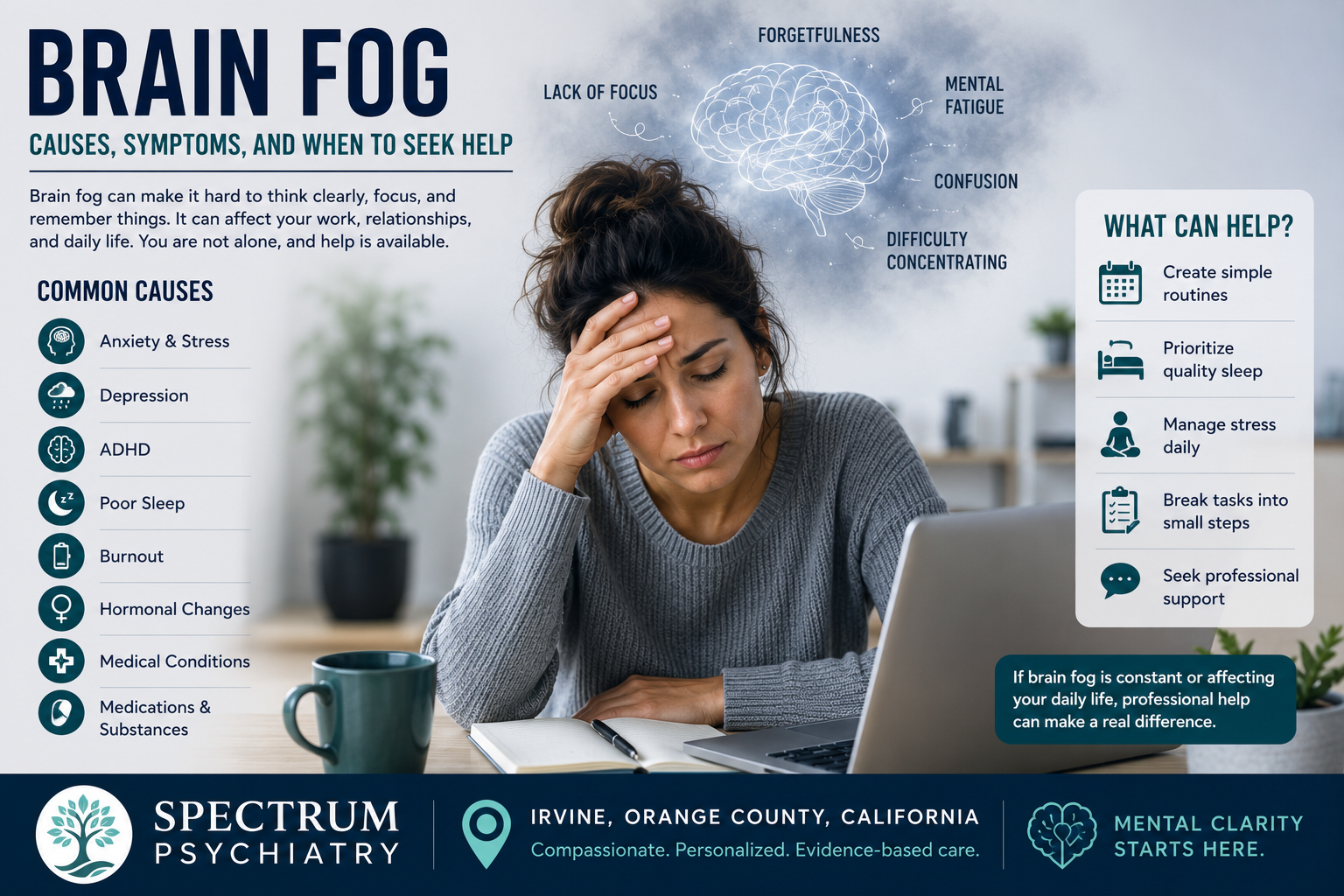
Brain Fog: Causes, Symptoms, and When to Seek Help
Learn how brain fog can be connected to anxiety, depression, ADHD, sleep problems, stress, burnout, and mental health care at Spectrum Psychiatry in Irvine.
Read article →