
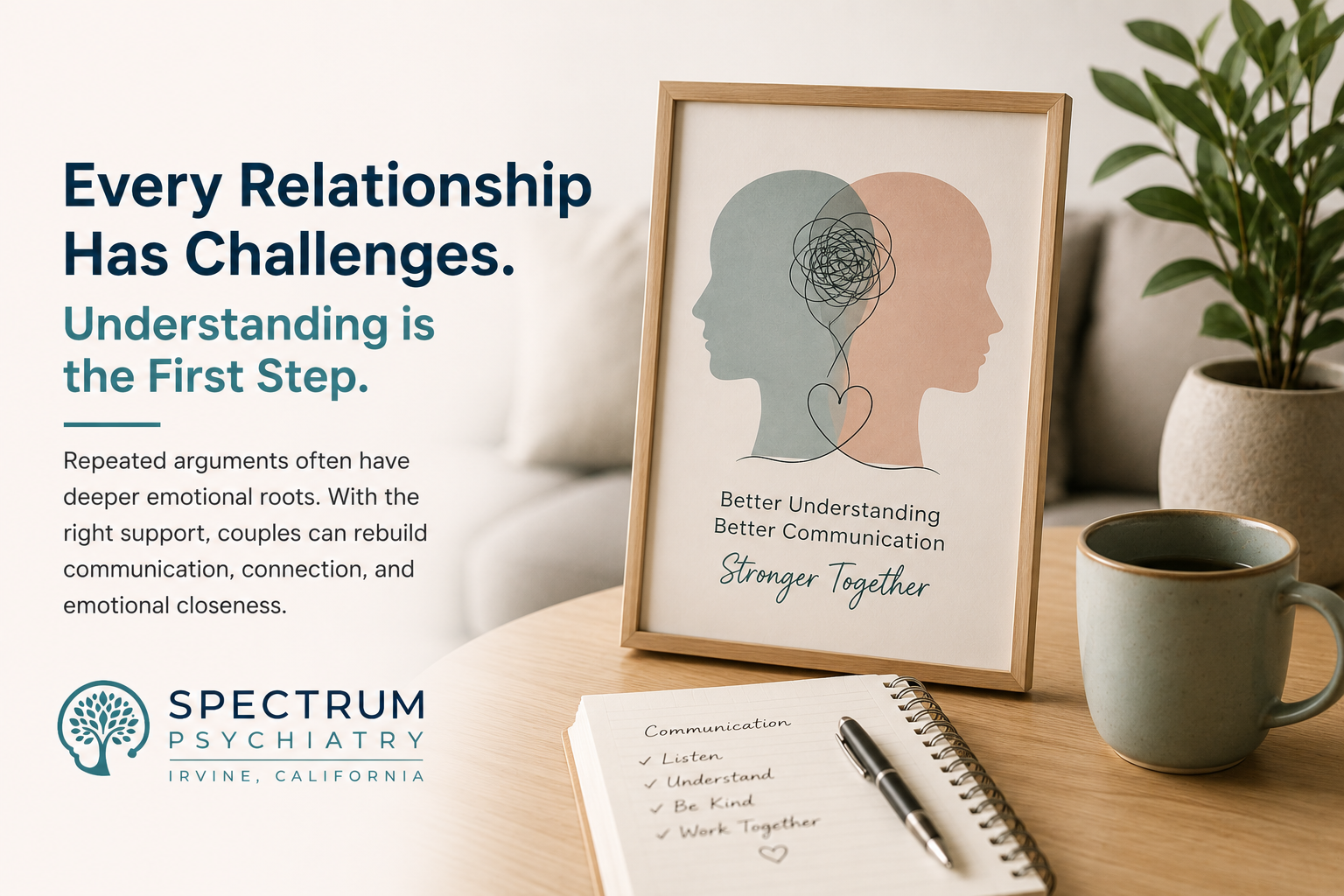
Relationship Conflict: Why Couples Keep Having the Same Arguments
Many couples do not argue about completely new problems each time. Instead, they often repeat the same argument in different forms. One partner may feel unheard. The other may feel criticized. One person may withdraw, while the other pushes harder for connection. Over time, the conflict becomes familiar, painful, and difficult to break.
Relationship conflict is not always only about communication. It can also be connected to anxiety, depression, ADHD, burnout, trauma, stress, sleep problems, emotional dysregulation, or unresolved personal struggles. When mental health symptoms are present, even small disagreements may feel overwhelming.
At Spectrum Psychiatry in Irvine, Orange County, we help patients understand how emotional health can affect relationships. While psychiatric care is not the same as couples therapy, treating anxiety, depression, ADHD, mood symptoms, or emotional regulation challenges can support healthier communication and stronger relationships.
Why Do Couples Repeat the Same Arguments?
Repeated arguments often happen because the surface topic is not the real issue. A couple may argue about chores, money, parenting, texting, family visits, or schedules. But underneath the argument, one partner may feel unsupported, rejected, controlled, dismissed, or emotionally unsafe.
When the deeper need is not recognized, the same conflict returns. The words may change, but the emotional pattern remains the same. One person may protest, the other may defend. One may shut down, the other may become more intense. Both may leave the conversation feeling misunderstood.
Understanding recurring conflict requires looking at the emotional pattern, not only the topic of the argument. Mental health symptoms can intensify that pattern and make it harder to pause, listen, and respond calmly.
The Role of Stress in Relationship Conflict
Stress is one of the most common reasons couples become more reactive with each other. Work pressure, financial concerns, parenting demands, school stress, health issues, caregiving, and lack of rest can reduce patience and emotional flexibility.
When someone is stressed, their nervous system may already be on alert. A small comment may feel like criticism. A delayed response may feel like rejection. A normal disagreement may quickly become a larger argument.
In busy communities like Irvine and Orange County, many couples manage demanding schedules and high expectations. Without enough recovery time, both partners may feel emotionally depleted before a conversation even begins.
Anxiety and Relationship Conflict
Anxiety can strongly affect relationships. A person with anxiety may overthink conversations, worry about being abandoned, seek reassurance, fear conflict, or interpret neutral behavior as a sign that something is wrong.
Anxiety may also make it hard to tolerate uncertainty. If one partner does not respond quickly, seems distracted, or needs space, the anxious partner may feel unsafe or rejected. This can lead to repeated questioning, emotional escalation, or difficulty letting the issue settle.
On the other side, a partner may feel pressured, criticized, or overwhelmed by repeated reassurance seeking. This can create a cycle where one person pursues connection and the other withdraws.
Learn more about anxiety treatment in Irvine at Spectrum Psychiatry.
Overthinking and Relationship Worry
Overthinking can make relationship conflict feel endless. A person may replay what their partner said, analyze tone of voice, imagine worst-case scenarios, or keep returning to the same conversation long after it ended.
Sometimes overthinking is an attempt to feel safe or prepared. But when it becomes repetitive, it can increase anxiety and make it harder to communicate clearly. Instead of asking for what they need, a person may become tense, withdrawn, defensive, or accusatory.
If overthinking is affecting your relationship, our article on Overthinking vs. Anxiety may also be helpful.
Depression and Emotional Distance
Depression affects much more than mood. It can reduce emotional energy, motivation, patience, affection, and communication. A partner experiencing depression may appear distant, uninterested, tired, or emotionally unavailable even though they still care deeply about the relationship.
Unfortunately, these changes are sometimes misunderstood as a lack of love or commitment. One partner may interpret withdrawal as rejection, while the other feels overwhelmed simply trying to get through the day. This misunderstanding can lead to repeated arguments and growing emotional distance.
Treating depression often improves not only individual well-being but also communication, emotional availability, and relationship satisfaction.
ADHD and Communication Problems
ADHD can influence relationships in ways that are often misunderstood. Forgetting important dates, interrupting conversations, struggling with organization, emotional impulsivity, or becoming distracted during discussions can create frustration for both partners.
Many adults with ADHD genuinely want to be attentive partners but experience neurological challenges that affect consistency rather than commitment. Understanding these differences can reduce blame and encourage healthier communication.
Learn more in our article about Adult ADHD vs. Anxiety.
Emotional Regulation During Arguments
Emotional regulation is the ability to recognize emotions, tolerate distress, and respond thoughtfully instead of reacting impulsively. During conflict, strong emotions may trigger defensiveness, criticism, shutting down, or saying things that are later regretted.
Improving emotional regulation does not mean avoiding difficult conversations. Instead, it means learning to pause, listen, identify emotions, and communicate needs without escalating the conflict.
Individuals experiencing anxiety, ADHD, depression, trauma, or chronic stress may find emotional regulation especially challenging, making appropriate treatment an important part of healthier relationships.
Healthy Communication Strategies
- Pause before responding during emotionally intense moments.
- Focus on one issue instead of several at once.
- Use "I" statements instead of blame.
- Listen to understand before trying to respond.
- Avoid assumptions and ask clarifying questions.
- Recognize when stress or exhaustion is influencing the discussion.
- Take healthy breaks if emotions become overwhelming.
- Practice empathy, even during disagreement.
Healthy communication is a skill that develops over time. Improving individual mental health often creates a stronger foundation for these conversations.
When Should You Seek Professional Help?
Repeated conflict may indicate that emotional or mental health concerns deserve attention. Professional support may be helpful when arguments become frequent, communication consistently breaks down, or one or both partners experience anxiety, depression, burnout, ADHD symptoms, or emotional dysregulation.
- The same arguments happen repeatedly.
- You feel emotionally disconnected.
- Conflict is affecting work or family life.
- One or both partners struggle with anxiety or depression.
- Communication feels impossible despite repeated efforts.
- Emotional reactions feel difficult to control.
Relationship Mental Health Support in Irvine
Spectrum Psychiatry provides psychiatric evaluation and treatment for adults experiencing anxiety, depression, ADHD, emotional dysregulation, burnout, and other conditions that may influence relationships. Supporting individual mental health can often improve communication, emotional resilience, and relationship satisfaction.
If you are searching for a psychiatrist in Irvine, California, Spectrum Psychiatry offers compassionate, evidence-based care tailored to your individual needs.
Related Articles
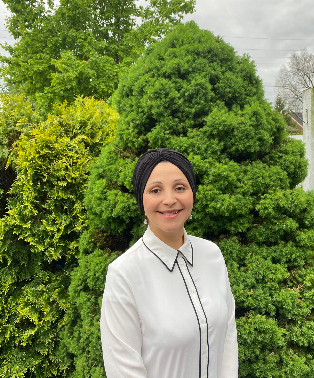
This article has been medically reviewed by Dr. Gulay Tegin to ensure accuracy and provide evidence-based information regarding relationship conflict, emotional well-being, and mental health.
Last reviewed: July 2026
Stronger Mental Health Can Support Stronger Relationships
If anxiety, depression, stress, ADHD, or emotional regulation challenges are affecting your relationship, Spectrum Psychiatry can help you understand the underlying causes and develop a personalized treatment plan.
Schedule an Appointment