
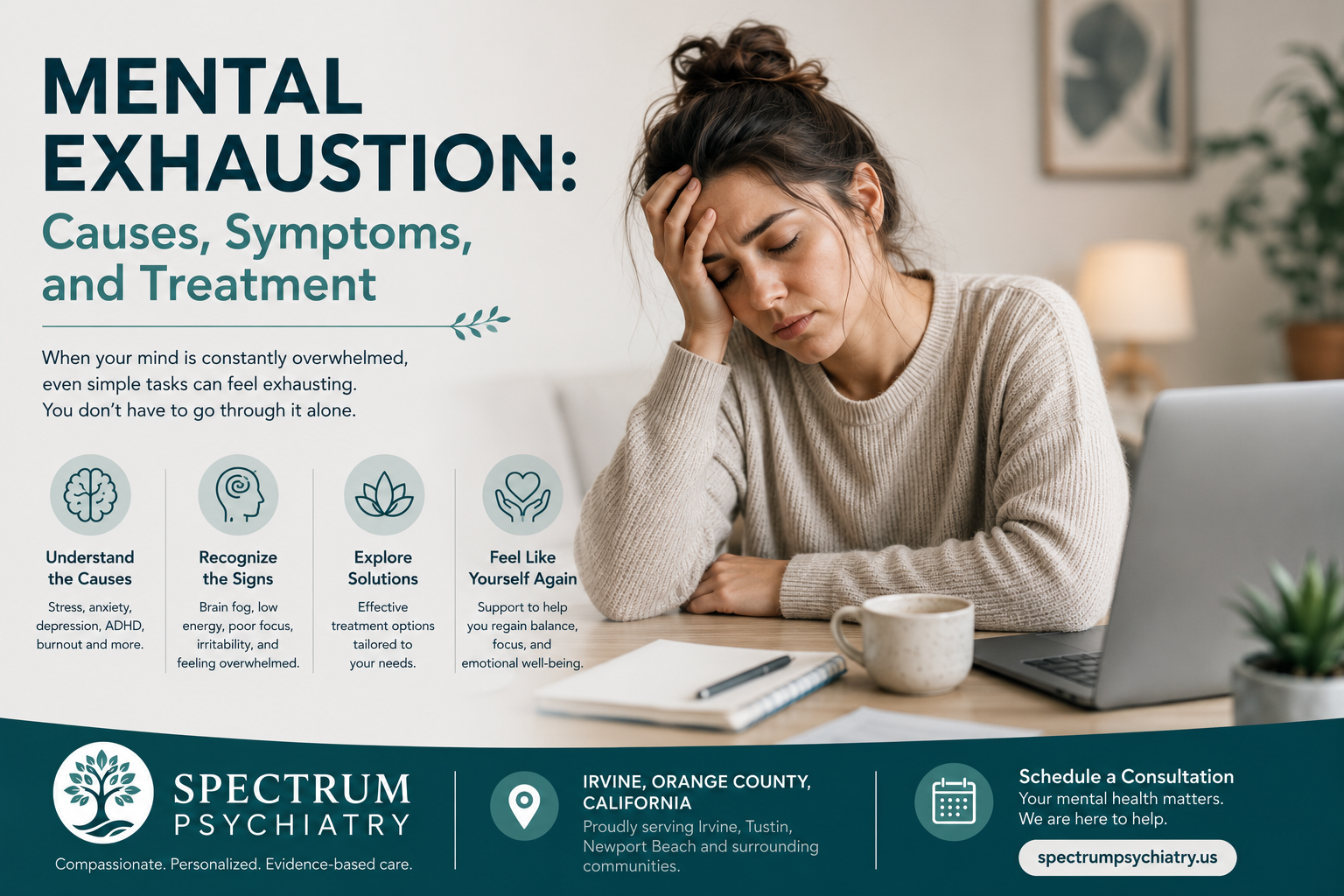
Mental Exhaustion: Causes, Symptoms, and Treatment
Mental exhaustion can feel like your mind has run out of energy. You may wake up already tired, struggle to focus, feel emotionally drained, or find that ordinary tasks take much more effort than they used to. Some people describe it as feeling mentally tired, emotionally empty, burned out, or unable to keep up with daily responsibilities.
For many adults in Irvine, Orange County, and across California, mental exhaustion develops gradually. Work demands, family responsibilities, financial pressure, health concerns, constant notifications, poor sleep, and emotional stress can all build up over time.
At Spectrum Psychiatry in Irvine, we help patients understand whether mental exhaustion may be connected to anxiety, depression, ADHD symptoms, burnout, sleep problems, medication concerns, or other mental health conditions. Feeling mentally drained is not a personal failure. It is often a sign that your mind and body need support.
What Is Mental Exhaustion?
Mental exhaustion is a state of cognitive and emotional fatigue. It can happen when the brain has been under stress for too long without enough rest, recovery, or support. Unlike ordinary tiredness, mental exhaustion may not improve after one night of sleep.
People with mental exhaustion may feel like they cannot think clearly, make decisions, regulate emotions, or stay motivated. They may continue functioning on the outside while feeling depleted on the inside.
Mental exhaustion can affect professionals, students, parents, caregivers, healthcare workers, business owners, and anyone living with prolonged stress or untreated mental health symptoms.
Common Symptoms of Mental Exhaustion
Mental exhaustion can show up differently from person to person. Some people mainly feel tired and unfocused. Others feel irritable, numb, anxious, or emotionally overwhelmed.
- Feeling mentally drained most days
- Difficulty concentrating or remembering details
- Brain fog or slow thinking
- Low motivation
- Irritability or emotional sensitivity
- Feeling overwhelmed by small tasks
- Difficulty making decisions
- Sleep problems or waking up tired
- Feeling detached or emotionally numb
- Loss of interest in usual activities
- Procrastination or avoidance
- Physical tension, headaches, or fatigue
If these symptoms are persistent, they may be connected to more than a busy schedule. A psychiatric evaluation can help identify whether anxiety, depression, ADHD, burnout, insomnia, or another concern may be contributing.
Mental Exhaustion vs. Physical Tiredness
Physical tiredness usually happens after physical activity or lack of sleep. Mental exhaustion is different. It can happen even if the body has not been physically active. The mind feels overloaded, foggy, or unable to process information efficiently.
Someone who is physically tired may rest and feel better. Someone who is mentally exhausted may rest but still wake up feeling drained. This is especially common when stress, anxiety, depression, or sleep problems are ongoing.
Mental exhaustion can also affect the body. People may experience headaches, muscle tension, stomach discomfort, appetite changes, or increased sensitivity to noise, conflict, or demands.
Why Mental Exhaustion Happens
Mental exhaustion often develops when the brain is asked to manage too much for too long. This may include emotional stress, repeated decision-making, constant multitasking, unresolved anxiety, poor sleep, or pressure to perform without enough recovery.
Modern life creates many sources of cognitive overload. Emails, texts, work messages, family needs, financial decisions, health information, social comparison, and digital noise all compete for attention. Over time, the brain may become overloaded.
In high-demand communities like Irvine and Orange County, many adults manage professional goals, family responsibilities, academic pressure, and high expectations. These pressures can make mental exhaustion more likely, especially when underlying anxiety, depression, or ADHD symptoms are present.
Mental Exhaustion and Anxiety
Anxiety can be mentally exhausting because the brain is constantly preparing for possible problems. A person with anxiety may replay conversations, worry about the future, scan for mistakes, or feel unable to relax even when nothing urgent is happening.
This constant mental activity can drain energy. Over time, anxiety may lead to poor sleep, irritability, difficulty concentrating, and feeling overwhelmed by ordinary decisions.
Learn more about anxiety treatment in Irvine at Spectrum Psychiatry.
Mental Exhaustion and Depression
Depression can also cause mental exhaustion. A person may feel slowed down, unmotivated, emotionally heavy, or unable to enjoy things that used to feel meaningful. Even simple tasks may feel difficult.
Depression-related exhaustion may come with low mood, guilt, hopelessness, sleep changes, appetite changes, poor concentration, and loss of interest. Some people continue functioning externally while feeling depleted internally.
If you feel functional on the outside but emotionally exhausted inside, you may also find our article on high-functioning depression helpful.
Mental Exhaustion and ADHD
Adults with ADHD often use significant mental energy simply to stay organized, remain focused, remember responsibilities, and manage time. Over the course of a day, this additional cognitive effort can become exhausting. Many adults describe feeling mentally worn out even when they have not completed physically demanding work.
Mental exhaustion related to ADHD may appear as procrastination, decision fatigue, difficulty switching between tasks, forgetfulness, or feeling overwhelmed by responsibilities. When untreated, these symptoms may also contribute to anxiety and low self-confidence.
Learn more about Adult ADHD vs. Anxiety and our ADHD treatment services.
Burnout and Mental Exhaustion
Burnout and mental exhaustion are closely related. Burnout usually develops after prolonged workplace stress, caregiving responsibilities, academic pressure, or chronic emotional strain. Mental exhaustion may be one of the earliest signs that burnout is developing.
If you constantly feel depleted despite rest, emotionally detached from work, or unable to recover your motivation, burnout may be a contributing factor.
Read our article on Burnout vs. Depression to better understand the differences.
Practical Ways to Improve Mental Energy
- Maintain a consistent sleep schedule.
- Reduce unnecessary multitasking.
- Take regular breaks during demanding work.
- Limit excessive screen time when possible.
- Exercise regularly according to your health status.
- Eat balanced meals and stay hydrated.
- Practice mindfulness or relaxation exercises.
- Set realistic daily priorities instead of trying to do everything.
- Ask for support when responsibilities become overwhelming.
- Seek professional evaluation if symptoms continue.
Lifestyle changes may improve mental energy, but persistent exhaustion should not be ignored. Treating the underlying cause is often the most effective approach.
When Should You Seek Professional Help?
Consider scheduling a psychiatric evaluation if mental exhaustion continues for several weeks, affects your work or relationships, or is accompanied by anxiety, depression, panic attacks, sleep problems, or difficulty functioning.
- You feel mentally exhausted almost every day.
- You cannot focus or complete routine tasks.
- You experience ongoing brain fog.
- You feel emotionally numb or detached.
- You have persistent anxiety or racing thoughts.
- You no longer enjoy activities you once enjoyed.
- Your work or relationships are suffering.
- Your symptoms continue despite rest.
Mental Exhaustion Treatment in Irvine and Orange County
Spectrum Psychiatry provides comprehensive psychiatric evaluations for adults experiencing mental exhaustion, anxiety, depression, ADHD symptoms, burnout, brain fog, and emotional stress. Treatment is individualized and based on each patient's symptoms, goals, and overall health.
If you are searching for a psychiatrist in Irvine, California, Spectrum Psychiatry is committed to providing compassionate, evidence-based mental health care for individuals throughout Irvine and Orange County.
Related Articles

This article has been medically reviewed by Cuneyt Tegin to help ensure accuracy, clarity, and alignment with current mental health education standards.
Last reviewed: July 2026
Feeling Mentally Exhausted?
If you are experiencing ongoing mental exhaustion, brain fog, anxiety, burnout, or difficulty concentrating, Spectrum Psychiatry can help you identify the underlying cause and develop a personalized treatment plan.
Schedule an Appointment