
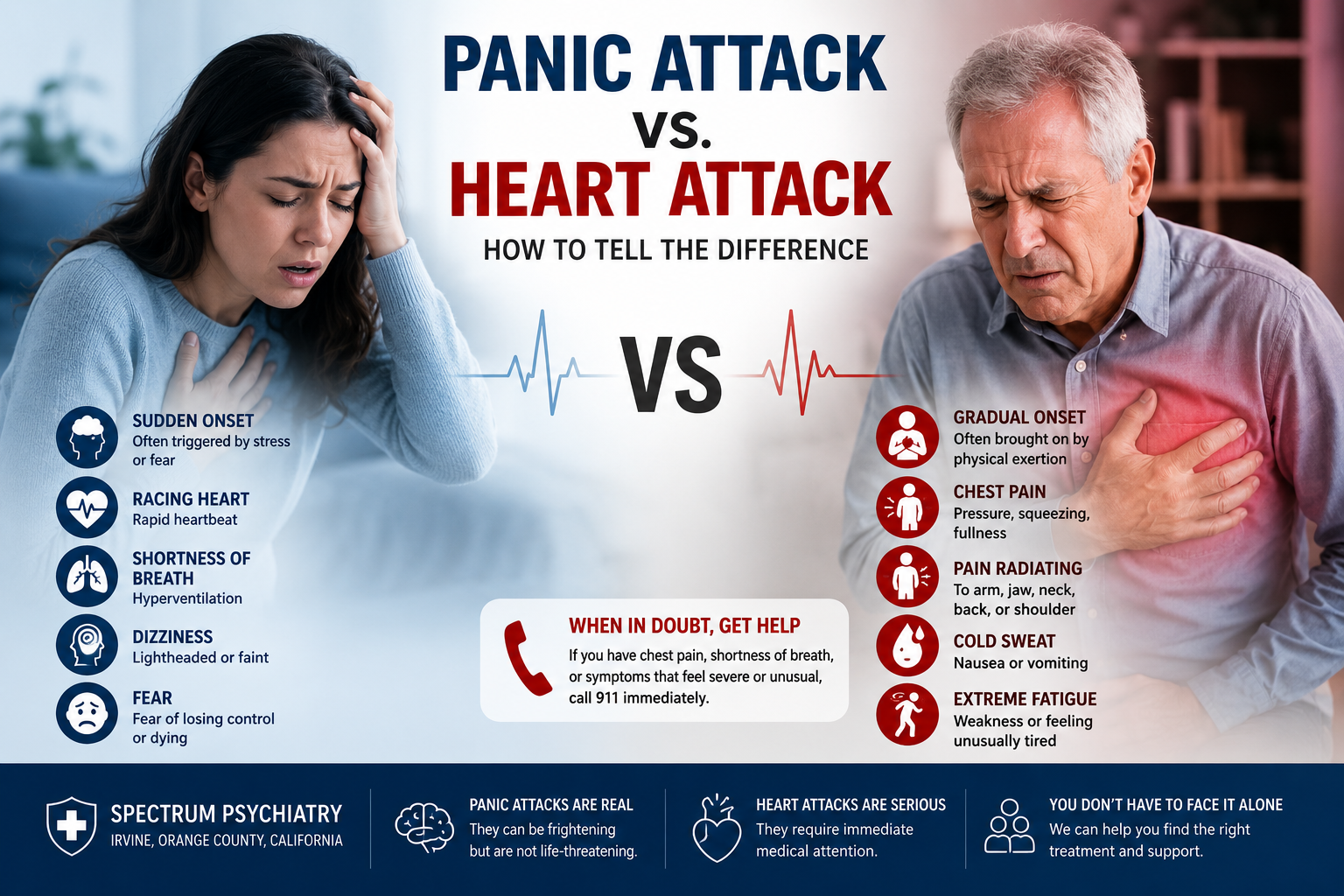
Panic Attack vs. Heart Attack: How to Tell the Difference
A racing heart, chest tightness, shortness of breath, sweating, dizziness, and fear that something terrible is happening can feel terrifying. Many people experiencing a panic attack worry they are having a heart attack. At the same time, heart attacks can be life-threatening and should never be ignored.
Panic attacks and heart attacks can share some symptoms, which is why it can be difficult to tell the difference without medical evaluation. If chest pain is new, severe, unusual, or accompanied by concerning symptoms, it is safest to seek emergency medical care.
At Spectrum Psychiatry in Irvine, Orange County, we help patients understand panic attacks, anxiety symptoms, and the connection between the mind and body. Once urgent medical causes have been ruled out, psychiatric care can help patients reduce panic symptoms and regain confidence in daily life.
Important Safety Note
If you are experiencing chest pain, pressure, shortness of breath, fainting, severe weakness, confusion, or pain spreading to your arm, jaw, back, or shoulder, call 911 or seek emergency medical care immediately. Do not assume symptoms are “just anxiety†without medical evaluation.
What Is a Panic Attack?
A panic attack is a sudden episode of intense fear or discomfort that often reaches a peak within minutes. It can happen in response to stress, a trigger, or seemingly out of nowhere. During a panic attack, the body activates its fight-or-flight response, creating powerful physical symptoms.
Panic attacks are not imagined. The symptoms are real and can feel overwhelming. A person may feel like they are losing control, passing out, going crazy, or dying. Because symptoms can be so physical, many people first seek help in urgent care or emergency settings.
Common panic attack symptoms may include:
- Racing or pounding heartbeat
- Chest tightness or discomfort
- Shortness of breath or feeling unable to get air
- Dizziness or lightheadedness
- Sweating or chills
- Trembling or shaking
- Nausea or stomach discomfort
- Tingling or numbness
- Feeling detached from reality
- Fear of dying or losing control
What Is a Heart Attack?
A heart attack happens when blood flow to part of the heart is blocked. This is a medical emergency. Heart attack symptoms can vary from person to person, and not every heart attack looks the same. Some symptoms are dramatic, while others may be more subtle.
Common warning signs can include chest pressure, pain, tightness, or discomfort. Pain may spread to the arm, shoulder, jaw, neck, or back. Some people experience shortness of breath, nausea, sweating, extreme fatigue, dizziness, or a feeling of impending doom.
Because heart attack symptoms can overlap with panic symptoms, medical evaluation is essential when symptoms are new, intense, or uncertain. It is always better to be cautious when chest pain or heart-related symptoms are involved.
Why Panic Attacks Can Feel Like Heart Attacks
Panic attacks activate the body's alarm system. Stress hormones increase, breathing changes, muscles tighten, and the heart may beat faster. These physical changes can create chest discomfort, shortness of breath, dizziness, and a sense of danger.
The brain may then interpret these sensations as proof that something is medically wrong. This fear increases adrenaline even more, which makes symptoms stronger. The cycle can become intense very quickly.
This does not mean the symptoms are fake. It means the nervous system is responding as if danger is present, even when the trigger may be anxiety or panic.
Key Differences Between Panic Attack and Heart Attack Symptoms
There are some patterns that may help distinguish panic attacks from heart attacks, but these differences are not reliable enough to make a diagnosis at home. When in doubt, seek medical care.
- Panic attacks often peak within minutes, while heart attack symptoms may persist, worsen, or come in waves.
- Panic attacks may occur with intense fear, tingling, trembling, or a sense of losing control.
- Heart attack pain may feel like pressure, squeezing, heaviness, or pain spreading to the arm, jaw, back, or shoulder.
- Panic attacks can happen during rest or after emotional stress.
- Heart attacks may happen during exertion, but they can also occur at rest.
- Both can cause sweating, shortness of breath, nausea, dizziness, and fear.
The overlap is exactly why professional evaluation matters. It is not safe to diagnose chest pain by symptoms alone, especially if the symptoms are new or unusual for you.
When to Call 911
Call 911 immediately if you experience chest pain or pressure with any of the following symptoms:
- Shortness of breath
- Fainting or feeling like you may pass out
- Pain spreading to the arm, jaw, neck, back, or shoulder
- Severe weakness or sudden fatigue
- Confusion
- Cold sweat
- New or unusual chest discomfort
- Symptoms that feel different from past panic attacks
- Chest pain during exertion
If you are unsure whether symptoms are anxiety or a medical emergency, choose emergency care. After medical causes are ruled out, ongoing panic or anxiety symptoms can be treated with mental health support.
What Happens After Medical Causes Are Ruled Out?
Many people feel embarrassed after being told their symptoms may have been caused by panic. But panic symptoms are real, frightening, and physically intense. Seeking medical help for chest pain is the right decision when symptoms feel dangerous or uncertain.
Once urgent medical causes are ruled out, the next step is to understand why panic symptoms are happening and how to reduce them. Panic attacks may occur as part of panic disorder, generalized anxiety, trauma-related symptoms, chronic stress, substance use, sleep problems, or other mental health concerns.
Spectrum Psychiatry in Irvine helps patients evaluate panic symptoms in the broader context of mental health, stress, sleep, medication history, and daily functioning.
Panic Disorder and Recurrent Panic Attacks
Some people experience one or two panic attacks during a stressful period. Others develop recurrent panic attacks and begin worrying constantly about having another episode. This can lead to avoidance of driving, exercise, social events, travel, work meetings, or places where escape feels difficult.
Panic disorder can become very limiting when a person begins to organize life around preventing panic. Treatment can help reduce panic symptoms, rebuild confidence, and improve daily functioning.
Learn more about anxiety treatment in Irvine and how Spectrum Psychiatry supports patients with panic symptoms.
Why Fear of Another Panic Attack Can Keep the Cycle Going
After a frightening panic attack, many people begin monitoring their body closely. They may check their pulse, avoid caffeine, avoid exercise, or become alarmed by normal sensations like a fast heartbeat or shortness of breath after climbing stairs.
This body scanning can make panic more likely because ordinary sensations are interpreted as danger. The fear of symptoms can become a trigger for more symptoms.
Treatment often focuses on breaking this cycle, improving coping skills, reducing avoidance, and addressing underlying anxiety or stress.
Treatment Options for Panic Attacks
Treatment for panic attacks depends on the person's symptoms, medical history, medication history, stress level, sleep, and overall mental health. Many patients benefit from a combination of education, therapy, lifestyle changes, and medication management when appropriate.
Therapy can help patients understand panic symptoms, reduce fear of body sensations, manage avoidance, and build practical coping strategies. Medication may be considered when panic attacks are frequent, severe, or significantly interfering with life.
Treatment may also include addressing related concerns such as generalized anxiety, depression, trauma, insomnia, substance use, or chronic stress.
Practical Steps During a Panic Attack
If you have already been medically evaluated and your provider has confirmed that symptoms are panic-related, the following strategies may help during future episodes:
- Remind yourself that panic symptoms are uncomfortable but temporary.
- Slow your breathing instead of taking rapid shallow breaths.
- Ground yourself by naming things you can see, hear, and feel.
- Loosen tight muscles in your jaw, shoulders, and hands.
- Try not to fight the symptoms; allow them to rise and fall.
- Reduce caffeine or stimulants if they worsen symptoms.
- Follow your provider's treatment plan consistently.
These strategies are not a substitute for emergency care when symptoms are new, severe, or uncertain. They are intended for patients who have already been evaluated and diagnosed with panic attacks or anxiety.
Panic Attack Treatment in Irvine and Orange County
Spectrum Psychiatry provides psychiatric evaluations and personalized treatment for anxiety, panic attacks, depression, stress-related symptoms, sleep concerns, and related mental health conditions. Our team helps patients in Irvine, Orange County, and nearby California communities understand what is happening and build a plan for long-term relief.
If panic attacks are affecting your ability to drive, work, sleep, exercise, travel, or feel safe in your body, professional care can help. You do not have to keep living in fear of the next episode.
If you are searching for a psychiatrist in Irvine, CA, Spectrum Psychiatry offers compassionate, evidence-based mental health care for adults experiencing panic and anxiety symptoms.
Related Articles

This article has been medically reviewed by Dr. Gulay Tegin to help ensure accuracy and provide evidence-based information regarding panic symptoms, anxiety, and mental health care.
Last reviewed: July 2026
Panic Attack and Anxiety Treatment in Irvine
If panic attacks, chest tightness after medical clearance, racing thoughts, or anxiety are affecting your daily life, Spectrum Psychiatry can help you explore personalized treatment options.
Schedule an Appointment